A recall campaign for commercial, orange flowering petunia varieties in spring 2017 caused economic losses worldwide. The orange varieties were identified as undeclared genetically engineered (GE)-plants, harboring a maize dihydroflavonol 4-reductase (DFR, A1), which was used in former scientific transgenic breeding attempts to enable formation of orange pelargonidin derivatives from the precursor dihydrokaempferol (DHK) in petunia.
…
[Our results] unequivocally [point to] the first scientific GE-petunia from the 1980s as the A1 source….
…
American and European authorities unambiguously stated that the GE-petunia is not harmful to consumers and environment. It is still unknown, how plants harboring the A1 construct of Meyer et al. (1986) entered classical breeding programmes.
Nefarious use of GE-plants is unlikely, due to foreseeable troubles when plants inevitably attract attention. There are, however, several scenarios how the GE-petunia could have escaped. After its creation at the Max Planck Institute for Plant Breeding Research in Cologne, and the contentious field trial in Germany in 1990, the plants were kept in several institutions, and were also used for breeding purposes, followed by field trials in the US. Currently, the most favored explanation seems to be that during a chain of company fusions the GE-background of orange petunias was forgotten, and the lines could therefore enter new breeding programmes.
We can hack our technologies, and even our societies, so why not ourselves?
Alas, things are not so straightforward. While there are many similarities between the biological and the computational, biological systems are complex on an entirely different level. They have evolved over millions of years, with a great deal of feedback and a mind-bogglingly large number of interacting components. And, in many ways, they’re already well-tuned and optimized.
Biology is a game of trade-offs. Any change in an interconnected system can yield both positives and negatives. Ways around sleep, for instance, come with costs. Taken to their extreme, practices like polyphasic sleep can take a month of adapting before you stop feeling like a zombie, and can severely mess with your social life. Caffeine, which more than 50 percent of Americans consume daily in coffee, is no panacea. Coffee makes you feel awake, but it can make you jittery, with the occasional sensation of your eyes bugging out from your skull.
…
When it comes to biology and nutrition, while there is no doubt so much more to learn (and not everything that stands the test of time is necessarily correct), an incremental tinkering approach, tempered by a lot of humility, might be much more effective in the long term than the quick fixes of biohacking.
Editor’s note: Samuel Arbesman is the scientist in residence at Lux Capital, a science and technology venture-capital firm
Nearly twenty years ago, researchers began noticing a curious paradox in health-focused studies: despite common wisdom that being overweight or obese is unhealthy, a significant number of analyses showed that in a variety of circumstances additional weight is actually associated with a lower risk of death!
…
The universally-utilized body mass index (BMI) takes your weight (in kilograms) and divides it by your height (in meters) squared to give a neat number. But this tidy value also leaves out all sorts of important information about the body. How much fat do you have? Where is it located? How much muscle do you have?
A new study published to PLoS ONE focused on that last question. Researchers primarily based out of the Albert Einstein College of Medicine wondered if the controversial obesity paradox would persist if muscle mass was properly taken into account.
…
[W]ithout adjusting for muscle mass, normal weight individuals (BMI 18.5-25) had a higher risk of mortality than overweight individuals (BMI 25-30). But after adjusting, they mostly had a lower risk of death.
…
There are a few key takeaways from the study. One, it provides another example of how BMI is flawed for estimating health. Two, it shows that the obesity paradox is likely a statistical artifact of utilizing BMI in research, not an indication that additional body fat benefits a generally healthy adult.
Read full, original post: Muscle Mass May Reduce Risk of Death and Explain the Obesity Paradox
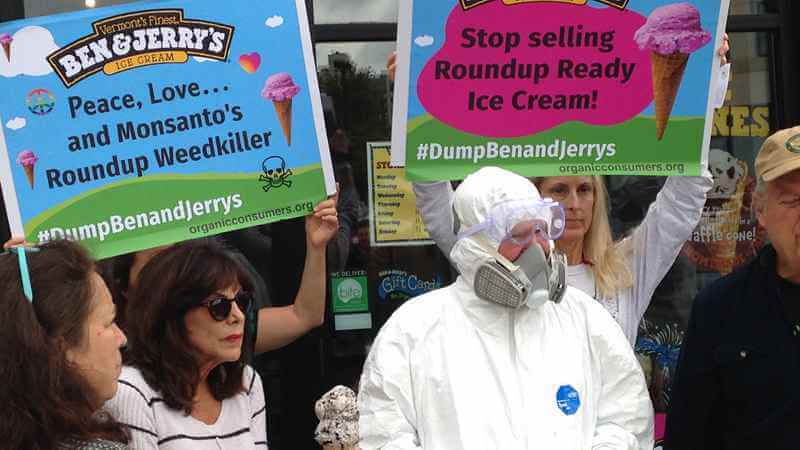
A crackpot named E. G. Vallianatos has written a blog post that links pesticides to school shootings. He says, “[Pesticides] may have something to do with the mass-shootings [sic] in schools all over America because some of them are neurotoxins.” He claims that the chemical industry’s pesticides make children stupid and violent, and the government acts as an accomplice. His solution, of course, is to eat only organic food.
This nonsense probably would have remained in total obscurity were it not for the fact that it was reprinted, in part, by the Organic Consumers Association (OCA) — a group of conspiracy theorists that has been cited as a source by outlets such as the New York Times.
Some astronomers are questioning the existence of what might be the most Earth-like planet yet found outside the solar system, based on a reexamination of archival data.
Kepler 452 b was discovered by NASA’s Kepler space telescope and announced in 2015. At the time it seemed like everything astronomers had hoped for in an Earth analogue: slightly larger and more massive than our planet, and in a habitable 385-day orbit around a star remarkably similar to our sun.
…
In a new analysis, reported last month [March] in a paper accepted to The Astrophysical Journal, researchers take an extremely statistical approach to considering any given planetary candidate—averaging out errors from the entire span of the Kepler mission, and from every instrument in aggregate. In the process, they say they learned to better distinguish a true planetary signal from astrophysical false alarms or instrumental noise.
…
In an e-mail sent to Kepler scientists who work on the project, representatives from NASA’s Exoplanet Science Institute … wrote Kepler 452 b should keep its status as a planet for now: “This new paper has not definitively shown that the Kepler 452 b signal is instrumental in origin. While the external reliability remains high, the internal reliability is lower than what is claimed in the original 2015 paper. For now, the Exoplanet Archive has opted to retain Kepler 452 b within the Confirmed Planets table until a more definitive refutation is published.”
A “landmark opinion” from the European Court of Justice on the definition of genetically modified organisms could pave the way for a revival of crop biotechnology in Europe.
According to Rothamsted Research’s senior plant geneticist, Professor Nigel Halford, the ambiguities of legislation in Europe have long caused problems for biotechnology, but this latest legal opinion – if it gets endorsed by the court’s judges – could break that deadlock.
…
Due to EU regulations on genetically modified crops, only two GM crops have ever been licensed for cultivation in Europe, and one of those, the Amflora potato, was subsequently withdrawn because the company that produced and marketed it, BASF, decided to walk away from crop biotech in Europe. That leaves a single variety of insect-resistant maize, MON810, as the only GM crop available to European farmers, and that is not available everywhere because some Member States impose their own national bans.
…
“This opinion could prompt a green light for crop scientists and plant breeders to start using genome editing for crop improvements in Europe. It is an extremely important assessment, and a rare bit of good news for Europe’s plant biotechnologists,” he concluded.
Biological evolution takes place over generations. But imagine if it could be expedited beyond the incremental change envisaged by Darwin to a matter of individual experience. Such things are dreamt of by so-called “transhumanists”. Transhumanism has come to connote different things to different people, from a belief system to a cultural movement, a field of study to a technological fantasy. You can’t get a degree in transhumanism, but you can subscribe to it, invest in it, research its actors, and act on its tenets.
So what is it? The term “transhumanism” gained widespread currency in 1990, following its formal inauguration by Max More, the CEO of Alcor Life Extension Foundation. It refers to an optimistic belief in the enhancement of the human condition through technology in all its forms. Its advocates believe in fundamentally enhancing the human condition through applied reason and a corporeal embrace of new technologies.
It is rooted in the belief that humans can and will be enhanced by the genetic engineering and information technology of today, as well as anticipated advances, such as bioengineering, artificial intelligence, and molecular nanotechnology. The result is an iteration of Homo sapiensenhanced or augmented, but still fundamentally human.
Evolution in hyperdrive
The central premise of transhumanism, then, is that biological evolution will eventually be overtaken by advances in genetic, wearable and implantable technologies that artificially expedite the evolutionary process. This was the kernel of More’s founding definition in 1990. Article two of the periodically updated, multi-authored “transhumanist declaration” continues to assert the point: “We favor morphological freedom – the right to modify and enhance one’s body, cognition and emotions.”
To date, areas to improve on include natural ageing (including, for die-hards, the cessation of “involuntary death”) as well as physical, intellectual and psychological capacities. Some distinguished scientists, such as Hans Moravec and Raymond Kurzweil, even advocate a posthuman condition: the end of humanity’s reliance on our congenital bodies by transforming “our frail version 1.0 human bodies into their far more durable and capable version 2.0 counterparts”.
Mis- and disinformation are distorting science and public policy. Subscribe to our Daily and Weekly Digests for incisive coverage of ‘disruptive’ innovations in AI, agricultural biotechnology, food, chemicals, nuclear energy, vaccines, and other disruptive innovations.
The push back against such unchecked optimism is emphatic. Some find the rhetoric distasteful in its assumptions about the desire for a prosthetic future.
And potential ethical problems, in particular, are raised. Tattoos, piercings and cosmetic surgery remain a matter of individual choice, and amputations a matter of medical necessity. But if augmented sensory capacity, for instance, were to become normative in a particular field, it might coerce others to make similar changes to their bodies in order to compete. As Isaiah Berlin once put it: “Freedom for the wolves has often meant death to the sheep.”
Augmented human hearing
In order to really get to grips with the meaning of all this, though, an example is needed. Take the hypothetical augmentation of human hearing, something I am researching within a broader project on sound and materialism. Within discussions of transhumanism, ears are not typically among the sense organs figured for enhancement.
Artist’s impression of a robotic ear. Image credit: Ociacia, Shutterstock.com
But human hearing is already being augmented. Algorithms for transposing auditory frequencies already exist (common to most speech processors in cochlear implants and hearing aids). Research into the regeneration of cilia hairs in the cochlear duct is also ongoing. Following this logic, augmenting unimpaired hearing need be no different, in principle, to correcting impaired hearing.
What next? Acoustic sound vibrations sit alongside the vast, inaudible electromagnetic spectrum, and various animals access different portions of this acoustic space, portions to which we — as humans — have no access. Could this change?
If it does, this may well alter the identity of sound itself. Speculations as to whether what is visible as light might under other circumstances be perceivable as sound have arisen at various points over the past two centuries. This raises heady questions about the very definition of sound. Must it be perceived by a human ear to constitute sound? By a sentient animal? Can a machine hear sufficiently to define sound beyond the human auditory range? What about aesthetics? Aesthetics itself — as the (human) study of the beautiful — may no longer even be applicable.
All hypothetical?
The technologies for broaching such questions are arguably already at hand. Examples of auditory sense augmentation (broadly conceived) include Norbert Wiener’s so-called “hearing glove”, which stimulated the finger of a deaf person with electromagnetic vibrations; an implanted colour sensor that — for its colour-blind recipient, Neil Harbisson — converts the colour spectrum into sounds, including ultraviolet and infrared signals; and a cochlear implant that streams sounds wirelessly from Apple’s mass market devices directly to the auditory nerve of its recipients.
The discussion is not entirely hypothetical, in other words. So what does all this mean?
There is a famous scene in the film The Matrix in which Morpheus asks Neo whether he wants to take the blue pill or the red pill. One returns him unawares to his life of total physical and mental enslavement within the simulation programme of the Matrix, the other gives him access to the real world with all its brutal challenges. But after experiencing this, he can never go back to life within the Matrix, and must survive outside it.
Advocates of transhumanism face a similar choice today. One option is to take advantage of the advances in nanotechnologies, genetic engineering and other medical sciences to enhance the biological and mental functioning of human beings (never to go back). The other is to legislate to prevent these artificial changes from becoming an entrenched part of humanity, with all the implied coercive bio-medicine that would entail for the species.
Of course, the reality of this debate is more complex. Holding our scepticism in abeyance, it still supersedes individual choice. Hence the question of agency remains: who should have the right to decide?
David Trippett is a musicologist and cultural historian. His research focuses on nineteenth-century intellectual history, Richard Wagner, and the philosophy of technology.
One of the main sources of nutrition for poor Ugandans, bananas, is on the verge of being wiped out by a deadly Fusarium fungus that is rapidly spreading through the continent. Known as Tropical Race 4, it has already devastated Asia and destroyed much of the banana industry in China.
There is no traditional defense against Tropical Race 4 right now, but scientists have had major success in genetically modifying banana plants so that they are resistant to the disease. The process is no different from that used to create many of the modern crops grown and consumed in the U.S. and other nations around the world. Crop improvement using biotechnology is only different from historical plant breeding in being more precise, and therefore arguably safer.
Sir Richard Roberts (Image source: Northeastern University)
But because these crops are called GMOs, anti-biotech NGOs (non-governmental organizations) like ActionAid – many of them funded by governments and well-meaning but misinformed foundations in Europe and North America – would rather argue against sound science and allow Ugandans to become malnourished and possibly starve instead of allowing these crop-improving technologies to succeed.
Despite their anti-GMO campaigning, a long-awaited science-based “biosafety bill”, similar to others already in place in Africa, that would allow the responsible use of GMOs passed the Ugandan Parliament late last year. Subsequently, however, activist-led efforts have resulted in a series of proposed “poison pill” amendments that that lack scientific justification, and could effectively kill the development of GMO bananas or indeed any other biotech crops in Uganda.
In June 2016, I organized a group of 113 Nobel Laureates and we wrote an open letter and petition urging those blocking the benefits of GMO biotechnology to stop – especially when it comes to nations like Uganda that desperately need access to all food production tools including biotech. A total of 131 Laureates have now signed the petition. We did so because the scientific evidence shows overwhelmingly that GMOs are as safe, if not safer than traditionally-bred crops. We also know that in many parts of the developing world they are the only thing that stands between the poor and widespread starvation.
Unfortunately, opponents like ActionAid Uganda have ignored our call and have continued their well-financed campaigns to sow fear and distrust about this beneficial technology, flooding the radio with ridiculously false claims that GMOs will cause cancer and make African men infertile. One wonders if the primary backers of Action Aid and other NGOs, which include the European Union, the British Government, the Rockefeller Brothers Fund and the Ford Foundation, are aware of this unethical – and I would say immoral – propaganda campaign.
Some of the most poisonous aspects of the proposed amendments include:
Mandatory isolation zones that would take up more than half of the average smallholders tiny farm plots, making the planting of GMOs economically non-viable;
Open-ended benefits sharing requirements that would hold biotech developers hostage to individual or group demands for compensation, effectively freezing current research investments and destroying all incentives for public or private investment in the future;
Mandatory GMO labels that would place small food vendors in local markets at risk of criminal prosecution if just one piece of GM produce didn’t include such a label. Most of these vendors are rural women;
Onerous economic and criminal penalties for vaguely defined infractions that would effectively stop all academic, non-profit and commercial activities in this sector.
None of these requirements are based on sound science, none add anything to safety or social justice and none exist in South Africa, Sudan, Burkina Faso or other countries where farmers are currently enjoying yield, pest management and pesticide-reduction benefits from planting biotech crops. Nor do they exist in other biosafety laws in African countries such as Ethiopia, Malawi, Tanzania, Ghana, Kenya and Nigeria. In fact, some 17 million of the 18 million farmers now growing biotech crops are in the developing world, and the vast majority of those farmers are smallholders (less than 2 hectares).
In our open letter and petition, my Nobel Laureate colleagues and I pointedly asked if the criminal and unethical campaign that another prominent group, Greenpeace, has waged against bio-fortified Golden Rice for over a decade now doesn’t constitute a crime against humanity. In my opinion, that question will be just as pertinent for other groups such as Action Aid if their scheming to block GMOs in Uganda is successful. They must not be allowed to succeed.
President Museveni and the leaders of the Parliament have been strong voices in the past supporting a responsible and science-based biosafety bill for Uganda. Those strong voices are needed now to ensure that the labor and know-how of Uganda’s scientists, who have worked hard on behalf of the nation’s farmers is not wasted and these important tools and new crop varieties will be used to help the country move to a fully sustainable agricultural future.
Sir Richard Roberts is an English biochemist and molecular biologist. He was awarded the 1993 Nobel Prize in Physiology or Medicine with for the discovery of introns in eukaryotic DNA and the mechanism of gene-splicing. He currently works at New England Biolabs.
This article was originally published in Ugandan newspaper New Vision as “Sir Richard Roberts: Will anti-biotech activists succeed in imposing their pro-poverty agenda on Uganda?” and has been republished here with permission.
“[B]rain entropy” – intense complexity and irregular variability in brain activity from one moment to the next, [is] marked by greater long-distance correlations in neural activity. Greater entropy, up to a point, is indicative of more information processing capacity, as opposed to low entropy – characterised by orderliness and repetition – which is seen when we are in a deep sleep or coma.
A new study in Scientific Reports is the first to examine whether and how ingesting a psychostimulant – in this case caffeine – affects brain entropy. The results show caffeine causes a widespread increase in cerebral entropy. This dose of neural anarchy is probably welcome, especially considered in light of another new paper, in PLOS One, which finds greater brain entropy correlates with higher verbal IQ and reasoning ability.
…
[As you enjoy your morning coffee, you are increasing the entropy throughout your brain – the bitter tonic is not merely waking you up, but apparently also boosting your brain’s useful anarchy, its complexity and information processing capacity.
In this episode of The Dissenter, Ricardo Lopes interviews Genetic Literacy Project founder Jon Entine about bioengineering, GMOs and “chemophobia.”
Ricardo Lopes is from Portugal and has a Master’s Degree in Dentistry. He recently started a Youtube channel, The Dissenter, where he’s trying to bring people interviews and talks with intellectuals and academics from a variety of areas and disciplines, ranging from Arts and Philosophy to the Social Sciences and Biology. Follow him on Twitter @TheDissenterYT
A landmark cancer drug approved last year seemed to herald a long-anticipated change in the treatment of some tumours: with medicines selected on the basis of molecular markers, rather than the tissue in which the cancer first took root. But clinicians and researchers are struggling to put that theory into practice. Although the drug itself works well in a variety of tumour types, some of the tests used to identify the molecular markers, it turns out, do not.
[T]he three kinds of tests commonly used to look for the DNA damage that arises from that defect can produce conflicting results, says Heather Hampel, a genetic counsellor at Ohio State University in Columbus. One relies on PCR, a process that amplifies specific regions of the genome; a second looks for certain proteins; and a third relies on DNA sequencing. “Which is the best? Is any positive on any test sufficient?” Hampel says. “Does that mean you should try them all? No one wants to miss a patient who might benefit from pembrolizumab.”
…
Eventually, some of these issues will be ironed out, says [oncologist] Michael Overman.
…
[T]he FDA was wise to move forward with the approval rather than wait for more evidence to sort out the issues with the molecular marker tests, he says.
Zachary Lippman, a plant biologist at Cold Spring Harbor Laboratory, stood among 2 acres of his experimental crops, including some altered with a gene-editing technology called Crispr-Cas9, one of the most ambitious efforts yet to improve on what nature created.
He plucked a tomato, held it up and asked: “Will people eat it?”
That question is rippling through the food industry, where a battle for public opinion is under way even before the new gene-edited foods hit the market.
Proponents including scientists and agriculture-industry executives say gene editing in plants could transform agriculture and help feed a growing global population. Organic farmers and natural-food companies say it may pose risks to human health and permanently alter the environment by spreading beyond farms.
The agricultural industry is desperate to avoid a repeat of the acrimonious and costly battles it fought over the genetically modified crops currently on the market, even though authorities such as the Food and Drug Administration and World Health Organization have deemed them safe. Seed companies and farm groups have spent millions of dollars on campaigns promoting the benefits of biotech crops, while fighting labeling requirements and proposals to block their cultivation.
Examining the fossil record through the lens of evolutionary developmental biology may help scientists reassess the evolutionary history of humans and other hominins, suggests a new report in the journal Science Advances.
Although the human body has 206 bones, the most durable and long-lasting part of the human skeleton is the teeth. Because of this, they are the most common item found in the hominoid fossil record and are thus a vital resource for paleoanthropology.
…
Alejandra Ortiz, a post-doctoral researcher at Arizona State University in Tempe, US, has worked with an international team of researchers to apply an evolutionary developmental biology approach to molar morphology.
Affectionately known as ‘evo-devo’, this approach seeks to understand how evolution (changes in species over long timescales) interacts with developmental processes (how individual organisms develop from embryos).
…
The authors suggest that a single developmental ‘program’ previously known in other mammals such as seals, called the patterning cascade model (PCM), might be responsible for the variation among hominoid molars. PCM postulates that a blueprint for the shape of a mature molar is built from interactions between signalling centres called ‘enamel knots’ during development.
The team analysed 763 molars from six hominoid genera, both living and extinct, and discovered that most of the diversity of the molar cusp landscape can be explained by the PCM.
In humans, a healthy microbiome—the universe of bacteria, fungi, and viruses that lives inside all of us—is increasingly recognized as critical to overall health. The same is true of the plant world, and [Indigo Ag Inc.] is among the dozen or so agricultural technology startups trying to take advantage of the growing scientific consensus. Their work is enabled by advances in machine learning and a steep reduction in the cost of genetic sequencing, used by companies to determine which microbes are present.
…
Indigo is the best-funded of the bunch, having raised more than $400 million.
…
The company’s first commercial products are focused on improving drought tolerance, one of the most difficult traits to address through genetic modification. … Indigo is also investing heavily in research and development efforts to see how microbes influence factors such as nitrogen use and pest resistance, aiming to reduce or even eliminate the use of synthetic pesticides and fertilizers as well as genetically modified seeds. With the general public rejecting chemical treatments and GMOs in favor of “natural” foods, Indigo is counting on a potentially multibillion-dollar market.
Needed GMO technology to help citizens in Third World countries is being thwarted by activist groups in First World countries who are anti-GMO, said Alison Van Eenennaam, a UCANR Cooperative Extension Specialist focused on Animal Genomics at UC Davis.
Alison Van Eenennaam
“If the African people choose to use this to develop better bananas, they should have the right to use that and not be dictated to by activist groups in the
First World promoting fear around this technology,” she said.
GMO technology could greatly benefit those in the developing world, especially those who struggle with starvation on a daily basis.
“Most people have never seen starvation. People take food for granted, and when you see people that have problems in their agricultural production systems that are actually affecting the food security, you have to address those problems, whether they be drought or disease problems,” Van Eenennaam explained.
Some of the ongoing CRISPR experiments in monkeys involve blood disorders like sickle-cell disease and beta thalassemia.
…
One concern with CRISPR has been the possibility that it will make accidental cuts to other parts of the genome that aren’t being targeted. [Researcher Hans-Peter] Kiem says he hasn’t yet seen any of these so-called off-target effects in monkeys, but his team is sequencing the genomes of the CRISPR-treated monkeys to make sure.
…
Researchers could get a better sense of whether a CRISPR therapy in monkeys will translate to cures for people if the animals had the same disease-causing mutations as humans.
…
[Researcher Jon] Hennebold says scientists need to move cautiously into human clinical trials of CRISPR because so little work has been done in monkeys. There’s still a question of whether CRISPR will cause immune reactions, for example, and off-target effects are a concern.
“We just don’t know enough about what it does outside of the region we want to modify,” he says.
Around 2006, beekeepers and scientists started talking about something called colony collapse disorder. CCD at that time was a new phenomenon; suddenly whole hives of worker bees started disappearing, leaving behind a queen, plenty of food, and a few nurse bees. Ever since, scientists have been trying to figure out why.
Larry Dapsis is entomologist for the Cape Cod Cooperative Extension—a county resource for local farmers. He says honeybee health is tied to a whole bunch of factors: travel, nutrition, queen genetics, pesticides, and pathogens and predators.
It’s a lot to cover so we’ll start with habitat loss.
Larry explains how development plays a role, “Thirty – forty years ago there was a lot more open farmland and meadows and things that just favor them. We’ve converted it to house lots, so we’ve taken away a lot of their natural forage and habitat.”
…
All of these stresses pile up. It’s a long list: Habitat loss. Travel. Nutrition. Queen genetics. Pesticides. Pathogens and predators—the sheer number and variety of these issues are overwhelming. But the list also sounds familiar—it has a lot of common ground with human challenges. Honeybees and humans have a long, intertwined history. Understanding our common challenges may offer opportunities to envision a healthier future for both species.
Read full, original post: The Many Dimensions of Honeybee Health
An international group of researchers has come up with a new plan to help astronauts survive high-level radiation in space – and even get them to Mars without the deadly exposure expected during three years of space travel.
It is estimated that a return trip from Mars would expose astronauts to radiation doses of 600 mSv – a large proportion of the lifetime cap Nasa sets for space travellers of 800-1200 mSv.
…
Part of the plan is to make some human cells radioresistant.
Scientists want astronauts to have personalized drugs tailor-made for their own bodies. To do this, they will have to use artificial intelligence to pinpoint which cells are more resistant than others, and fortify them using gene therapy.
Professor David Sinclair of UNSW School of Medical Sciences and Harvard Medical School Boston worked on a study last year that could lead to a drug development that improves the ability of DNA to repair itself and could also reverse aging.
…
“No one has ever offered up nutritional or pharmaceutical modalities to protect against radiation for me specifically,” said [astronaut Scott] Kelly.
Genetic engineering is the devil’s tool of the agricultural industry, dangerous to health and the environment. Or so you could summarize the view of the Greens on genetic engineering.The party has always been against it.Still, in the election program for the 2017 general election, they wrote that there is no proof of the safety of genetically modified plants.Well, a good six months later, the party is suddenly no longer so sure about their fundamental rejection.
Editor’s note: This article has been translated from German and lightly edited
“Biotechnology, nanotechnology and genetic engineering can eradicate or cure diseases, they can extend life – theoretically make even death superfluous,” writes the Federal Board party leaders Annalena Baerbock and Robert Habeck in a paper…. One should ask again, “whether certain new technologies could help to guarantee the supply of food even where climate change causes less and less rain or for saline soil.”
In the first ten days after publication of the paper, however, it became clear that the Green GMO is still resistant to embracing biotechnology.There is massive resistance in the party.Among other things, well-known anti-GM Bundestag member Harald Ebner argued loudly against a more open approach.