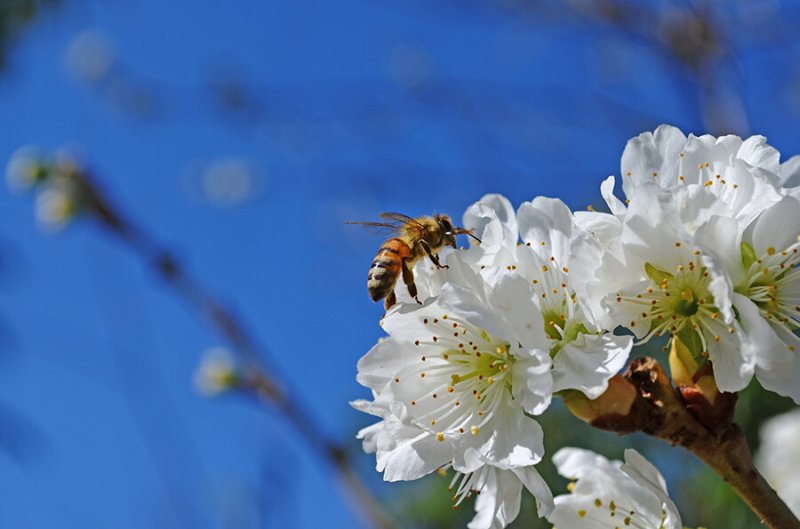
Around 2006, beekeepers and scientists started talking about something called colony collapse disorder. CCD at that time was a new phenomenon; suddenly whole hives of worker bees started disappearing, leaving behind a queen, plenty of food, and a few nurse bees. Ever since, scientists have been trying to figure out why.
Larry Dapsis is entomologist for the Cape Cod Cooperative Extension—a county resource for local farmers. He says honeybee health is tied to a whole bunch of factors: travel, nutrition, queen genetics, pesticides, and pathogens and predators.
It’s a lot to cover so we’ll start with habitat loss.
Larry explains how development plays a role, “Thirty – forty years ago there was a lot more open farmland and meadows and things that just favor them. We’ve converted it to house lots, so we’ve taken away a lot of their natural forage and habitat.”

…
All of these stresses pile up. It’s a long list: Habitat loss. Travel. Nutrition. Queen genetics. Pesticides. Pathogens and predators—the sheer number and variety of these issues are overwhelming. But the list also sounds familiar—it has a lot of common ground with human challenges. Honeybees and humans have a long, intertwined history. Understanding our common challenges may offer opportunities to envision a healthier future for both species.
Read full, original post: The Many Dimensions of Honeybee Health