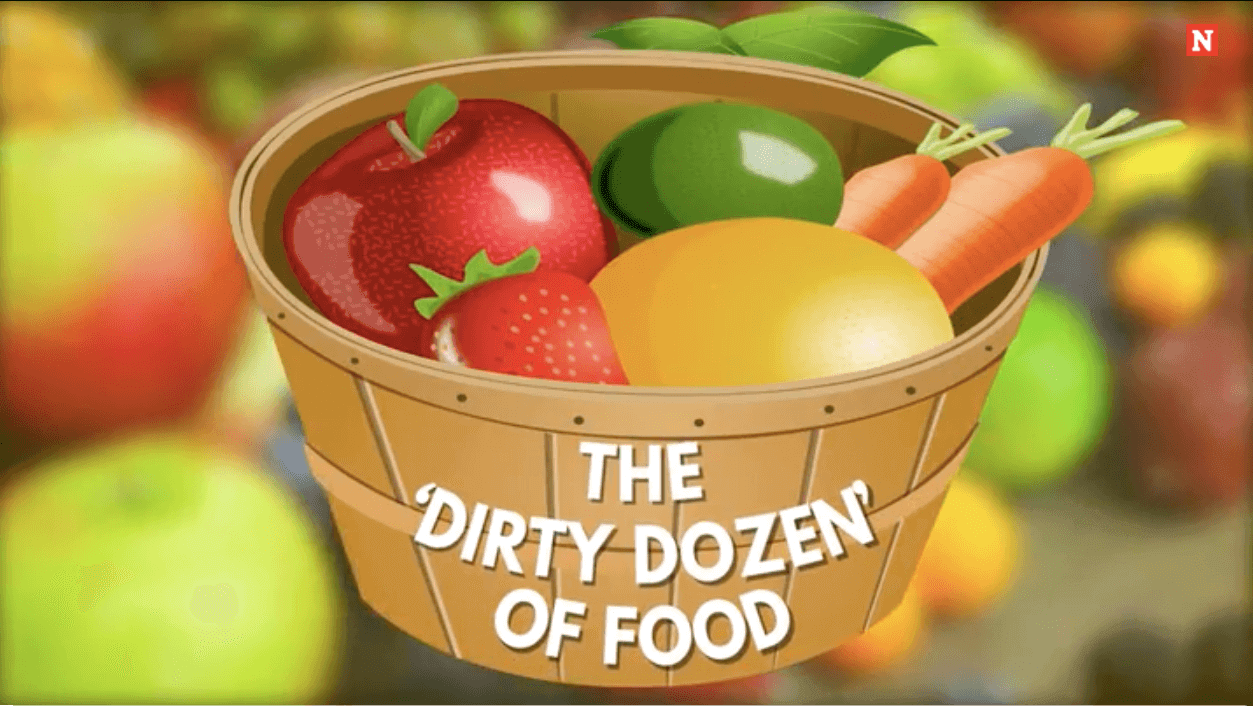
Viewpoint: 6 reasons to reject the Environmental Working Group’s misinformation on food and pesticides

fitjr activities eatafoodrainbow w

1. It creates a false sense of food risk where next to none exists.

They are not a testing organization. They acquire numbers from USDA tests, tests that are done to monitor the safety of chemistry use on the farm. The results overwhelmingly show that food is safe, and that the levels of chemicals detected are extremely small.

…

2. It perpetuates fear of chemistry that is used safely.

The point of the USDA survey is to verify that chemistry is being used safely, and it is. EWG simply bends and reports the numbers in an effort to scare consumers.

…

3. It harms farmers.

Farmers use crop protection products with great responsibility. After all, it is on their farm, they are applying it, and it typically is being applied near where their families and pets reside.

…

4. It discourages consumption of fresh fruits and vegetables.

At a time when we know that consumption of fresh fruits and vegetables is absolutely tied to better health and less long-term degenerative disease, we should be encouraging their consumption at every turn — not scaring people away.

5. It takes healthy food from the poor.

…

6. It promotes food waste.

Read full, original post: A Half Dozen Reasons to Reject the “Dirty Dozen”

The story behind the looming $30-billion-a-year synthetic DNA data storage market

dna data
[Emily] Leproust is cofounder and CEO of Twist Bioscience, a five-year-old startup that is, by some estimates, the world’s largest supplier of manufactured DNA strands, or synthetic genes. Custom-ordered genes are the raw material of synthetic biology and the starting point of every biotech drug, food, or fragrance. The DNA in the capsule represents a new market—potentially a huge one—for storage drives made out of DNA.

…

Encased in glass, [Twist’s new technology] resembles an ink-jet printer hacked together, with exposed circuit boards and nozzles aimed at postcard-size wafer of black silicon. As the machine kicked into life, little tanks squeezed droplets of adenine, cytosine, guanine, thymine—the A, C, G, and T of DNA—into 9,600 nano-wells, each the width of a strand of hair.

…

That’s where the $30-billion-a-year data storage market comes in. The research group IDC predicts the world will be creating 163 zettabytes of digital data by 2025, enough to cause “memory full” warnings on 1.2 trillion iPhones.

Instead of archiving that data on magnetic tapes, it may be possible to encode it in DNA—each bit translated into genes, to be sequenced when the data needs to be retrieved.

…Theoretically, all the data in existence could fit in the bland conference room where Leproust was showing me the silver pill. “For archival data you want to store for a long time, there’s nothing better,” says Luis Ceze, a computer scientist at the University of Washington.

Read full, original post: This company can encode your favorite song in DNA—for $100,000

Neonicotinoids, glyphosate may impact honeybees’ ability to taste and learn, ‘field realistic’ lab study claims

honey bees

Hive-bound young honey bees (Apis mellifera) are being poisoned by insecticide and weed killer gathered by their foraging hive mates, according to new research published in the Journal of Experimental Biology. The chemicals cause brain damage in young worker bees, affecting both their ability to taste and to learn, placing the future of the colony at risk.

Recent research in Europe and the USA has demonstrated that insecticides known as neonicotinoids have a substantial impact on honey bee health. Glyphosate, a commonly used herbicide, has also been shown to have effects on non-target species such as bees. In agricultural landscapes it is expected that honey bees would be exposed to both of these agrochemicals.

…

Both chemicals had a negative effect on the young bees’ olfactory learning, and reduced sucrose responsiveness or sense of taste. Glyphosate also reduced food uptake during rearing.

The paper demonstrates that neonicotinoids and glyphosate adversely affect memory, taste and smell in young bees – the very senses and skills required by worker bees for nectar foraging. The authors are concerned that compromised foraging behaviour may threaten the survival of the colony, especially at the end of the summer season.

Read full, original post: Young, hive-bound bees befuddled by common chemicals

Futurist Jamie Metzl: Through gene editing ‘we will increasingly direct our own evolutionary process’

jamie

In this talk from last month’s South by Southwest (SXSW), an annual conglomerate of film, interactive media, and music festivals, futurist Jamie Metzl explored the latest technological breakthroughs in human life extension and their big picture implications. While immortality remains the stuff of fairy tales, Metzl explains the science of extending human healthspan, what people can do today to make sure they are preparing themselves for a healthy future, and how new technologies will revolutionize how we think about and experience not just aging but also biology more generally. 

Metzl is a Senior Fellow of the Atlantic Council. He previously served as Executive VP of the Asia Society, Deputy Staff Director of the U.S. Senate Foreign Relations Committee, Senior Coordinator for International Public Information at the U.S. State Department, Director for Multilateral Affairs on the National Security Council, and as a Human Rights Officer for the United Nations in Cambodia.

Vacation hazard: Your gut bacteria picks up souvenirs, too

bacteria
The dreaded traveler’s diarrhea is the most common illness associated with vacationing or working abroad.

It’s so common the CDC estimates 30 to 70 percent of travelers are affected, depending on where they go. Most cases are caused from food or water contaminated with locale-specific bacteria. Those bacteria cause the adverse reaction in our guts. They can also carry antibiotic resistance genes. And it turns out we can pick up those bugs very quickly—just 48 hours according to new research presented at the American Society for Microbiology meeting.

Antibiotic resistance genes are a big problem. A recent report found that sexually transmitted infection, gonorrhea, is developing resistance to the last two antibiotics that treat it. Because bacteria can share genetic information between themselves in a processes called horizontal gene transfer, they can acquire resistance genes quite quickly. Resistance genes are specific to a particular drug or drug family, explains David Cox at the Guardian:

At the molecular level, such mutations can prevent an antibiotic entering the bacteria cell at all, altering the target molecules so that they don’t bind to the antibiotic anymore, or enhancing the efficiency of efflux mechanisms within the bacteria which allow it to simply pump a drug back out again. Certain genes, if acquired, can actively degrade antibiotics, limiting their effectiveness once they’ve entered the cell.

gut 4 13 18Petra Wolffs and her colleagues discovered genes picked up by the bacteria in the traveler’s guts depended on where they went on vacation. Quinolone-resistance genes were most common among travelers returning from India where the drug is manufactured, incidentally. From Andy Coghlan at New Scientist:

Within two days of reaching India, for instance, two travellers had picked up qnrB, a gene that makes bacteria resistant to quinolone, one of the world’s most important antibiotics. The travellers’ gut flora retained the new genes for at least one month after they had returned home.

In a previous study, Wolffs found that almost all travelers had gut bacteria resistant to tetracycline, a very common antibiotic, even before they left the Netherlands. That may suggest that travelers themselves are spreading resistance genes in the communities they visit.

Getting sick from eating exotic foods while abroad is common and to some extent expected. But even if a traveler drinks only bottled water, forgoes ice and fruits without peels, she can’t completely eliminate the chance of contamination. Foods, dirt, animals, water and even other people are often contaminated with microscopic bits of fecal material that are largely unavoidable, according to Drake Baer at New York Magazine:

Not that you should be extremely worried about all that poop… Because if there aren’t any pathogens in a given feces, he says, “you can spoon-eat feces without any deleterious effect.” While the world may be “covered in a fine patina of feces,” as one Stanford microbiologist observed, you’re mostly okay unless there are pathogens in there.

Mis- and disinformation are distorting science and public policy. Subscribe to our Daily and Weekly Digests for incisive coverage of ‘disruptive’ innovations in AI, agricultural biotechnology, food, chemicals, nuclear energy, vaccines, and other disruptive innovations.

So are these resistance carrying gut bacteria going to make us sick? It’s not likely says Wolffs. The small numbers of acquired resistance-carrying bacteria are dwarfed by the mammoth numbers of a traveler’s normal (native at least to the individual) gut flora. Unless there is something exceptionally aggressive about the resistance-carrying bacteria they are unlikely to sway the balance of the gut flora and make travelers ill. In Wolffs’ studies, the resistance-genes couldn’t be found after a couple of months. The organisms that carried them simply died off in the natural turnover of the gut microbiome.

But for some travelers, even small, sporadic exposures might contribute to illness. Travelers with compromised immune systems or those with chronic diseases like diabetes are more susceptible to infections, in general. These groups also pick up resistant infections more than a normal, healthy population.

Wolffs’ research will next track traveler’s returning home to see if they can spread the resistance-carrying bacteria picked up abroad to friends and family. If so, that would further the case that international travel is an important factor in spreading antibiotic resistance and a possible target for interventions to  contain resistance genes after a trip. Hopefully, research in this vein will yield some effective strategies to avoid a global antibiotic-resistance pandemic.

Meredith Knight is a frequent contributor to the Genetic Literacy Project. She is a freelance science and health writer based in Austin, Texas. Follow her on Twitter @meremereknight.

Frankenfoods? A ‘terrible word’ that could describe more foods than you might realize

frankenfood
Opponents of GMOs have been unceasing in their campaign to vilify genetically modified foods by describing them as “Frankenfoods,” thus implying they are not natural and are potentially harmful.

“The practice of introducing new DNA and chemicals to seeds or animals (Aqua Advantage has developed a GMO fish) is similar to how Mary Shelly’s Frankenstein created his monster–—through piecing together lots of different organisms,” wrote the Organic Authority on its website—a common allusion in the anti-GMO world. “We all know what happened when the monster turned on Frankenstein, and many critics of genetic engineering have likened the inevitable backlash of GMO technology to the destruction and murderous rampage of Frankenstein’s monster.”

Many anti-GMO articles that warn of the dangers GM crops are often accompanied by an image of atomato fruit or vegetable with syringes sticking out of them. Very often it is a fruit or vegetable for which there is no current GM equivalent such as a tomato. This depiction is used to reinforce the notion that GM foods are created in laboratories and not by nature and therefore are dangerous to consume.

With the constant barrage of scare-based imagery, it is not surprising that there is widespread public suspicion that GMOs are dangerous to human health. But there is little controversy surrounding GMOs within the scientific community with 88 percent of the members of the American Association for the Advancement of Science believing GMOs are “generally safe.” The safety of GMOs were once again reinforced by the May 2016 report by the U.S. National Academy of Sciences, Engineering and Medicine, which concluded, there was “reasonable evidence that animals were not harmed by eating food derived from genetically engineered crops”, and epidemiological data indicated there was no increase in cancer or other health related problems associated with these crops entering our food supply.

David Zilberman, a professor of agriculture and resource economics at the University of California, Berkley, has noted that Frankenfood was “a terrible word, a stigmatization word, one that’s used to scare people… People are afraid of GMOs for little or no reason. GM is simply a tool. Because it allows us to modify plants with far greater precision and control then before, it will be very valuable.”

The reality is that the vast bulk of the foods we consume whether organic or conventionally grown have had their genetics altered in the field or in a laboratory via a process of selective breeding or advanced biotechnology techniques, and all such foods are safe to eat. The altering of genes in plants is even known to occur naturally as highlighted by the sweet potato.

Mis- and disinformation are distorting science and public policy. Subscribe to our Daily and Weekly Digests for incisive coverage of ‘disruptive’ innovations in AI, agricultural biotechnology, food, chemicals, nuclear energy, vaccines, and other disruptive innovations.

Scientists at the International Potato Center in Lima, Peru have found genes from bacteria in 291 sweet potatoes varieties, some 8,000 years old, including ones grown in the U.S., Indonesia, China and parts of South America and Africa, “People have been eating a GMO for thousands of years without knowing it,” said virologist Jan Kreuze, who led the study… This example might be helpful for regulators and scientists looking at the safety of GM crops.

Modern foods are lab foods

In one form or another many plant breeding techniques including GMOs rely upon the use of a laboratory; by that measure, most crops that are produced could be considered to be Frankenfoods. Here are some examples of non-GMO lab-created foods:

  • “Wide cross” hybridization involves crossing two individual plants belonging to different species and has created plants that do not exist naturally including varieties of corn, oats, pumpkins, wheat, tomatoes and potatoes.
  • The seedless watermelon is a polyploid which is a cell or organism that contains more than two
    Screen Shot 2016-08-09 at 4.17.27 PMpaired sets of chromosomes. It has three sets of chromosomes. Polyloidy can be induced in plants and cell cultures by using chemicals such as colchicine (a toxic natural occurring chemical that was originally extracted from a plant) and Oryzalin (which is used as an herbicide).
  • Seedless grapes are very unnatural clones, which are grown from cuttings—a form of asexual reproduction in which roots are treated with hormones to stimulate growth.
  • Hybrid crops have been developed using marker assisted selection, which is a laboratory process involving selecting certain traits in a plant such as drought or disease resistance based upon a genetic marker. Cross breeding may involve somatic fusion which is the fusion of two distinct plant species to form a new hybrid with the characteristic of both—for example Triticale, which is a fusion between wheat triticum and rye secale, and is often sold as an organic seed.
  • While the opponents of GMOs demonize them as Frankenfoods, they do not do the same for crops grown via a process of mutagenesis. The Ruby Red grapefruit, again often sold as organically grown, is an example of a variety of grapefruit created through mutagenesis, which is a form of genetic engineering that involves exposing seeds to chemicals or radiation, including X-rays, gamma rays and thermal neutrons, to generate mutants that have desirable traits. The Rio Red variety was developed using thermal neutrons. About three quarters of the grapefruits grown in Texas are Ruby Red varieties and in 1993, the Ruby Red was declared the state fruit of Texas. More than 3,000 plants have been produced utilizing mutagenesis including conventional and organic varieties of rice, pears, wheat, soybeans and sunflowers.

Although crops grown via GM technology and mutagenesis have both proved to be safe for human consumption and the environment, the National Academies has indicated that “regulating genetically modified crops while giving a pass to products of mutation breeding isn’t scientifically justified.” It should also be noted that genetic modification is a much more process and quicker method of breeding for certain traits then is mutagenesis.  A report by the UK government’s GM Science Review Panel concluded, “mutation breeding involves the production of unpredictable plants and undirected genetic changes and many thousands, even millions, of undesirable plants are discarded in order to identify plants with suitable qualities for further breeding.”

Are GMOs inherently risky?

Henry I. Miller, a physician and molecular biologist, has addressed the notion of the supposed increased risks of genetically modified foods.

Wide-cross hybridizations and radiation-induced mutagenesis represent far more drastic tinkering with nature — and lead to far less predictable results—than the modern molecular techniques used to alter genes, but neither legislators nor anti-genetic-engineering activists have shown any concern about creating new plant varieties with those older techniques.  Even though the outcomes would by any reasonable definition be genetically modified or bioengineered, they are not subject to mandatory testing or review before entering the food chain…In contrast, if a gene is moved by recombinant DNA techniques, the resulting variety is subject to lengthy, hugely expensive, and increasingly politicized regulation…To be clear, it’s not the source of genetic material or whether DNAs from different organisms are mixed that confers risk; what is important is the function of the genetic alteration—for example, whether it could cause the organism to express a new toxin or allergen or become more weed-like.

True Frankenfoods are not grown in laboratories as the opponents of GMOs would like people to believe but instead are natural foods which contain toxic substances.  For example, rhubarb leaves are poisonous; if ingested, they could cause breathing problems, seizures, kidney failure and in some cases death.  Castor oil is made from castor beans which contain ricin. The Ackee fruit of Jamaica has toxic black seeds. There are many poisonous types of mushrooms; consuming about half of a death cap mushroom for instance is deadly for adults.

Cassava contains linamarin; when eaten raw, the digestive system will convert it to cyanide.  Eating just a few pieces of uncooked cassava root can provide a lethal dose.  Potatoes contain solanine, a natural toxin. As a result, consuming an uncooked potato can cause vomiting and diarrhea. The National Institute of Health advises against eating potatoes that are green below the skin because it is an indication of a high concentration of solanine.

ucm374865Acrylamide, found in potatoes, grain products and coffee, is classified by the EPA as “likely to be carcinogenic to humans” based on studies in lab animals. (Ironically, a potato that sharply reduces the production of acryladmide in fried potatoes has been developed by tweaking one gene—which has led anti-GMO activists to brand it a ‘dangerous Frankenfood’.)

The opponents of GMOs would like us to believe that genetic modification of crops has dangerous implications for our food supply. But the reality is that there is no evidence that it is inherently any more dangerous or riskier than any other plant breeding technique. It is merely another application of science to agriculture that is designed to help feed a growing word population.

Imagine if those who opposed grafting or hybridization because they viewed them as tampering with mother-nature and potentially dangerous to humans had succeeded in halting their development? If such were the case, the implications for humanity would have been quite detrimental. Those who oppose GM technology are likely to look just as foolish to future generations.

Steven E. Cerier is a freelance international economist and a frequent contributor to the Genetic Literacy Project.

Monsanto has no patent on GMO Bt cotton seeds, Indian court rules

btcotton khDD x @LiveMint

Monsanto Co., the world’s largest seed company, can’t own a patent over genetically modified cotton seeds in India, a court ruled on [April 11].

The Delhi High Court verdict said that certain items such as seeds, plants and animals can’t be patented under Indian laws. The court rejected Monsanto’s plea to stop Nuziveedu Seeds Ltd., an estranged licensee of the company, from selling Bt cotton seeds in India.

The verdict underscores the challenges faced by multinational companies in dealing with the patent laws at a time when the country of about 1.3 billion people is trying to attract foreign companies to invest in mega projects. The government has been trying to strike a balance between the interests of consumers and companies spending in research and innovation, and to ensure that essential items such as seeds and drugs are available to people at affordable prices.

“What it means is effectively Monsanto has no patent on seeds in India and they have never had it. They have tried to hoodwink the seed companies and farmers for years claiming they have a patent and making huge amounts of money from that,” Diya Kapur, a lawyer for Nuziveedu Seeds, told by phone.

Read full, original post: Monsanto Can’t Have Patent on Bt Cotton in India, Court Says

Stanford biologist Drew Endy: We need transparency when synthesizing humans

drew endy

Perhaps more than anyone else working in synthetic biology, [researcher Drew] Endy has tried to hold the community to account.

…

[He] suggested that scientists needed to be as transparent as possible when discussing the possibility of writing and engineering human genomes.

…

I spoke to Endy in his airy, high-ceilinged lab at Stanford about why he does this work and what troubles him. This interview has been edited for length and clarity.

…

I wish for humanity to transition from living on Earth to living with the Earth — for our civilization to be flourishing in partnership with the planet by the time that we’re synthesizing human genomes routinely. One of the failures of [global effort called Genome Project-write, or GP-write, whose goal is to redesign gene systems and entire genomes in various organisms] is that it reinforces attention on humans, on ourselves, as opposed to the rest of the world.

…

I wish for us to think about changing that T to that A, or whatever, in the same way we feel about our kids and our family.

…

I’m going to be super excited about synthesizing human genomes. But if those conditions aren’t met, I’m going to be really nervous because I feel like it’s going to amplify a bunch of disasters looming from our human-centric thinking in our cultural, political, and economic systems.

Read full, original post: Is the World Ready for Synthetic People?

CRISPR 2.0: Tweaking gene editing tool to revolutionize precision medicine

crispr

CRISPR has been hailed as one of the most promising gene editing technologies and promises to revolutionize precision medicine and eradicate genetic diseases. However, the technique is not perfect and needs improvements. A new paper improves this system by creating a novel Cas9 fusion: ExoCas9. This fusion produces a higher rate of overall gene targeting and bias the spectrum of DNA lesions produced to favor much longer deletions.

…

We anticipate that this variant will also allow for mutation of a larger spectrum of genomic targets that cannot be targeted with traditional Cas9 in zebrafish, other model organisms, and even humans.

The CRISPR-Cas9 system has the great potential to cure numerous genetic diseases within our lifetime. Gene editing has already been shown to cure the rare skin disease epidermolysis bullosa (EB) in a young boy through gene therapy. Nonetheless, scientists as a whole are still fine-tuning this relatively new method and ExoCas9 is not the first published Cas9 fusion. For example, researchers used a novel Cas9 fusion to the I-TevI nuclease domain (TevCas9) to result in two, non-compatible breaks in the DNA that consistently result in 33-36 nucleotide deletions (Wolfs et al., 2016). Nonetheless, it is through small innovations like ExoCas9 and others that some time in the not so distant future the use of gene editing to cure genetic diseases will be commonplace!

Editor’s note: Thomas Clements is a Ph.D. student at Rice University and will be transitioning to a career as a Lecturer in the Biological Sciences Department at Vanderbilt University starting in Fall 2018

Read full, original post: Curing the world with CRISPR: Where we are at and where we’re headed

Viewpoint: EWG’s Dirty Dozen foods and pesticides list scares people away from healthy eating

Screen Shot at PM e

The Environmental Working Group (EWG) on [April 10] released its 2018 “Dirty Dozen” list to showcase the top pesticide-riddled fruits and vegetables. But some argue that the list should be disregarded completely and may be scaring consumers away from otherwise healthy produce.

…

Tamika Sims, director of food technology communications at the International Food Information Council and the IFIC Foundation, told Newsweek that this list may actually do consumers harm by advising them to avoid otherwise healthy foods.

“I think that it’s a disservice to people to tell them to avoid all of these nutritious foods if they can’t afford or don’t have access to the organic option,” Sims said.

…

While organic produce does offer lower pesticide exposure, Sims, who holds a doctorate in virology and immunology, said consumers should feel safe buying conventional produce over organic because “both are equally regulated by the USDA.”

Read full, original post: Dirty dozen list puts unnecessary fear in consumers over healthy foods, food scientist warns

Estonia becomes first nation to provide state-sponsored DNA testing

stemcamp still

Estonia, a former Soviet territory nestled in the Baltic region between Latvia and Russia, has become the first nation to provide state-sponsored genetic testing and advice—to 100,000 of its 1.3 million residents. Government knowledge of citizens’ DNA architecture may sound like a scary prospect—but it’s a complicated issue.

“I think it’s an ambitious effort,” said Laura Hercher, Director of Research in Human Genetics at Sarah Lawrence College and co-founder of The DNA Exchange.

…

Most state biobank initiatives aggregate data anonymously for medical research. This is what sets the Estonian program apart: DNA donors, in this case, elect to receive certain kinds of information about their genetic makeup.

After a participant’s DNA is analyzed for more than 600,000 DNA variants that have been linked to both common and rare diseases, she can ask to find out about the risks of breast cancer—but request not to see information about rare disorders she could transmit to future children.

…

“There’s a lot of potential for giving people both complicated information, hard-to-understand information, or wrong information if you give out things that we don’t know well, and that we haven’t studied not only among sick people but also among healthy people,” [said Hercher].

The Estonian government—as well as other governments faced with the same decisions—will have to grapple with whether or not public health concerns outweigh medical advances.

Read full, original post: Would You Give the Government Your Genome?

European farmers push EU to emulate USDA in not regulating CRISPR and other new crop breeding techniques

nbt

European farmers warned EU policymakers on [April 10] to take immediate action and encourage innovative new plant breeding techniques following the US decision not to regulate them.

“If we don’t act now, we will put ourselves in the hands of a few multinational American companies. EU farmers and their cooperatives will not accept it,” said Thor Gunnar Kofoed from EU farmers association Copa and Cogeca.

According to Kofoed, the EU has the largest number of plant breeders in the world but they are faced with a challenging policy and regulatory framework.

“They need to be encouraged to invest in new breeding technologies instead of being held back,” he insisted.

On 28 March, the US Department of Agriculture (USDA) issued a statement regarding the state-of-play of the so-called new plant breeding techniques (NPBTs).

The term NPBTs describes a number of scientific methods that enhance plant traits like drought tolerance and pest resistance through genetic engineering.

The debate revolves around whether these techniques should be classed as genetically modified organisms (GMOs) and should, therefore, fall under the strict GMO approval process.

Read full, original post: EU farmers: US overtakes Europe in plant breeding innovation

Video: Innovative brain-mapping techniques could unlock neuroscience secrets

mapping

What [neuroscientist Tony] Zador showed me was a map of 50,000 neurons in the cerebral cortex of a mouse. It indicated where the cell bodies of every neuron sat and where they sent their long axon branches. A neural map of this size and detail has never been made before. Forgoing the traditional method of brain mapping that involves marking neurons with fluorescence, Zador had taken an unusual approach that drew on the long tradition of molecular biology research at Cold Spring Harbor, on Long Island. He used bits of genomic information to imbue a unique RNA sequence or “bar code” into each individual neuron.

…

The result: a 3-D rendering of 50,000 neurons in the mouse cortex (with as many more to be added soon) mapped with single cell resolution.

This work, Zador’s magnum opus, is still being refined for publication. But in a paper recently published by Nature, he and his colleagues showed that the technique, called MAPseq (Multiplexed Analysis of Projections by Sequencing), can be used to find new cell types and projection patterns.

…

[T]he technique should be able to scale up to handle 100,000 neurons within a week or two for only $10,000 — far faster than traditional mapping would be, at a fraction of the cost. Such advantages will make it more feasible to map and compare the neural pathways of large numbers of brains.

Read full, original post: New Brain Maps With Unmatched Detail May Change Neuroscience

Viewpoint: How an anti-GMO reporter discovered science and embraced the benefits of crop biotechnology

cayN s x

I’ve … come to learn that GMOs are a stand-in for many other gripes, like industrialization and corporatization. They’re viewed as the nemesis of a simpler, saner, slower way of life. For those who worship the god of organic, GMOs are nothing less than the devil himself. I understand all that, because I felt much the same way just four short years ago.

It’s OK to wax nostalgic for family farms and self-sufficiency. It’s great to want safe food, and a healthy, biodiverse ecosystem. It’s laudable to advocate for social justice and food security. But none of these concepts are antithetical to GMOs, which are simply a crop breeding technology.

…

[T]he majority of those who hold anti-GMO beliefs are uninformed and confused. To reach them, we need to focus on sharing the human stories and compelling examples that can drill through a solidified mindset.

And we have to set the record straight, wherever we find it wrong.

If die-hards can change their hearts and minds, so too can those who are bewildered and uncertain about genetic engineering because all they’ve ever heard is something bad (and invariably incorrect).

Read full, original post: Changing minds about GMOs

Why humans and Neanderthals look so different

face

Compared to modern humans, Neanderthals had heavy eyebrows, huge noses, and large, long faces that bulged forward. Using 3D computer models, an international team of scientists has analyzed these facial features in detail, uncovering some likely explanations for these dramatic physical differences.

…

[Some] features are so distinctive that paleontologists figure they must’ve evolved for a special reason. New research published [April 3] in Proceedings of the Royal Society B suggests this is very much the case, and that Neanderthals acquired a facial structure that made life during the Ice Age more bearable.

…

[One hypothesis is] Neanderthals were better at drawing in cold air, using their large nasal cavities to warm and humidify the air before it reached the lungs. This notion is a bit more controversial, as airway size may relate to an animal’s respiratory demands (i.e. heavy breathing during exertion) and not climate.

Lastly, and on a related note, the large airway passages may have allowed for so-called “turbo breathing,” allowing Neanderthals to take some extra gulps of air while performing strenuous work, or when burning significant amounts of calories to keep the body warm.

…

The nasal cavities of Neanderthals, and especially those found in modern humans, were shown to condition air more efficiently than H. heidelbergensis, which suggests both species evolved to withstand cold and dry climates.

Read full, original post: Why Neanderthals Had Faces That Were So Different From Ours

Reviving the American chestnut: 10,000 blight-resistant GMO trees being grown in New York

n e

For nearly 30 years, researchers at the State University of New York College of Environmental Science and Forestry have been studying the disease that wiped out four billion American chestnut trees in the 1900s, in hopes of reestablishing the population of the majestic tree with the help of modern science.

…

[SUNY ESF professor and co-founder of the American Chestnut Research and Restoration Project William] Powell’s team first worked to identify the genome that could protect the historically significant trees from blight. Next came the first plantings of genetically modified seeds; now the team is seeking for approvals from the federal government and preparing to distribute 10,000 blight-resistant American chestnut trees to jump start the effort to restore the tree to its native range in North America.

Powell said the key was finding a gene in the tree that can detoxify the acid the blight releases to kill the trees cells.

…

Powell said he expects to have all of the paperwork submitted for USDA review this year, and the review process could take several years.

Read full, original post: SUNY ESF researchers growing 10,000 blight-resistant American chestnut trees

MIT Media Lab halts relationship with startup Nectome over storing their brains in fatal ‘brain uploads’

nectome

The MIT Media Lab will sever ties with a brain-embalming company that promoted euthanasia to people hoping for digital immortality through “brain uploads.” The startup, called Nectome, had raised more than $200,000 in deposits from people hoping to have their brains stored in an end-of-life procedure similar to physician-assisted suicide.

…

MIT’s connection to the company drew sharp criticism from some neuroscientists, who say brain uploading isn’t possible. “Fundamentally, the company is based on a proposition that is just false. It is something that just can’t happen,” says Sten Linnarsson of the Karolinska Institute in Sweden. He adds that by collaborating with Nectome, MIT had lent credibility to the startup and increased the chance that “some people actually kill themselves to donate their brains.”

…

Nectome is working on how to embalm people’s brains in a way that preserves the connections between neurons. Such a “connectome,” some speculate, could retain information about a person’s memories. Most neuroscientists think the ability to recapture memories from brain tissue and re-create a consciousness inside a computer is at best decades away and probably not possible at all.

…

In its statement, the Media Lab said it was canceling the contract “upon consideration of the scientific premises underlying the company’s commercial plans, as well as certain public statements that the company has made.”

Read full, original post: MIT severs ties to company promoting fatal brain uploading

Gene editing in agriculture: Disclosure, communication and transparency critical to public acceptance

place wager meet farmer

Communication is critical around the topic of gene-editing, an emerging technology that involves making precise changes in the genetic material of plants and animals used in food production to improve food safety, reduce food waste and use less water, land and other resources.

“Consumers are going to ask, ‘Is this safe?’ And how is that question going to be answered?” said Greg Jaffe, director of biotechnology for the Center for Science in the Public Interest, speaking during a panel discussion at Future Food-Tech. “Everyone in the food chain from the farmer all the way up to the consumer and all of the businesses in between need to know that a gene-edited crop or animal is out there in the food supply. I’m not necessarily talking about labeling or disclosure under the recent bioengineered disclosure law, but I do think … if something’s hidden from consumers, consumers ask why. ‘Why is this being hidden from me?’”

…

[Craig Wilson, vice president of quality assurance and food safety at Costco Wholesale] described an important distinction between gene-editing and genetic engineering.

“We’re not transferring material genome to genome or organism to organism; we’re essentially turning switches on and off,” he said.

Read full, original post: Consumers ‘need to know’ when it comes to food technologies