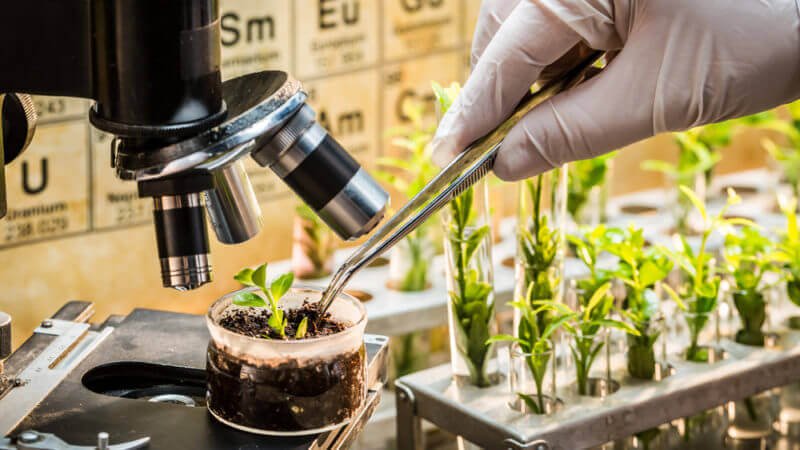
European farmers push EU to emulate USDA in not regulating CRISPR and other new crop breeding techniques

nbt

European farmers warned EU policymakers on [April 10] to take immediate action and encourage innovative new plant breeding techniques following the US decision not to regulate them.

“If we don’t act now, we will put ourselves in the hands of a few multinational American companies. EU farmers and their cooperatives will not accept it,” said Thor Gunnar Kofoed from EU farmers association Copa and Cogeca.

According to Kofoed, the EU has the largest number of plant breeders in the world but they are faced with a challenging policy and regulatory framework.

“They need to be encouraged to invest in new breeding technologies instead of being held back,” he insisted.

On 28 March, the US Department of Agriculture (USDA) issued a statement regarding the state-of-play of the so-called new plant breeding techniques (NPBTs).

The term NPBTs describes a number of scientific methods that enhance plant traits like drought tolerance and pest resistance through genetic engineering.

The debate revolves around whether these techniques should be classed as genetically modified organisms (GMOs) and should, therefore, fall under the strict GMO approval process.

Read full, original post: EU farmers: US overtakes Europe in plant breeding innovation

{{ reviewsTotal }}{{ options.labels.singularReviewCountLabel }}
{{ reviewsTotal }}{{ options.labels.pluralReviewCountLabel }}
{{ options.labels.newReviewButton }}
{{ userData.canReview.message }}

Related Articles

Infographic: Global regulatory and health research agencies on whether glyphosate causes cancer

Infographic: Global regulatory and health research agencies on whether glyphosate causes cancer

Does glyphosate—the world's most heavily-used herbicide—pose serious harm to humans? Is it carcinogenic? Those issues are of both legal and ...

Most Popular

ChatGPT-Image-Mar-10-2026-01_39_01-PM
Viewpoint—“Miracle molecule” debunked: Why acemannan supplements don’t work
Screenshot 2025-07-30 at 10.48
Can gene editing eliminate Down syndrome? Scientists have done it in lab-grown cells
ChatGPT-Image-May-26-2026-07_51_21-AM-2
Viewpoint: There are more than 1,000 chemicals in a cup of coffee—including many substances that can cause cancer. Why isn’t it banned?
Screenshot-2026-06-04-at-12.05.08-PM
Cases of brain inflammation surge as U.S. measles pandemic approaches 2000
Screenshot 2026-05-26 at 10.15
Viewpoint: Double standard—Why does the wellness industry get a free pass while Big Healthcare is treated as morally suspect?
Screenshot-2026-05-28-at-1.36.28-PM
Viewpoint: Can mRNA research survive the Trump administration?
ChatGPT Image May 26, 2026, 08_42_17 AM (1)
Viewpoint: Greenpeace and poison: How environmental advocacy groups rely on compliant (and often ignorant) journalists to spread disinformation and spark litigation
Picture1
Sounds we can’t hear — the hidden planetary signals behind science, fear, and misinformation
downsyndrome_compilation_MID_1
CRISPR breakthrough that can remove the chromosome responsible for Down syndrome raises ethical questions
glp menu logo outlined

Get news on human & agricultural genetics and biotechnology delivered to your inbox.