Viewpoint: Why you should ignore organic food advocates’ advice to avoid ‘pesticide soaked’ conventional fruits and vegetables

Credit: Wikimedia Commons (Public Domain)

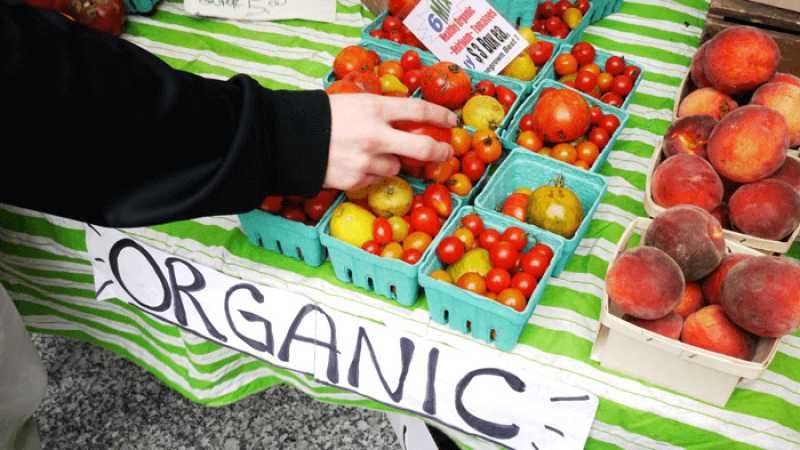
The most commonly stated reason people buy organic food is avoidance of pesticide residues. Indeed, organic producers cannot use conventional synthetic pesticides, but that does not mean no pesticides are used. Soap-based herbicides and insecticides such as boric acid, lime sulfur, elemental sulfur and various oils are allowed. So is copper sulphate since it occurs in nature, although for agricultural use it is synthetic, made by reacting copper oxide with sulphuric acid.

Follow the latest news and policy debates on sustainable agriculture, biomedicine, and other ‘disruptive’ innovations. Subscribe to our newsletter.

Even though our food supply contains only traces of pesticides, some consumers still prefer organic. To make sure they are really getting what they are paying for, they look to Canada’s seal of organic certification. The natural assumption is the seal on a package is a guarantee the rules of “organic” food production that prohibit synthetic pesticides and fertilizers, GMOs, antibiotics and hormones are followed. But that may not actually be so, because as surprising as it might be, organic certification is not actually carried out by the government and does not require testing for prohibited substances.

This is an excerpt. Read the original post here
{{ reviewsTotal }}{{ options.labels.singularReviewCountLabel }}
{{ reviewsTotal }}{{ options.labels.pluralReviewCountLabel }}
{{ options.labels.newReviewButton }}
{{ userData.canReview.message }}

Related Articles

Infographic: Global regulatory and health research agencies on whether glyphosate causes cancer

Infographic: Global regulatory and health research agencies on whether glyphosate causes cancer

Does glyphosate—the world's most heavily-used herbicide—pose serious harm to humans? Is it carcinogenic? Those issues are of both legal and ...

Most Popular

Screenshot-2026-06-05-at-2.12.30-PM
Some plants can poison you. So how did humans figure out what is safe to eat?
Credit: ACSH
Viewpoint: Who and what’s to blame for the surge in vaccine-preventable diseases?
Organic-Produce
Viewpoint: Why you should ignore organic food advocates’ advice to avoid ‘pesticide soaked’ conventional fruits and vegetables
ChatGPT-Image-Jun-5-2026-01_17_48-PM
GLP-1 weight-loss drugs may reshape our desires and emotions
Screenshot-2026-06-05-at-11.12.44-AM
‘Protecting religious liberty and parental authority’: Challenging expert guidance, Trump signs off on Kennedy’s gutting of childhood vaccine schedule
Screenshot-2026-06-04-at-12.05.08-PM
Cases of brain inflammation surge as U.S. measles pandemic approaches 2000
Screenshot 2026-06-05 at 12.14
‘Nicotine-free generation’: Should the U.S. emulate Britain and ban all nicotine products, from cigarettes to vapes?
ChatGPT-Image-Mar-10-2026-01_39_01-PM
Viewpoint—“Miracle molecule” debunked: Why acemannan supplements don’t work
Screenshot 2026-05-26 at 10.15
Viewpoint: Double standard—Why does the wellness industry get a free pass while Big Healthcare is treated as morally suspect?
ChatGPT-Image-Jun-4-2026-11_49_36-AM-2
‘You don’t understand Tolkien’: Skeptic Pope trolls tech giants about the exaggerated, risk-less benefits of AI
ChatGPT-Image-May-26-2026-07_51_21-AM-2
Viewpoint: There are more than 1,000 chemicals in a cup of coffee—including many substances that can cause cancer. Why isn’t it banned?
Picture1
Sounds we can’t hear — the hidden planetary signals behind science, fear, and misinformation
edb7f6d7-2370-418f-9578-74e29678e35c
Facts & Fallacies Podcast: Nicotine vaping—public health miracle, or risk to children? Professor Cliff Douglas
glp menu logo outlined

Get news on human & agricultural genetics and biotechnology delivered to your inbox.