‘Game changer’ for Huntington’s? New genetic treatments on horizon

huntingtons
“It came completely out of the blue,” says James*. They had thought it was his father’s knees that were the problem – he was never comfortable and was constantly shifting them. “He went to the doctor, and he said, ‘You have got osteoarthritis.’ So that was put to bed for a few months.” But that wasn’t the end of it. James’s father deteriorated and consulted a different GP, who said, “Don’t worry about your knees, why are you moving so much? Why can’t you keep still? I’m going to refer you to a specialist.” James and his mother started to realise that his father’s movements were nothing to do with his knees. That was a smokescreen. The real cause was Huntington’s disease.

First characterised in 1872 by the American physician George Huntington, the disease is one of the cruellest, coldest killers on Earth. It’s caused by a mutation of the HTT gene, which creates a toxic protein that gradually destroys vast tracts of the brain, eventually removing all the person’s mental faculties. This mutated gene is dominant, meaning that only one of your two copies of HTT needs to be faulty for you to have Huntington’s. If one of your parents has the disease, there’s a 50 per cent chance of you inheriting it.

For those who know they are at risk, life has always been an agonising waiting game. There is no cure, and symptoms on average begin in the mid-40s (it then usually takes around 15 years to kill). Indeed, for more than 100 years after the disease was characterised, those at 50:50 risk of inheriting it had no way of ending the uncertainty until the symptoms started.

It was only around 50 years ago that the condition began to emerge into the light of day. On 3 October 1967, the folk singer Woody Guthrie died in New York from what was then called Huntington’s chorea (chorea is the Greek word for dance and refers to the uncontrollable movements made by people with the disease). A few months later, Leonore Wexler – wife of Milton Wexler, a prominent American psychoanalyst – was diagnosed with the same condition.

Milton Wexler and Guthrie’s widow, Marjorie, were powerful people, and both set up foundations to support people with Huntington’s, raise awareness and stimulate research. But the great pioneer in the search for the disease’s cause was Nancy Wexler, Leonore and Milton’s daughter. Milton had begun fundraising and mobilising researchers after Leonore’s death, work that Nancy then carried on with official positions at the National Institute of Neurological Disorders and Stroke and Columbia University. Charles Sabine, a former war reporter turned Huntington’s activist, who carries the mutant gene, is certain that “without the interest of those families – Wexlers, Guthries – we would be nowhere, we would be 50 years back. It would still be hidden.”

Indeed, finding the gene responsible was no mean feat: a large population was needed to detect the genetic differences between those with and without Huntington’s. So when a large community of people with the disease came to Nancy’s attention, around Lake Maracaibo in northern Venezuela, she worked to win their trust. From 1979 onwards, blood and tissue samples from Maracaibo fed the gene-hunting of the US–Venezuela Collaborative Research Project, led by Wexler. Thanks to the Maracaibo families, in 1983 the causative gene of Huntington’s was located on chromosome 4, followed by the precise localisation and sequencing of the gene ten years later.

But since then, those with the disease have waited in vain for the next chapter of the story to begin. They have seen many false dawns, but after several decades there’s now new hope. A clinical trial targeting the gene is underway, and preliminary results have, for the first time, demonstrated success in lowering the toxic protein it makes.

Families like James’s may finally be about to have their futures transformed.

“Phenomenal”. “Ground-breaking”. A “game changer”. So read the headlines when the trial’s results went public on 11 December 2017. It’s usually wise to take media coverage of medical research with a pinch of salt, but in this instance the scientific community seemed just as excited – if not more so.

“I really think this is, potentially, the biggest breakthrough in neurodegenerative disease in the past 50 years,” said neuroscientist John Hardy of University College London (UCL) when speaking to the BBC. “That sounds like hyperbole – in a year I might be embarrassed by saying that – but that’s how I feel at the moment.”

Sarah Tabrizi, a principal investigator at the Huntington’s Disease Centre at UCL and the leader of the trial, is similarly excited: “A ray of hope emerged in 1993 with the discovery of the genetic source of the disease. Since then, we’ve been telling HD families that treatments will come. Now we have reason to believe that science has caught up.”

To some degree, Tabrizi has inherited Nancy Wexler’s mantle as the prime mover in Huntington’s research. She is passionate, vibrant, a bundle of energy and conviction – and she now has a hectic schedule, taking the good news about this progress across the globe.

huntingtons 3 12 18 2Rightly, she is proud. Researchers have been trying to target the mutant HTT gene ever since 1993. They achieved success in mice as long ago as 2000, but it’s taken a lot of further work tailoring a drug and evaluating its effect in mice and non-human primates to get to this stage. The breakthrough delivered by this research is the result of 25 years of painstaking work.

The drug in question is IONIS-HTTRx, developed by California-based Ionis Pharmaceuticals in conjunction with researchers around the world. There are many lines of promising ongoing research, but the Ionis drug – a type of antisense oligonucleotide, or ASO – is the first that’s suggested it might be possible to suppress the disease. An ASO works by sticking to the messenger RNA that carries the information for making a specific protein from a cell’s DNA to its protein-building machinery. Then the ASO destroys the RNA, preventing the protein from being made.

The Ionis team wanted a way to reduce the amount of mutant huntingtin protein that the faulty HTT gene creates, which is what wreaks havoc in the brain. A crucial issue was whether it would be necessary to target the mutant protein alone (“the bad guy”, as Tabrizi calls it) or whether a general lowering of huntingtin – both normal and mutant – would work. Tests on mice, run in collaboration with Don Cleveland’s laboratory at the University of California, San Diego, proved the latter to be the case.

The next step was to screen thousands of ASOs to find the one most likely to lower huntingtin effectively in people while remaining safe. “I don’t like to use the word ‘gene silencing’, because ASOs don’t silence,” says Tabrizi. “You’re leaving enough huntingtin to cover its functions.”

With an ASO selected, the UCL trial then confirmed the drug’s safety and its ability, when injected into the spinal cord, to lower huntingtin levels in the cerebrospinal fluid. The excitement of the result lay in its biological effect: its success in lowering the protein in humans was, Tabrizi says, “beyond what I’d ever hoped”.

Hope is now high among those affected by Huntington’s too. But until a treatment becomes generally available, their options remain limited. There are medications to help manage some of the symptoms – such as depression, mood swings and involuntary movements – but nothing can yet slow its progression.

Confusion and weight loss always appear as the disease takes hold. The journalist Charlotte Raven has been symptomatic for over seven years. She is quite thin, and keeps up good conversation in a strong voice with no trouble, but she can’t read any more – “the words just don’t go in”. As a writer and editor, she’s acutely aware of what the disease is doing to her, and she misses the bustle of running a magazine; planning and coordinated activity are difficult. “I just sit and listen to Radio 4. Dramas I can’t take in, but news I can do.”

For people like Charlotte and their families, the last great breakthrough was the arrival of testing. A 90–95 per cent accurate test followed the location of the HTT gene in 1983, though it was complicated, needing several family members to make a diagnosis. When the gene was sequenced in 1993, an almost 100 per cent reliable test became available – but for many, this only compounded the misery.

As James says: “When it was discovered, they thought there’d be an influx, but no one’s coming through the door. Thinking about it, why would you want to know?” With no cure available, taking the test means a person has the chance of turning their 50 per cent hope into 100 per cent misery at a stroke. Most decide to wait and see. To this day, only around 20 per cent of the at-risk population in the UK have taken the test.

Elisabeth Rosser, a clinical genetics consultant at Great Ormond Street Hospital in London, has some revealing figures on the psychology of testing. The fully reliable test was offered to 80 people in Oxfordshire who had previously tested positive on the 90–95 per cent test. When she asks me to guess how many opted for it, I plump for 10, thinking I’d better aim low. Only one took up the offer.

“They wanted that 5–10 per cent of doubt and hope,” Rosser explains, the modest chance that their diagnosis was wrong. Conversely, people who had tested negative before were also reluctant to take the new test: “They feared that their near certainty of being disease-free might freakishly be taken away.” But the existence of a treatment would surely change this. Starting treatment before the onset of symptoms is always going to be better.

The main spur to taking the test has been the wish to start a family, and it’s here the broader implications of there being no treatment come into focus. Before testing became available, many of those at risk simply opted not to have children – with a 50 per cent chance that their self-denial was unnecessary. Some gambled. But with the arrival of the test, another option became available: pre-implantation genetic diagnosis (PGD). This, though, brings its own difficulties.

PGD involves in vitro fertilisation, with only embryos free from the Huntington’s mutation being selected. Since 2013 the NHS has offered three free cycles of PGD to at-risk couples. The proviso is that if successful, it won’t fund PGD for a subsequent child. The cost of private PGD – the price of a sibling – is around £15,000.

The test; the wish to have children; PGD; the lack of a treatment – these play out in various permutations in different families. James and his wife wanted healthy children, but PGD normally reveals whether the parent has Huntington’s – and James, like many others in families with a history of the disease, didn’t want to know. There is a way PGD can do this, using a protocol called exclusion testing. It involves seeing which grandparents an embryo has inherited its chromosomes from. In the case of James, any embryos carrying a chromosome 4 from his father were excluded.

huntingtons 3 12 18 3This worked for James and his wife, but there were complications, and they lost their baby at 12 weeks. “It affected my wife quite badly,” he says. They waited to try again, but gradually it became clear that this was not going to happen. The issue of James’s at-risk status became a problem, and they split up.

James came to decide that if he were to think about entering a new relationship and having children, it would be better if he had been tested. In September 2017, he received his result: he doesn’t have Huntington’s. He has a clear future.

For Louise* and Simon*, things started similarly but then took a different course. “We didn’t know that HD was in the family until my dad was diagnosed,” Louise recalls. She and her sister were now at risk, and the dilemma of whether or not to get tested left them “going round in circles”. But, she says, “PGD was one area where we felt we could do something positive – move forward.” Like James and his wife, Louise and Simon opted for exclusion testing. This was successful, and they now have a boy.

But Louise knows she would have acted differently if a treatment had been available: “It’s a game-changer. If there was a treatment, I would want to know my status, so I could start ASAP if I was gene-positive.”

The way James and Louise and Simon engaged with the options is by no means typical – awareness of the availability of PGD and uptake of all the possible interventions are low. Nayana Lahiri, a clinical geneticist at St George’s Hospital in south London, reports that prenatal testing has remained at a constant, fairly low level in the UK since the mutant gene was sequenced in 1993. On average, just over 20 tests have been conducted each year. PGD has become more popular – at least 50 cycles were completed in the UK in 2015 – but this represents a recent sharp rise. From its introduction in 2002 until 2009, the annual number of cycles was never more than 20.

What is evident is that, although the disease is implacable, every family deals with it in their own way. Charlotte Raven had a daughter, Anna, in 2005, just months before her father divulged that he’d been diagnosed. She did decide to take the test, which proved positive, and there followed “years of agony”. She “worried about Anna being on her own”, so she and her husband decided to have another child. “I remember thinking should I get the embryos tested,” she says, but in the end, rather than try to “medicalise everything”, she decided to proceed without. As she put it in an article in the Daily Telegraph: “In the event, hope won over apprehension and our son was born, five years after his sister.” Both, though, will have to wait until they are 18 to take their own tests to see whether they have inherited the faulty gene.

PGD may help individual families worried about passing on Huntington’s, but it can only do so much. Apparently random new appearances of the disease aren’t just the result of families hushing it up in the past – its very nature means that it will continue to appear out of the blue.

In a mutated HTT gene, a particular triplet of DNA bases, CAG, is abnormally repeated. With below 26 sets of CAG in each of your two HTT genes, you won’t get the disease, but with more than 40 in just one of them, you will – at an age that depends on the number of those extra repeats.

In between lie two grey zones. If you have 27–35 repeats, you won’t develop Huntington’s, but your children still might, because the repeats are unstable across generations, more often increasing than decreasing if passed down, especially in the male line. With 36–39 repeats, you may or may not get the disease, but either way your children are at higher risk. The tendency for the number of repeats to increase in the next generation is especially marked once you’ve reached 36.

In the UK, it’s estimated there are between 6,000 and 10,000 people with Huntington’s, and another 25,000 at risk of developing it. But, if the prevalence figures from a 2016 Canadian study of the borderline cases (36–39 repeats) are similarly reflected here, a further 150,000 people in the UK could pass on a higher risk to their children.

Elena Cattaneo at the University of Milan has mapped the entire life story of the HTT gene – dating back a billion years – to try to get to the bottom of why the number of CAG repeats has this insidious habit of increasing from one generation to the next. The gene’s first appearance (with no repeats) was in the single-celled amoeba Dictyostelium discoideum. Two repeats then start to show in sea urchins, and they gradually increase throughout animal evolution.

The repeats are highest in humans, and there is some evidence that a high level of repeats up to the danger zone may enable higher cognitive functions. Amber Southwell, assistant professor of medicine at the University of Central Florida, says that MRI studies have shown that people towards the high end of the safe range (up to 26 CAG repeats) have more grey matter than those with fewer.

Indeed, it’s possible that rising CAG repeats on the HTT gene could have been part of an evolutionary process that helped raise humans’ mental capacities above those of other animals. This reveals a potential paradox of the disease: that, as Cattaneo and her colleague Chiara Zuccato have suggested, the terrible destruction of Huntington’s could in fact be “an offshoot of a biological process that ultimately made us the human beings we are”.

And the rise in CAG repeats continues. “No matter how good your family planning is, we’ll never eradicate the Huntington’s disease mutation,” Southwell concludes. Or, as Charles Sabine puts it, Huntington’s is “a disease of the future”.

On the day that the UCL trial’s success was declared, the Swiss pharmaceutical giant Roche announced that it would take up a $45 million option to move IONIS-HTTRx on to the next stage: a phase III trial involving hundreds of patients over a longer period to assess whether it can reverse symptoms. At this stage, there’s only evidence that it combats the cause of Huntington’s in humans, not the disease itself – though Ionis and its collaborators have used an ASO to reverse symptoms in mice.

And although the excitement about the result was fully justified, Sarah Tabrizi sounds a note of caution: it will take time to move things forward. “We expect that planning for this study will take about a year, and then it will take several years to enrol and complete. In these studies, if the drug provides clinical benefit in people with Huntington’s disease while maintaining a favourable safety profile, Roche will apply for marketing approval.” It is this, ultimately, that will decide whether a safe and effective treatment has finally arrived.

Some experts believe the Ionis drug’s non-selective approach, lowering both normal and mutant huntingtin, is a gamble. While studies have shown that reducing huntingtin – even knocking it out completely – is well-tolerated in adult mice, Southwell believes the risks haven’t been fully explored: “I think you can’t really draw a conclusion about this from a nine-month study in mice. We’re talking about decades of treatment in humans.”

This will be a major concern in the clinical trial to come: will IONIS-HTTRx be safe over many years of use? And what about delivery? Getting the drug into the brain by injecting it into the spinal cord means some parts of the brain are reached better than others. Striking a balance, over decades of treatment, between lowering mutant huntingtin in the right places and not lowering the good protein too much elsewhere will not be easy.

So, other treatment methods are actively being sought. Targeting mutant huntingtin alone is Southwell’s preferred approach, but it will require some ingenuity: for all the intricacy of the genetic tools we’ve developed so far, they aren’t very good at counting. Getting them to pick out, say, an HTT gene with 40 CAG repeats and silencing it while sparing a good gene with only 26 repeats is challenging. But there is a way.

huntingtons 3 12 18 4Genes are inherited in blocks, known as haplotypes, which mostly travel together on the chromosomes, and the Huntington’s mutation has travelled with just a few such typical blocks. This means that you don’t have to count the CAG repeats to tell good and bad HTT genes apart; instead you can look for tell-tale variations in the genetic material nearby – individual DNA bases that differ between haplotypes, known as single nucleotide polymorphisms. An approach that uses these to target only the mutant gene is now moving towards human clinical trials.

A further option is AMT-130, a gene therapy being developed by the Dutch company UniQure, which uses an engineered virus to carry interference RNA into cells to silence the mutant gene. This is promising because it could result in a lifetime cure from a single dose, and clinical trials are due to start this year.

Finally, there’s another strategy being led by Gill Bates, co-director of the Huntington’s Disease Centre at UCL, who was one of the researchers from the 1993 team that found the HTT gene. One thing that makes mutant huntingtin more toxic is a virulent protein that HTT sometimes produces in error. Bates’s work is looking at how to stop the production of this protein.

Treatments for other diseases, such as cancer and HIV, often involve more than one agent, so this isn’t necessarily a competition. Tabrizi envisages a possible future in which the above approaches and others could be combined: a virally delivered interference RNA could be delivered to the striatum (a portion of the brain seriously affected by Huntington’s), a drug similar to the Ionis one could target the cortex, while a small-molecule drug might mitigate the disease’s effects on the body.

But beyond all of these techniques, what we’d really like to be able to do is snip out those accursed extra CAG repeats. The wherewithal to do this is perhaps now to hand, thanks to the gene-editing tool CRISPR. Since its discovery in 2012, it’s already been used to target the mutant HTT gene in mice, successfully restoring normal functions. But a major complication is that it targets a particular DNA sequence wherever it finds it in the genome, and there are many other genes with CAG repeats. Unless we can be sure that there will be no off-target effects, CRISPR is risky. And once made, the genetic change is final and any unforeseen consequences cannot be reversed.

So as befits a problem the size of Huntington’s, there’s lots of promising work underway to try to find a cure. But, notes Ed Wild, a clinical scientist at the UCL Huntington’s Disease Centre, “there’s a problem of hype in HD press releases”. This is why he co-founded the blog HDBuzz – “to propagate a more tempered narrative” around research in the field. (So tempered that Charlotte Raven has another name for it: HDBuzzkill.) For the leading therapy, the Ionis drug, this has meant underlining the necessary timescale for the crucial phase III trial: three to four years is likely, plus the time it would take to license it if successful, so perhaps five to six years in all.

Nevertheless, Tabrizi remains confident. As she notes, families have been promised Huntington’s treatments since the discovery of the HTT gene in 1993. “Now we may be able to offer a precision medicine that improves the lives of everyone affected,” she says. Others are confident too. John Hardy believes the Ionis drug could be a test case for treating many other neurodegenerative diseases. Even HDBuzz called Ionis’s December 2017 results “the best early Christmas present we could have hoped for”.

But the last word should go to members of families affected by Huntington’s. Understandably, they have been very emotional about the trial’s success. James, though excited, is afraid that “by the time they manage to license the trial drug and do further testing, my father will no longer be around”. His dad is now in the late stages of the disease.

But for Jessica Wilson, a young woman who has tested negative but has two family members with Huntington’s and several others at risk, there is hope: “I can say that I will never be the same as I was before [the disease] surfaced; now I can say that I will never be the same as I was before today, before the news hit. Nothing the world throws at us now will ever be tougher than this has been.”

* Some names have been changed.

Sarah Tabrizi and Gill Bates have received funding for their work from Wellcome, which publishes Mosaic.

Peter Forbes is a science writer, writing mainly on biology, medicine and things nano. He has published numerous articles and reviews for magazines and newspapers, including the Guardian, Independent, Times, Financial Times, Aeon, Nature, Scientific American, New Scientist, Modern Painters and New Statesman. Follow him on Twitter at @heliconiuscydno.

This article first appeared on Mosaic as How close are we to a cure for Huntington’s? and has been republished here with permission.

Viewpoint: GMO critic Vandana Shiva’s anti-modernity crusade threatens world’s poor

Vandana Shiva on Rice Background
The recently-published “Social Justice Warrior Handbook,” which satirizes people who promote liberal, multicultural, anti-capitalist, anti-globalization, politically correct views, could have had Indian activist and mountebank Vandana Shiva on the cover.  She opposes the tools and practices of modern agriculture and science–and well, modernity in general—and advocates retrogressive policies that will cause widespread malnourishment, deprivation and death to the very people she claims to champion.  And she’s no friend of the environment, either.

Illustrating the quest for “Back to Nature” and anti-globalization fervor that has infected many U.S. universities, Shiva has been a popular guest lecturer at American universities.  In recent years, she has been invited to a number of U.S. campuses, including Beloit College, the College of New Jersey, Arizona State, the University of Utah and Wake Forest and Georgia Southern Universities, among others.  Although she gets good press from left-wing and environmental publications, and naïve undergraduates dote on her, Shiva is widely considered by the scientific community to be abjectly unbalanced (in both senses of the word) for advocating unsound policies and promulgating disproven theories about agriculture.

As science writer Jon Entine and Monsanto science communicator Dr. Cami Ryan discussed in a Forbes article, many of Shiva’s hobby horses have proven to be exceedingly lame.  Some prominent examples:

  • The “Green Revolution.”  The new varieties and practices of the Green Revolution provided greater food security to hundreds of millions of people in developing countries on much of the planet; it made available high-yielding varieties of wheat and also new agronomic and management practices that transformed the ability of Mexico, India, Pakistan, China, and parts of South America to feed their populations.  From 1950 to 1992, the world’s grain output rose from 692 million tons produced on 1.70 billion acres of cropland to 1.9 billion tons on 1.73 billion acres of cropland—an extraordinary increase in yield per acre of more than 150 percent.  India is an excellent case in point.  In 1963, wheat grew there in sparse, irregular strands, was harvested by hand, and was susceptible to rust disease.  The maximum yield was 800 lb per acre.  By 1968, the wheat grew densely packed, was resistant to rust, and the maximum yield had risen to 6000 lb per acre.  Without high-yield agriculture, either millions would have starved or increases in food output would have been realized only through drastic expansion of land under cultivation—with losses of pristine wilderness far greater than all the losses to urban, suburban and commercial expansion.

rice 2 13 18 2And yet, from her perch in a parallel universe, Shiva contends that the Green Revolution actually caused hunger.  Here, as elsewhere, she employs the propaganda technique known as the Big Lie, a phrase coined by Adolf Hitler in his 1925 book Mein Kampf.  Shiva promulgates lies so “colossal” (as Hitler put it) that it seems inconceivable that someone could “have the impudence to distort the truth so infamously.”  Read on.

  • Golden Rice, genetically engineered varieties that are biofortified, or enriched, by genes that produce beta-carotene, the precursor of vitamin A.  These could be a monumental public health breakthrough, because vitamin A deficiency is epidemic among poor people whose diet is composed largely of rice, which contains no beta-carotene or vitamin A.  In developing countries, 200 million-300 million children of preschool age are at risk of vitamin A deficiency, which increases their susceptibility to illnesses including measles and diarrheal diseases.  Every year, about half a million children become blind as a result of vitamin A deficiency and 70% of those die within a year.  But Shiva is opposed to it: “By focusing on only one crop, rice, which by itself does not provide all the nutrients, including higher quantities of Vitamin A than Golden Rice, the Golden Rice pushers are in fact worsening the crisis of hunger and malnutrition.”  “Promoters of Golden Rice are blind to diversity, and hence are promoters of blindness, both metaphorically and nutritionally,” she adds.  Shiva has dismissed Golden Rice as a hoax and a myth–which are the vilest sort of lies, not unlike those of the pernicious charlatans who condemn childhood vaccination for the prevention of infectious diseases.

As Entine and Ryan wrote: “Shiva’s alternate proposed solution for promoting a ‘diversity of diet’ has not worked for the very poor who cannot afford to buy vegetables or fruits, or cannot devote the land on their subsistence farm to grow more of them.”  The hoax is Shiva’s unworkable alternative, not the proven capabilities of genetic engineering.

  • Genetically engineered, pest-resistant cotton (Bt-cotton, so-called because it contains a protein from the bacterium Bacillus thuringiensis that kills certain insects).  Shiva claims that the cultivation of these seeds is not only ineffective but actually causes hundreds of thousands of farmer suicides in India.  But Shiva’s statistics are cherry-picked, largely irrelevant and often simply wrong, and her argument relies on a fallacy of logic known as post hoc, ergo propter hoc–after the fact, therefore because of the fact.  In other words, she confuses correlation with causation, the kind of “logic” that leads one to believe that autism is caused by organic food because of graphs like this one.

In a 2013 article in the journal Nature, agricultural socio-economist Dominic Glover observed, “It is nonsense to attribute farmer suicides solely to Bt cotton,” and moreover, “Although financial hardship is a driving factor in suicide among Indian farmers, there has been essentially no change in the suicide rate for farmers since the introduction of Bt cotton.”

Reinforcing Glover’s observations, a definitive, comprehensive study of Bt-cotton in India published in 2011 concluded: “Bt cotton is accused of being responsible for an increase of farmer suicides in India. . . Available data show no evidence of a ‘resurgence’ of farmer suicides.  Moreover, Bt cotton technology has been very effective overall in India.  Nevertheless, in specific districts and years, Bt cotton may have indirectly contributed to farmer indebtedness, leading to suicides, but its failure was mainly the result of the context or environment in which it was planted.”  A 2006 study of four of India’s major cotton-producing states found that Bt-cotton gave rise to yield gains of approximately 31% and a 39% decrease in number of insecticide sprays, which led to an 88% increase in profitability, equivalent to about $250 per hectare.

cotton 2 13 18Eminent UC Berkeley agricultural economist David Zilberman echoes those findings and sums up India’s experience with genetic engineering this way: “India gained from adopting [genetic engineering applied to] cotton but has lost from not adopting it with other crops.  The US, Brazil and Argentina adopted [genetic engineering] in corn and soybean, which led to increases in output and gains from exporting these extra crops. India and the rest of the world have also indirectly enjoyed benefits from the increased global supply of corn because of [genetic engineering].

In a 2014 article, “Seeds of Doubt,” in The New Yorker, investigative journalist Michael Specter called into question a number of Shiva’s claims regarding genetic engineering, as well as her ethics and judgment:

At times, Shiva’s absolutism about [genetic engineering] can lead her in strange directions.  In 1999, ten thousand people were killed and millions were left homeless when a cyclone hit India’s eastern coastal state of Orissa.  When the U.S. government dispatched grain and soy to help feed the desperate victims, Shiva held a news conference in New Delhi and said that the donation was proof that “the United States has been using the Orissa victims as guinea pigs” for genetically engineered products.  She also wrote to the international relief agency Oxfam to say that she hoped it wasn’t planning to send genetically modified foods to feed the starving survivors.  When neither the U.S. nor Oxfam altered its plans, she condemned the Indian government for accepting the provisions.

We endorse shopping in the marketplace of ideas, but not when toxic goods there pollute it.  Recall Daniel Patrick Moynihan’s observation that everyone is entitled to his own opinion but not his own facts.  Shiva is a seemingly endless font of bogus, made-up facts–that is to say, lies–and bizarre reasoning.

Even the way Shiva represents herself to the public at large and to potential speaking venues–variously as a “scientist,” “nuclear physicist,” or “quantum physicist–is untrue.  However, she earned her doctorate not in physics, but in philosophy.

Ironically, Shiva’s connection with physics illustrates not her expertise in the discipline, but her wrong-headedness.  Her dissertation in the philosophy of science at the University of Western Ontario focused on the debate over a central notion in physics known as Bell’s Theorem, which is concerned with “testing whether or not particles connected through quantum entanglement communicate information faster than the speed of light,” and which has been called the “most profound theory in science.”  The abstract of Shiva’s dissertation states, in part: “It has been taken for granted that Bell’s [theorem] is based on a locality condition which is physically motivated, and thus his proof therefore falls into a class by itself.  We show that both the above claims are mistaken”(emphasis added).

But contrary to Shiva’s conclusion, Bell’s theorem has been proven scientifically correct. As Entine and Ryan wrote, “The main thesis of quantum mechanics that she challenged has since been confirmed by experimental physics, meaning that her thesis stands at odds with factual reality.”  But reality testing has never been Shiva’s forte.

The New Yorker’s Michael Specter wrote that Shiva has been called the “Gandhi of grain” and been “compared to Mother Teresa.”  We think a more apt comparison would be to Trofim Denisovich Lysenko, the charlatan and ideologue who single-handedly laid waste to Soviet agriculture during the Stalin era and for years thereafter.

While this upper-caste Indian gets little right about science, she is adept at extracting money from sponsors on the lecture circuit.  According to her speakers’ agency, the Evil Twin Booking Agency (we did not make up that name), Shiva’s usual fee for an American university appearance is $40,000 plus a business class round-trip ticket from New Delhi.  We can infer, then, that American universities probably pay Shiva around $50,000 for each appearance, at which she exposes their students to her mendacious, baseless attacks on modern agriculture and science.

As for the actual substance of Shiva’s presentations at universities, we can only imagine…  After all, she is the author of “In Praise of Cowdung” – a paean to peasant agriculture and an attack on improved seeds and modern fertilizers in Indian agriculture.  That essay in particular reminds us of an old “Peanuts” cartoon in which the character Lucy van Pelt is about to embark on a writing assignment.  “Write about something you know well,” the teacher instructs.  Lucy begins typing, “The air hung heavy with stupidity…”

Henry I. Miller, a physician and molecular biologist, is the Robert Wesson Fellow in Scientific Philosophy and Public Policy at Stanford University’s Hoover Institution and a former trustee of the American Council on Science and Health. He was the founding director of the Office of Biotechnology at the FDA. Follow him on Twitter @henryimiller 

Drew L. Kershen is the Earl Sneed Centennial Professor of Law (Emeritus), University of Oklahoma College of Law, in Norman, Okla.

This article was originally published at the American Council on Science and Health as “‘Social Justice Warrior’ Vandana Shiva Is A Poor Advocate For The Poor” and has been republished here with permssion. 

Bill Gates endorses CRISPR gene editing to spur food, medical innovation

e a bef c ec cd af

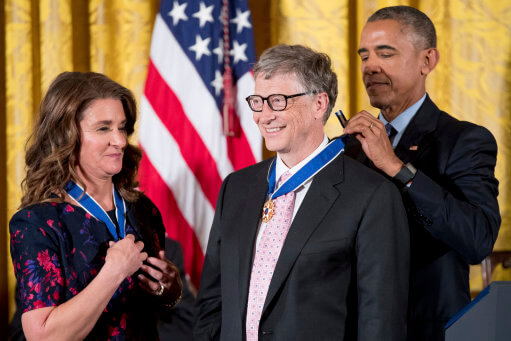
Philanthropist Bill Gates today strongly endorsed new gene editing techniques such as CRISPR, saying they could help humanity overcome some of its “biggest and most persistent challenges” in global health and agriculture over the next decade.

“Eliminating the most persistent diseases and causes of poverty will require scientific discovery and technological innovations,” he wrote. “CRISPR makes the discovery and development of innovations much faster and more precise.”

In a statement released [April 10], Gates advocated for the use of gene editing techniques to address pressing problems in agriculture, where the Bill & Melinda Gates Foundation (BMGF) has been backing research into the use of gene editing for a decade, as well as medicine.

“The technology is making it much easier for scientists to discover better diagnostics, treatments, and other tools to fight diseases that still kill and disable millions of people every year, primarily the poor,” he wrote. “It is also accelerating research that could help end extreme poverty by enabling millions of farmers in the developing world to grow crops and raise livestock that are more productive, nutritious, and hardy.”

Editor’s note: Read Bill Gates’ full statement

Read full, original post: Bill Gates: Gene editing can help humanity

Video: How genetics is revolutionizing medicine and disease research

geneticengineering

This three-part series of documentary shorts, produced by Retro Report in partnership with STAT, looks back at the roots of three of today’s most promising genetic technologies: genetic testing to predict which diseases someone might develop, precision medicine to match people’s genes to the treatments most likely to work for them, and genome-editing via CRISPR to repair disease-causing genes. Watch and listen to experts explain how the 1980s and 1990s version of each was going to change medicine and save lives. It puts today’s promises in a whole new light.

The race to sequence the human genome was also billed as a race to end disease. So what happened?


…

Does the ability to more easily change the blueprint of life mean we’re on the path to repairing the broken bits in our genetic inheritance? Or have we tried this before and failed?

…

It’s now easier than ever to peer into your own genetic code. But are all of the new companies out there offering you information about yourself that you can believe?

…

[Genetic testing has] moved out of the labs into the masses. New companies and new quackery are popping up everywhere, equating your personal genome to all manner of things beyond disease, from your wine tastes to even your dating preferences. The question that must be answered now is: Even with your genome in hand, what can you believe?

Read full, original post: The Code

South Korean protesters demand labeling of GMO foods

ede dd c a a a ba a f

Hundreds of farmers, consumers and environmental activists gathered in front of the Government Complex in Seoul [April 10] to demand that food labeling list genetically modified organisms (GMO).

About 500 protesters from across the nation criticized the central government for not changing the regulations.

They were concerned that GMOs could be harmful to health and demanded the right to know whether their purchases contained any GMO.

Cooperative group Farmer’s COOP said the government imports an average of 2.28 million tons of GMO as ingredients for food products a year and each person consumes 40 kilograms. But a survey by Farmer’s COOP, the Citizens’ Coalition for Economic Justice and consumer group Consumers Korea revealed that none of 438 market products containing GMOs that it searched listed the ingredients on labels.

…

South Korean President Moon Jae-in promised during his presidential campaign in 2017 to list GMO ingredients in domestic food products. The food ministry showed the same intention. But authorities have so far failed to act.

…

Protesters demanded “GMO’s exodus out of the country to prevent humanity’s extinction” and asked the food ministry to “stop giving in to heavyweight conglomerates and start working on approving the transparent GMO ingredient indication.”

Read full, original post: Consumers, farmers demand food labels list GMO ingredients

Podcast: Geneticist George Church on the future of synthetic biology

dn

George Church’s Harvard lab is one of the most celebrated fonts of innovation in the world of life sciences. George’s earliest work on the Human Genome Project arguably pre-dated the actual start of that project.

…

Much of George’s most recent and celebrated work has been with a transformationally powerful gene-editing technique called CRISPR, which he co-invented. George and I discuss CRISPR and its jarring ramifications throughout this week’s edition of the After on Podcast.

…

We begin by discussing genetic sequencing. “Sequencing” is a fancy (and rather cool way) of saying, “reading.”

…

George and I next discuss gene editing. As the word suggests, editing the genome of a person, bacterium, or virus involves changing some of its letters.

…

The third thing we discuss is DNA synthesis. Specifically, the creation of relatively small, customized units called “oligos.” These are short sequences of DNA, which typically run from a couple dozen letters to a couple hundred letters long.

…

Our fourth topic is DNA assembly. This is the process of stringing those oligos together into long strands.

…

So that’s the table of contents of the first half of our interview: Sequencing, editing, synthesis, and assembly. With those foundations in place, George and I then talk about the astounding things that this integrated set of rapidly improving, and mutual reinforcing fields are enabling.

Read full, original post: The astounding present and dizzying future of synthetic biology

Viewpoint: Anti-biotech activists don’t understand the difference between GMOs and CRISPR crops

shutterstock e

CRISPR-Cas9 may genetically modify a crop, but it doesn’t necessarily result in a genetically modified organism, the dreaded GMO. To understand how that can be, we need to understand both genetic modification and federal regulations.

…

CRISPR-Cas9 doesn’t require foreign genes, nor does it necessarily need a bacterium to introduce the system into the target cells. It leaves no trace, and the genome that has been modified is almost identical, biosimilar is the word I would choose, to the original.

…

The USDA has determined that CRISPR-Cas9 techniques when they do not introduce foreign DNA or use a “plant pest” bacteria for insertion do not require their oversight.

…

The response to these regulatory decisions by the anti-GMO forces has been to cry foul. For them, any alteration of DNA is genetic manipulation – it is all about the process. But if that were the case, then crossbreeding and grafting techniques we have used for hundreds of years would also be of concern.

…

Global scientific thought believes that a crop’s safety is based on the end product not the mechanism of mutagenesis.

Read full, original post: CRISPR-Created Foods Are Different Than GMOs. It’s Wrong For Anti-GMO Activists To Pretend They’re Not.

Scientists are skeptical of regenerative agriculture’s ‘extraordinary claims’

wheat field crop agriculture trees x

What is regenerative agriculture? Why is it different from sustainable agriculture? And how do I reconcile what practitioners of this system are claiming with the scientific evidence? These were all going through my mind when, a couple weeks ago at [a meeting where] we watched a YouTube video of Gabe Brown’s TED talk…. Brown farms near Bismarck, ND, and has become the American face of regenerative agriculture in the past decade. Here is what I learned.

…

Brown states … “We’ve done this without the use of any synthetic fertilizers, pesticides, or fungicides.”

We are to believe that biodiversity-powered microbes free up large amounts of phosphorus, fix large amounts of nitrogen from the air, while plants produce 31 tons of biomass in a short North Dakota season, while also producing harvested crops and livestock?

I cannot say that this scenario is impossible, but I find it highly improbable, because if this is true, then it means that science has missed an astounding, extraordinary process.

…

[E]xtraordinary claims require extraordinary evidence. What counts as evidence are peer-reviewed publications in scientific journals – I have looked for the evidence to support the claims of regenerative agriculture. What I have found are lots of YouTube videos, testimonials, articles and interviews. None of these sources is extraordinary evidence.

Editor’s note: Andrew McGuire is an agronomist at Washington State University

Read full, original post: Regenerative Agriculture: Solid Principles, Extraordinary Claims

Estonia launches genetic-testing program for 8% of its population

h fbt

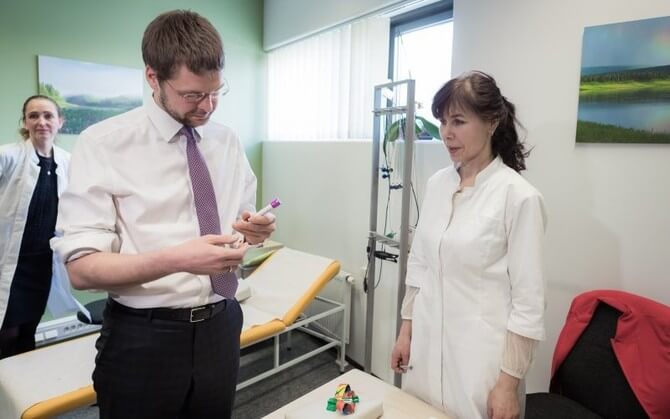
The Estonian government is to collect the DNA of 100,000 citizens to provide them with personalised health and lifestyle advice. Nearly eight per cent of the country’s 1.3 million population will supply blood samples for the unprecedented programme, which aims to minimise health problems by warning participants most at risk of conditions such as cardiovascular disease and diabetes.

However, critics say the state-funded €5m (£4.36m) scheme could cause unnecessary worry for people who discover they are more likely to suffer certain diseases.

Estonia’s government is the first to run a personal genetic information service, although similar schemes are run by private companies such as California’s 23andMe.

The programme will analyse participants’ DNA for 600,000 variants linked to common diseases.

It is hoped that participants who are given early warnings will adopt healthier lifestyles or take preventative drugs.

The service will also be able to flag people who are likely to suffer adverse reactions to common medicines, such as codeine and anti-depressants.

…

The Estonian scheme will likely allow people to specify which information they would like to receive, according to New Scientist.  For instance, participants could chose to learn if they were predisposed to common diseases but not if they have increased risk of cancers.

…

The programme began collecting samples this week and more than 10,000 people have signed up since it launched on 20 March.

Read full, original post: Estonia to DNA test 100,000 residents and give lifestyle advice based on results

How non-coding ‘junk’ DNA can influence cancer growth

image

Most of the human genome — 98 percent — is made up of DNA but doesn’t actually encode genes, the recipes cells use to build proteins. The vast majority of genetic mutations associated with cancer occur in these non-coding regions of the genome, yet it’s unclear how they might influence tumor development or growth.

…

“Most cancer-related mutations occur in regions of the genome outside of genes, but there are so incredibly many of them that it’s hard to know which are actually relevant and which are merely noise,” said senior author Trey Ideker, PhD, professor at UC San Diego School of Medicine and Moores Cancer Center. “Here for the first time we found about 200 mutations in non-coding DNA that are functional in cancer — and that’s about 199 more than we knew before.”

…

The study was published April 2 in Nature Genetics.

…

Next, the researchers will try to combine these non-coding mutations with coding mutations and determine if there are subtypes — certain types of breast cancer that have a common pattern of both coding and non-coding mutations, for example.

Read full, original post: Even DNA that Doesn’t Encode Genes Can Drive Cancer

Why FDA’s proposed gene-editing regulations could stifle CRISPR research on food animals

pig cow

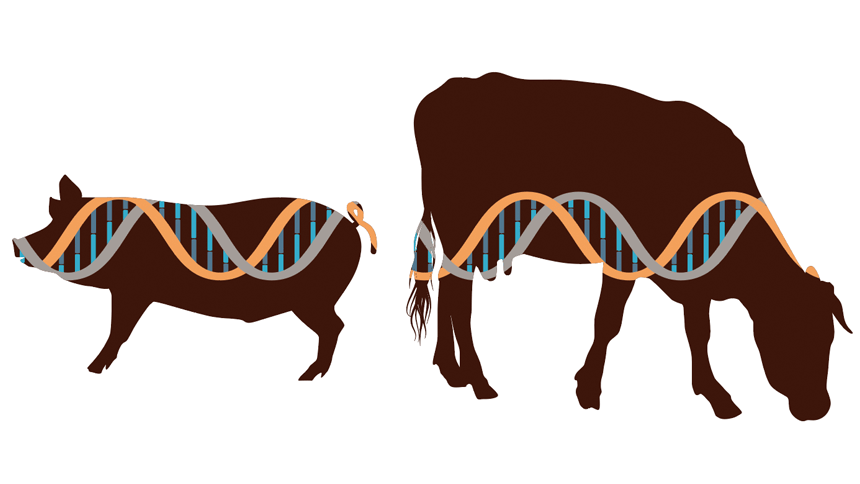
A 2017 draft Food and Drug Administration guidance proposes mandatory, multigenerational premarket new animal drug evaluation of all “intentional genomic alterations” induced by site-directed nucleases such as CRISPR in food animal genomes, irrespective of the novelty of the alteration or the existence of any hazards in the resulting product. Such a regulatory approach will effectively introduce additional layers of regulatory scrutiny on products produced using gene editing that are no different from those that could have been obtained using conventional breeding. Although this guidance may not directly impact the basic research community, due to Food and Drug Administration regulatory discretion around genetic modifications in model species, the potential opportunity cost of placing high regulatory costs on gene-edited food animals based solely on the use of modern molecular methods to introduce genomic alterations has potential global implications in terms of sustainability of food animal production.

…

Applying a new animal drug regulatory framework to intentional genomic alterations made by gene editing tools such as CRISPR, in cases where they are used to make edits that are identical to existing genetic variants or those that might arise spontaneously, is neither proportional to product risk nor agnostic to the modification technique. Unfortunately, lengthy process-based regulation triggered by human “intention” may effectively preclude animal breeders from employing gene editing to introduce beneficial genetic alterations such as disease resistance alleles into our food animal populations.

Read full, original post: The Importance of a Novel Product Risk-Based Trigger for Gene-Editing Regulation in Food Animal Species

Male birth control? Here are 3 methods headed our way

GettyImages

While a pill for men certainly isn’t coming to the pharmacy anytime soon, unfortunately, there is reason for (muted) hope. Several promising products are quietly making their way through clinical trials.

…

More than a decade in the making, the male birth control that’s furthest along in clinical trials is a gel called Nestorone-Testosterone. The gel contains testosterone and a progestin, which is a synthetic form of the female sex hormone progesterone.

…

In a new, yet-to-be published study recently presented at the annual Endocrine Society meeting, researchers revealed data from a 100-person randomized controlled trial showing that a male birth control pill — dimethandrolone undecanoate, or DMAU — appeared to be safe when used every day for a month.

The effects of the drug also stuck around in the blood for at least 18 hours, suggesting DMAU would only need to be taken once per day.

…

[Reversible inhibiation of sperm under guidance, RISUG] involves injecting a polymer gel into the vas deferens to block sperm, rather than cutting or tying the vas (a vasectomy). And the treatment can be reversed with a shot that breaks down the gel.

…

Researchers who have modeled the impact of a new male contraceptive estimate that even if only 10 percent of interested men took up the novel method, we’d see unintended pregnancies fall by up to 5 percent in the United States.

Read full, original post: The 3 most promising new methods of male birth control, explained

Wheat gene discovery could give breeders new tool to boost crop yields

Paired spikelets in wheat Credit CSIRO WS

A new study has isolated a gene controlling shape and size of spikelets in wheat in a breakthrough which could help breeders deliver yield increases in one of the world’s most important crops. 

The team from the John Innes Centre say the underlying genetic mechanism they have found is also relevant to inflorescence (floral) architecture in a number of other major cereals including corn, barley and rice. 

The genetic identification of an agronomically-relevant trait represents a significant milestone in research on wheat; a crop with a notoriously complex genome.  

The findings, published today in the journal The Plant Cell, give breeders a new tool to accelerate the global quest to improve wheat. The study also highlights a range of next generation techniques available for fundamental research into wheat, the world’s most abundantly produced crop. 

…

The study revealed that a gene called TEOSINTE BRANCHED1 (TB1) regulates wheat inflorescence architecture, promoting paired spikelets via a mechanism which delays flowering and reduces the expression of genes that control the development of lateral branches called spikelets. 

Editor’s note: Read the full study

Read full, original post: Wheat research discovery yields genetic secrets that could shape future crops

How ‘number crunching’ and big data has transformed the study of fossils, evolution

fossil
In 1981, when I was nine years old, my father took me to see Raiders of the Lost Ark. Although I had to squint my eyes during some of the scary scenes, I loved it – in particular because I was fairly sure that Harrison Ford’s character was based on my dad. My father was a palaeontologist at the University of Chicago, and I’d gone on several field trips with him to the Rocky Mountains, where he seemed to transform into a rock-hammer-wielding superhero.

fossil 2 13 2
The author’s father, Jack Sepkoski in the field. All images courtesy the author.

That illusion was shattered some years later when I figured out what he actually did: far from spending his time climbing dangerous cliffs and digging up dinosaurs, Jack Sepkoski spent most of his career in front of a computer, building what would become the first comprehensive database on the fossil record of life. The analysis that he and his colleagues performed revealed new understandings of phenomena such as diversification and extinction, and changed the way that palaeontologists work. But he was about as different from Indiana Jones as you can get. The intertwining tales of my father and his discipline contains lessons for the current era of algorithmic analysis and artificial intelligence (AI), and points to the value-laden way in which we ‘see’ data.

My dad was part of a group of innovators in palaeontology who identified as ‘palaeobiologists’ – meaning that they approached their science not as a branch of geology, but rather as the study of the biology and evolution of past life. Since Charles Darwin’s time, palaeontology – especially the study of the marine invertebrates that make up most of the record – involved descriptive tasks such as classifying or correlating fossils with layers of the Earth (known as stratigraphy). Some invertebrate palaeontologists studied evolution, too, but often these studies were regarded by evolutionary biologists and geneticists as little more than ‘stamp collecting’.

The use of computers to analyse large data sets changed this image – particularly because it allowed palaeontologists such as my dad, and his colleague David Raup at the University of Chicago, to expose patterns in the history of life that emerged only on very long timescales. One of their signature contributions was the discovery that life has experienced major, catastrophic mass extinctions at least five times in the Earth’s history (this is why many people now refer to the current biodiversity as the ‘sixth extinction’).

By the mid-1980s, what began as a small, iconoclastic movement had achieved fairly stunning success. A vindicating moment came, in 1984, when the English geneticist John Maynard Smith – notoriously skeptical of palaeontology’s value to evolutionary analysis – published an essay in Nature in 1984 inviting palaeontologists to the ‘high table’ of evolutionary biology (a reference to the Oxbridge practice of seating fellows and professors on a raised platform in the dining hall).

fossil 2 13 3

A graph of mass extinction.

The analytical, data-driven palaeobiology pioneered by my father has now become a cottage industry. Much like algorithms are used in genomics to automate data analysis, a group of researchers at the University of Wisconsin-Madison, for example, recently announced a project called ‘PaleoDeepDive’ – a ‘statistical machine-reading and learning system, to automatically find and extract fossil-occurrence data from the scientific literature’. Palaeobiology’s success has paralleled the advent of computing and the internet, and would seem like an obvious example of the determining impact of technology on science.

The real story is somewhat more complicated, however. My father and his colleagues did not, in fact, ‘invent’ the practice of analysing the history of life using data. That approach was introduced long before the advent of computers, as far back as the 1830s and ’40s, when the discipline of palaeontology was still brand-new.

One of the first scientists to explore life’s history with data was the 19th-century German palaeontologist Heinrich Georg Bronn. During his lifetime, Bronn was one of the leading naturalists in Europe; his posthumous fame is connected to his status as one of the first translators of Darwin’s On the Origin of Species (1859). But an intriguing feature of Bronn’s work is that he treated the history of life as a history of data. Much as palaeontologists do today, he painstakingly amassed something akin to a huge, paper ‘database’ of fossil groups, which allowed him to perform quantitative analysis of populations over time. What he found was that the history of life, seen through data, reveals a grand pattern of dynamic succession: as some groups of organisms ascended and thrived, others passed away to extinction, apparently in a coordinated fashion.

Bronn presented his theoretical case by marshalling his evidence in many hundreds of pages of data tables and statistical summaries. While several other naturalists of the early 19th century also pursued a numerical approach to taxonomy, Bronn took it further than anyone else, and championed it as a new methodology for palaeontology. Along with his statistical tables, Bronn also presented innovative visualisations of his data in the form of what are now called ‘spindle diagrams’. These depict changes in the diversity of a higher taxonomic unit (say, a family) as a line whose thickness varies depending on the number of species or genera it contains at a given time.

fossil 2 13 4
Bronn’s graph.

If this approach is so old, why were palaeontologists treated like ‘stamp collectors’ for so long, and why was modern palaeobiology considered ‘revolutionary’? Computers do have an important role in this story, but one that’s not necessarily as determinative as it seems at first glance. While Bronn and others advocated for an analytical approach throughout the 19th century, it failed to catch on. Some palaeontologists objected to making broad theoretical claims based on what was (admittedly, at the time) a very fragmentary record; others rejected the data-driven approach because its results often clashed with the Darwinian expectation of gradual, unbroken evolutionary development (pointing instead to an irregular tempo in the development of life).

But modern palaeobiology succeeded where Bronn and others failed, for two reasons. First, by the 1970s some biologists – and especially palaeontologists such as Stephen Jay Gould – had become much more receptive to challenging Darwin’s gradualist evolutionary assumptions. Gould (who was my father’s graduate mentor at Harvard University) promoted a theory of ‘punctuated equilibria’ – the insight that lineages persist for long stretches with very little change, ‘punctuated’ by periods of rapid evolution. Likewise, the mass extinctions documented by my father and others led to a revision of the Darwinist belief that the diversity of life has been basically stable throughout geological history.

Secondly, and more broadly, culture has changed significantly. Yes, computers have allowed faster and more powerful statistical analysis than what was possible with pen and paper. But even more fundamentally, they have changed how we ‘see’ data. In the earlier 19th century, graphs such as Bronn’s (or other kinds of visualisations, such as line graphs) were relatively novel, and their ubiquity not yet established. Yet in our own time, it’s taken for granted that the best way of understanding large, complex phenomena often involves ‘crunching’ the numbers via computers, and projecting the results as visual summaries.

That’s not a bad thing, but it poses some challenges. In many scientific fields, from genetics to economics to palaeobiology, a kind of implicit trust is placed in the images and the algorithms that produce them. Often viewers have almost no idea how they were constructed. The complexity of computers has made data-analysis a black-box, something it’s hard for humans to peer into. At the same time, computer jockeys such as my dad have achieved a new cultural status – if not quite Indiana Jones, they still have a kind of power and authority most of us can’t access.

Increasingly, with the advances in machine-learning and AI, even those authorities are sometimes mystified by how their algorithms work. Indeed, there are many palaeontologists who are concerned that more traditional methods – developing deep familiarity with past organisms or environments – have been eclipsed by the lure of easy results and quick publication offered by data-crunching. The stakes for this one scientific discipline might seem fairly low, but in an age of molecular genomics and Google analytics, for the rest of us they couldn’t be higher.Aeon counter – do not remove

David Sepkoski is a historian specialising in the modern natural sciences at the Max Planck Institute for the History of Science in Berlin. His latest book is Rereading the Fossil Record: The Growth of Paleobiology as an Evolutionary Discipline (2012).

This article was originally published at Aeon as What a fossil revolution reveals about the history of ‘big data’ and has been republished here with permission.

Viewpoint: Environmental Working Group’s Dirty Dozen list highlights ‘meaningless distinctions’ between organic and conventional foods

Screen Shot at PM
On April 10, the Environmental Working Group – an NGO funded by big organic marketers – released its annual “Dirty Dozen List” of produce items it categorizes as most important to buy as organic to avoid pesticide residues. EWG makes its list based on an egregious, science-free misinterpretation of what is really a remarkable, transparent source of public data generated by the USDA.What that data actually demonstrates is the outstanding safety profile of the US food supply, but EWG twists it into an argument for consumers to pony up the extra dollars to buy organic with the idea that by doing so they are protecting themselves and their family from exposure to pesticide residues in food.

px Environmental Working Group logoThe “inconvenient truth” here is that the very same USDA data EWG is using to classify commodities as “dirty” documents the fact that organic food samples also contain detectable synthetic pesticide residues. If those low level residues qualify as “dirty” when they are on “conventional” food, then organic is also “dirty.” Even if EWG wants to make a “dirty” index that isn’t supported by toxicology and health experts, it isn’t OK to ignore the fact that the same measure applies to the products that they are recommending as alternatives. A certain number of the samples in the USDA program happened to be labeled as organic, and EWG looked at the data at a level detail where they could have noticed that, so they have no excuse for this omission of information.

Many consumers believe that organic farming means “no pesticides.” That isn’t at all true because pests are definitely a challenge for organic farmers as they are for any kind of farmer. Organic growers are allowed to use a large list of pesticides which are considered “natural.” Interestingly the USDA pesticide residue testing program does not look for residues of most of the major organic pesticides (sulfur, lime sulfur, mineral oil, copper-based fungicides, Bt, live biologicals…). If it did there would be even more “pesticide detections” for the organic samples. Also, under the USDA organic rules, it is officially deemed “ok” of organic samples have synthetic residues that are less than 5% of the EPA tolerance level. Such residues are deemed “unintentional.”

So even though there isn’t data to look at all the potential pesticide residues on organic, lets look at how this “inconvenient truth” of synthetic pesticide detections plays out relative to the latest installment of EWG’s infamous list based on the most recent USDA, PDP data from 2016. (I won’t address the crops on their list that were not part of the 2016 USDA sampling data: #3 Nectarines, #6 Peaches, #10 Celery, #12 Bell Peppers).

Number 1: Strawberries

strawberrieskarieangelllucstmThere were 5.2 synthetic pesticide residues detected per organic strawberry sample. 75% of those were below the magic 5% of tolerance level that makes them officially OK for organic, but interestingly 76% of the residues on the conventional strawberries met the same criterion. Strawberries are best grown in areas with extended cool seasons as in coastal counties of California. There isn’t that much of that kind of land available and so the fact that organic strawberries only yield around 1/3 to 1/2 of the amount of fruit per acre – its actually not a good idea to do more organic production – certainly not based on pesticide residue concerns

Number 2. Spinach

There were 7.7 synthetic pesticide residues detected per organic spinach sample. 80% of those met the 5% of tolerance standard which is the same percentage for conventional. It is actually difficult to find any metric that differs between organic and conventional for this crop.

Number 4. Apples

There were 5 synthetic pesticide detections per organic sample for apples (vs. 4.25 for conventional). 78% of those met the 5% of tolerance standard to be ok for organic, but so did 76% of the detections for conventional. No buyer advantage for organic apples.

Number 5. Grapes

There were 2.35 detections/organic sample which is about half of the number for conventional (but remember, many of the most important organic grape pesticides are not tested for in the USDA program). 87% of the detections on organic were under the 5% standard, but so were 82% of the detections on conventional.

Number 7. Cherries

There was a very small sampling of cherries in the 2016 data (30 samples) and none were organic so this isn’t a crop for which we can say very much

Screen Shot at AM eNumber 8. Pears

There were 5.7 synthetic pesticide detections on organic pears vs 4.2 per conventional sample. For both categories 69% of those detections met the “OK for organic” 5% rule

Number 9. Tomatoes

There were more synthetic pesticide detections per sample for conventional vs organic tomatoes (3.9 vs 1.5), but 97% of the conventional detections met the 5% organic ok standard while only 79% of the organic detections met that standard

Number 11. Potatoes

2.3 synthetic pesticide detections per sample on organic (vs 2.9 on conventional). 66% met the 5% organic standard vs 74% for conventional.

So, the bottom line is that there is no meaningful distinction between organic and conventional foods that the USDA tested in 2016. Both are quite safe and consumers should not hesitate to buy and consume these foods that are well documented to promote health. The real take-away is that consumers should be very wary of organic-funded organizations like the Environmental Working Group that are trying to manipulate them with fear. EWG ends its dubious list with a link to “Donate Now” because “EWG helps protect your family from pesticides!” Does convincing you to spend more for organic which has the same, low, safe levels of pesticide qualify as “protection?” Such organizations deserve no respect or support.

Steve Savage is an agricultural scientist (plant pathology) who has worked for Colorado State University, DuPont (fungicide development), Mycogen (biocontrol development), and for the past 13 years as an independent consultant. His blog is Applied Mythology. You can follow him on Twitter @grapedoc

This article originally appeared at Forbes as “The Inconvenient Truth About The Environmental Working Group’s Dirty Dozen List” and has been republished here with permission.
CRISPR paired with DNA barcoding could track cancer growth

maxresdefault

Stanford scientists have found a way to modify pairs of cancer-related genes in the lungs of mice and then precisely track individual cells of the resulting tumor – a combined technique that could dramatically speed up cancer research and drug development.

…

[Evolutionary biologist Dmitri] Petrov’s idea was to attach short, unique sequences of DNA to individual tumor cells inside mice lungs. Each sequence functions as a heritable genetic barcode, and as each cancer seed cell divides, growing into a tumor, the number of barcodes also multiplies.

Now, instead of having to painstakingly cut out individual tumors, the scientists could take an entire cancerous lung, grind it up, and then use high-throughput DNA sequencing and computational analysis to very precisely determine how big a tumor is by counting how often its barcodes pop up. By tallying different barcodes, scientists can compare tumor sizes much more quantitatively than was previously possible.

…

The combination of CRISPR-Cas9 and DNA barcoding could allow scientists to replicate in the lab the kind of genetic diversity observed in cancer patients.

…

The team’s hybrid technique could also prove valuable for cancer drug testing. Pharmaceutical companies could test a drug on thousands of tumor variations simultaneously to see which ones respond to treatment and – equally important – which ones don’t.

Read full, original post: Stanford scientists combine CRISPR and DNA barcoding to track cancer growth

Large-scale switch to organic farming would imperil natural habitats, study finds

Habitat destruction Rain forest destruction in thailand form Aerial view

Organic agriculture is not as good for the environment as commonly believed, according to a new scientific study reviewing multiple lines of evidence over more than two decades.

The study, conducted by German researchers Eva-Marie Meemken and Matin Qaim from the University of Goettingen and published in the journal Annual Review of Resource Economics, challenges many beliefs that have helped the organic food industry grow into an $82 billion global market.

However, Meemken and Qaim also make clear that the scientific evidence shows that organic is better in some specific situations, and that the best strategy overall may be to combine conventional and organic approaches.

In general, the study concludes that while organic farming is more environmentally friendly per unit of land than conventional approaches, it is not better for the environment when assessed in terms of units of output.

This is because organic farming generally has lower yields — between 19-25 percent, on average — although the picture is complicated between different crops and locations.

The lower land-use efficiency of organic systems means that “large-scale conversion to organic would likely require bringing more natural habitats into agricultural production,” with a potentially severe impact on global biodiversity due to the loss of rainforests and other currently wild areas.

Read full, original post: New study challenges beliefs about organic ag

Plant scientists embrace USDA decision to not regulate gene-edited crops

prog sainsbury lab norwich in page

Researchers in the US have been given the go-ahead to use gene-editing techniques to alter crops and plants. The decision opens the door for scientists to create a new generation of genetically altered crops without serious restriction and paves the way for approvals for similar work in Britain and the rest of Europe.

The decision – by the US Department of Agriculture – has delighted scientists who had feared that limitations on the creation and growing of genetically modified crops would also be imposed on crops created using far simpler gene-editing techniques.

“I think this decision by American legislators will have all sorts of benefits in the long run,” said Professor Denis Murphy of the University of South Wales. “This is a win-win situation because agriculture for gene-editing is cheaper, faster, simpler and more precise than the genetic modification of plants, in which a gene is taken from one organism and moved to another.”

The European Court of Justice indicated in January that it does not think crops created though gene-editing techniques should be regulated by the rules that govern genetically modified organisms in Europe. “At the same time, Britain’s Acre – the advisory committee on releases into the environment – also seems to be sympathetic to this position,” said Professor Huw Dylan Jones of Aberystwyth University. “It is very encouraging.”

Read full, original post: US gene-editing ruling delights plant scientists

Why the cockroach is hard to kill—and what its genetics teaches us about adapting to environments

mleg nclrsgo rsbmjov

The second-largest genome ever sequenced belongs to a small but fascinating creature. Called “xiao qiang” or “little mighty” in China, the American cockroach has a genome larger than that of humans.

It’s genetic code holds the secrets to how these insects can survive on so many different types of food and in such unfriendly habitats, or even how it can survive for a week without a head and grow replacement limbs.

…

[Researchers] found that the groups of genes related to the immune system, sensory perception, detoxification, and growth and reproduction were all enlarged, helping to explain how cockroaches are able to live in so many different environments — and why it’s so hard to kill them.

…

Scientists are looking to species like the American cockroach to learn about how traits that make them incredible adapters and stubborn survivalists are encoded in their DNA.

…

The American cockroach will regenerate lost limbs. By amputating limbs during their research and monitoring their regrowth, scientists found that genes in the cockroach’s DNA prompt healing and regeneration.

Cockroaches have long been used in traditional Chinese medicine for treating cuts and burns, but researchers will study how the insects generate new tissue in hopes of unlocking future medical applications for humans.

Read full, original post: Why We Can Learn a Lot From the Cockroach Genome About How to Adapt to Any Environment