Artificial intelligence doesn’t ‘think’ like we do. How can we ever trust it?

bigstock
Image: Bigstock

Today, digital information technology has redefined how people interact with each other socially, and even how some find their partners. Redefined relationships between consumers, producers and suppliers, industrialists and laborers, service providers and clients, friends and partners are already creating an upheaval in society that is altering the postindustrial account of moral reasoning.

…

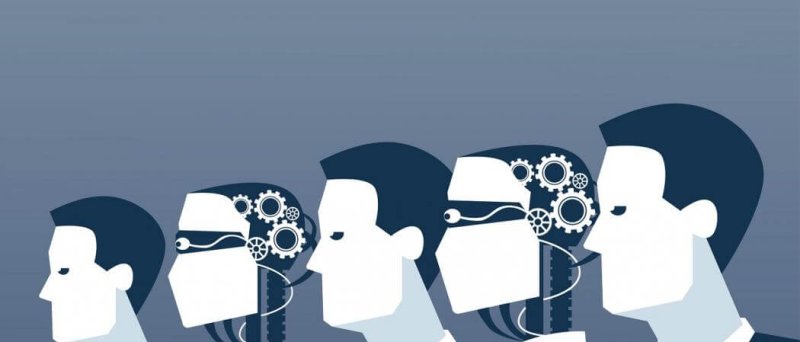
Humans cannot sift through their experiences at a long-range timescale, while machines can easily do so. Humans will rule out factors that are perceived to be irrelevant and inconsequential for a decision, while a machine will not rule anything out.

…

To understand, how artificial the artificial intelligence–based decisions may be, it is important to examine how humans make decisions. Human decisions may be guided by a set of explicit rules, or by associations simply based on consequentialism, or by a combination. Humans are also selective about which information is relevant for making a decision. Lacking selectivity, machines may consider factors that humans deem impertinent in making a decision.

…

Without internal logical consistency, AI systems lack robustness and accountability—two critical measures for engendering trust in a society. By creating a rift between moral sentiment and logical reasoning, the inscrutability of data-driven decisions forecloses the ability to engage critically with decision-making processes.

Read full, original post: Ethics in the Age of Artificial Intelligence

Related Articles

Infographic: Global regulatory and health research agencies on whether glyphosate causes cancer

Infographic: Global regulatory and health research agencies on whether glyphosate causes cancer

Does glyphosate—the world's most heavily-used herbicide—pose serious harm to humans? Is it carcinogenic? Those issues are of both legal and ...

Most Popular

Screenshot-2026-11-17-at-12.18.09-PM
Challenging glyphosate fear-mongering: Statewide Nebraska study finds no link between weedkiller use and non-Hodgkin lymphoma
Soybean Harvest in Cupped Hands
30 years of GMO farming: Defying cynics, we’ve had larger harvests, lower costs, and $385 billion in added global farmer income
Screenshot-2026-11-18-at-2.44.24-PM
Why should thousands of Americans die every year waiting for a kidney transplant? There’s an easy fix to this morbid reality
Health vs
Health vs. Hype’s rocky debut: American Medical Association’s misinformation-debunking podcast platforms ‘leaky gut’ wellness crank 
Low-Poly Climate Connections Infographic
Viewpoint: EU-backed climate “disinformation” crackdown—who polices what’s false?
measles
The grim human cost of the Trump—RFK Jr. measles-prevention failure: 16 times more cases than in 2024
ChatGPT-Image-Mar-10-2026-01_39_01-PM
Viewpoint—“Miracle molecule” debunked: Why acemannan supplements don’t work
Gloved Hand Holding M-M-R Vaccine Vial
Viewpoint: The dangerous lie RFK Jr.-founded Children’s Health Defense is circulating to discredit one of medicine’s great breakthroughs: the MMR (measles-mumps-rubella) vaccine
BEMT Lotion for Freckled Skin
Burned by FDA bureaucracy: Why Americans waited decades for cancer-preventing sunscreen
Screenshot-2026-11-17-at-12.56.22-PM
RFK Jr.’s CDC blocked measles risk alert for pregnant women; 112 contracted the disease, and one-quarter were hospitalized
Screenshot-2026-11-17-at-11.04.14-AM
There are more than 6,000 genetic disorders. For the first time, gene editing is making some treatable. Are we ready?
glp menu logo outlined

Get news on human & agricultural genetics and biotechnology delivered to your inbox.