Herbicide-tolerant GMO soy ‘as safe as conventional counterpart’, confirms EU safety panel

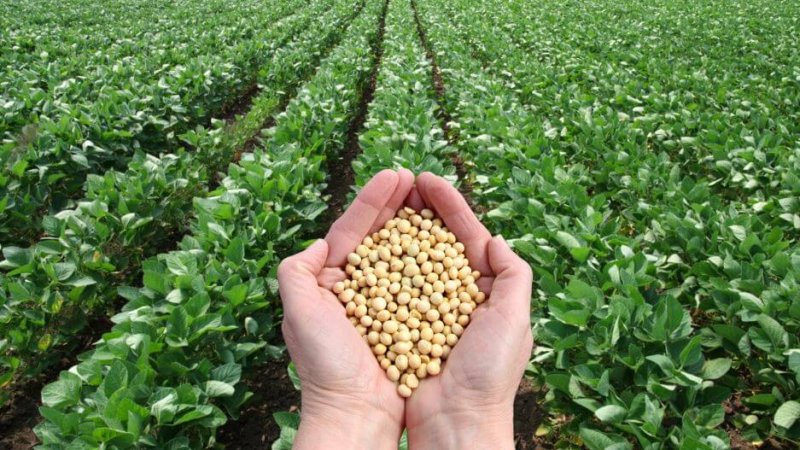
bigstock agricultural concept

In the present scientific opinion, the scientific Panel on Genetically Modified Organisms of the European Food Safety Authority (hereafter referred to as the ‘GMO Panel’) reports the outcome of its risk assessment of soybean SYHT0H2 …. The GMO Panel conducted the assessment of soybean SYHT0H2 in line with the principles described in Regulation (EC) No 1829/2003 and its applicable guidelines for the risk assessment of genetically modified (GM) plants.

The GMO Panel did not identify toxicological and allergenicity concerns regarding the AvHPPD‐03 and PAT proteins expressed in soybean SYHT0H2 and finds no evidence that the genetic modification might significantly change the overall allergenicity of soybean SYHT0H2.

The GMO Panel concludes that it is unlikely that soybean SYHT0H2 would differ from conventional soybean varieties in its ability to persist under European environmental conditions …. [T]he GMO Panel concludes that soybean SYHT0H2 would not raise safety concerns in the event of accidental release of viable GM soybean seeds into the environment.

The GMO Panel concludes that soybean SYHT0H2 is as safe as and nutritionally equivalent to the conventional counterpart and the tested non‐GM soybean reference varieties, and no post‐market monitoring of food/feed is considered necessary. In the case of accidental release of viable soybean SYHT0H2 grains into the environment, soybean SYHT0H2 would not raise environmental safety concerns.

The post‐market environmental monitoring plan and reporting intervals are in line with the intended uses of soybean SYHT0H2. In conclusion, the GMO Panel considers that soybean SYHT0H2, as described in this application, is as safe as its conventional counterpart and the tested non‐GM soybean reference varieties with respect to potential effects on human and animal health and the environment.


Read the original article

{{ reviewsTotal }}{{ options.labels.singularReviewCountLabel }}
{{ reviewsTotal }}{{ options.labels.pluralReviewCountLabel }}
{{ options.labels.newReviewButton }}
{{ userData.canReview.message }}

Related Articles

Infographic: Global regulatory and health research agencies on whether glyphosate causes cancer

Infographic: Global regulatory and health research agencies on whether glyphosate causes cancer

Does glyphosate—the world's most heavily-used herbicide—pose serious harm to humans? Is it carcinogenic? Those issues are of both legal and ...

Most Popular

Screenshot-2026-05-01-at-1.29.41-PM
Viewpoint: What happens when whole grains meet modern food manufacturing? Labels don’t tell the whole story.
S
As vaccine rejectionism spreads, measles may be taking a more dangerous turn
Screenshot 2026-05-06 at 2.56
Singularity crisis ahead? Can super babies save us from rogue AI geniuses?
Screenshot-2026-05-06-at-2.07.43-PM
Manufacturing a conspiracy: The timeline of how  the White House embraced the fringe claim that scientists are being mysteriously murdered
Screenshot-2026-04-20-at-2.26.27-PM
Viewpoint — Food-fear world: The latest activist scientists campaign: Cancer-causing additives
Screenshot-2026-03-13-at-12.14.04-PM
The FDA wants to make many popular prescription drugs OTC—a great idea. Here’s why it’s unlikely to happen
Screenshot-2026-04-30-at-2.19.37-PM
5 myths about summer dehydration that could damage your health — or even kill you
ChatGPT-Image-May-6-2026-03_41_05-PM
‘Protecting the integrity of science’: Kennedy’s FDA blocks release of taxpayer-funded studies finding COVID and shingles vaccines safe
Screenshot 2026-05-06 at 12.49
Immortal dragons: The quest to ‘make death optional’
Screenshot-2026-05-01-at-11.56.24-AM
‘Science moves forward when people are willing to think differently’: Memories of DNA maverick Craig Venter
glp menu logo outlined

Get news on human & agricultural genetics and biotechnology delivered to your inbox.