Video: Race protests did not lead to a surge in COVID-19 cases

jt w n jpjqzjenkv ltjajy y
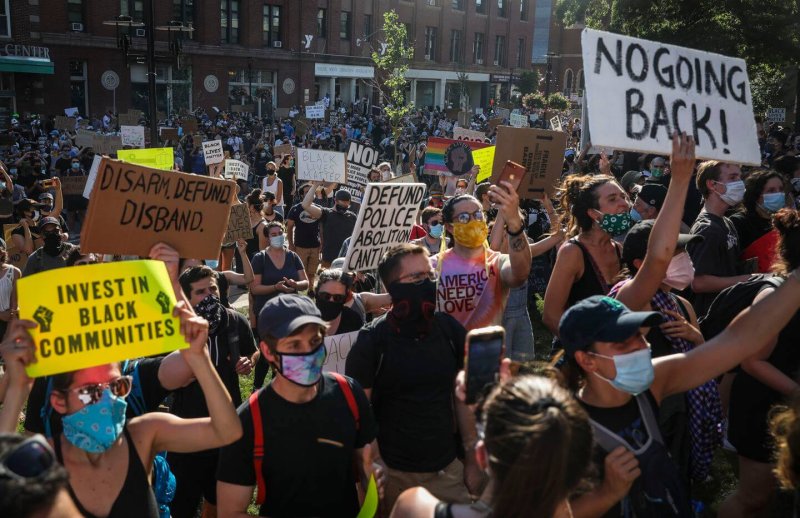
Credit: Erin Clark/Boston Globe

Looking at raw data and simply saying that Coronavirus cases in the USA are “rising” just because the “number of cases” on a specific day was higher than the day before, may be very confusing for the public.

The number of cases may vary widely based on the number of tests being done every day, and a higher number of cases may be the result of more coronavirus tests.

Many media platforms keep warning or even confirming that the cases of COVID-19 have been rising in the USA over the past weeks following the start of the “Black Lives Matter” protests, that the protests maybe spreading the virus and may even cause a second wave.

This video takes a more reasonable and scientific approach to analyze the data of the number of cases during the weeks before and after the “Black Lives Matter” protests, to try and find out if there has been any statistically “significant difference” between the number of cases before and after the protests.

The video also tells us if the risk of contacting Coronavirus was higher or lower in the 2 weeks following the start of the protests. Let us know your comments and feedback.

Dr. Wessam Atif is a medical doctor and a public health researcher. Dr. Atif focuses on qualitative research in sanitation, hygiene education and public policy to support governments and policymakers of developing countries to achieve better public health goals. He is studying for his MPH at the University of Manchester. Recently, Dr. Atif has worked with the World Health Organization as a technical consultant to develop risk-based hygiene and  sanitation inspection systems in the Western Pacific Region. Find him on Linkedin

Watch the video here

{{ reviewsTotal }}{{ options.labels.singularReviewCountLabel }}
{{ reviewsTotal }}{{ options.labels.pluralReviewCountLabel }}
{{ options.labels.newReviewButton }}
{{ userData.canReview.message }}

Related Articles

Infographic: Global regulatory and health research agencies on whether glyphosate causes cancer

Infographic: Global regulatory and health research agencies on whether glyphosate causes cancer

Does glyphosate—the world's most heavily-used herbicide—pose serious harm to humans? Is it carcinogenic? Those issues are of both legal and ...

Most Popular

Screenshot-2026-05-01-at-1.29.41-PM
Viewpoint: What happens when whole grains meet modern food manufacturing? Labels don’t tell the whole story.
S
As vaccine rejectionism spreads, measles may be taking a more dangerous turn
ChatGPT-Image-Mar-27-2026-11_47_30-AM-2
FDA’s expedited drug reviews are hailed in some quarters but other approval practices are problematic
Screenshot-2026-04-20-at-2.26.27-PM
Viewpoint — Food-fear world: The latest activist scientists campaign: Cancer-causing additives
Screenshot 2026-05-06 at 2.56
Singularity crisis ahead? Can super babies save us from rogue AI geniuses?
Farmers can talk to plants
Farmers are a major source of misinformation—about farming
Screenshot-2026-05-06-at-2.07.43-PM
Manufacturing a conspiracy: The timeline of how  the White House embraced the fringe claim that scientists are being mysteriously murdered
Screenshot-2026-04-30-at-2.19.37-PM
5 myths about summer dehydration that could damage your health — or even kill you
Screenshot 2026-05-06 at 2.19
Vaccine shootout at the CDC 
Screenshot-2026-03-13-at-12.14.04-PM
The FDA wants to make many popular prescription drugs OTC—a great idea. Here’s why it’s unlikely to happen
glp menu logo outlined

Get news on human & agricultural genetics and biotechnology delivered to your inbox.