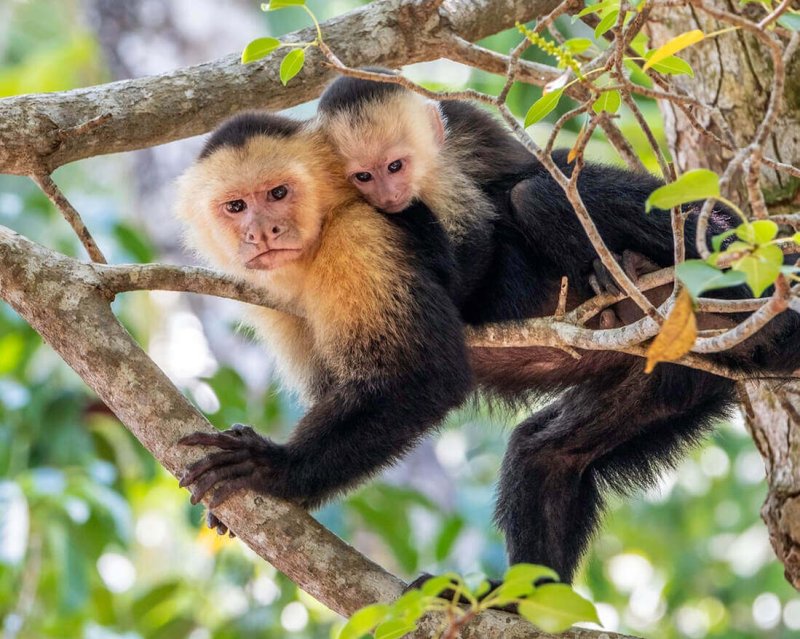
Using a noninvasive imaging technique, researchers found that male capuchin monkeys showed expansion in the gray matter of a brain area called the hypothalamus, which is responsible for maintaining critical body functions such as hormone secretion and temperature regulation. Female capuchin monkeys showed expansion in the gray matter of different brain areas than males. Analyses of the connectivity of the white matter in the brain revealed that expansion for females was primarily found in areas that are associated with higher-order functions such as attention, perception, and social behavior.
Male and female capuchins inhabit different social niches: females rely on high quality resources and strong relationships with maternal kin to acquire reproductive success, which means that they compete with other females for these resources and for male attention. On the other hand, males rely on social status and must compete against other males from outside groups for reproductive success. One possible explanation for the sex differences that emerge in capuchin brains is that selection pressures act differently on the brains of males and females as a result of their separate social niches.
“Knowing these differences will be informative for future behavioral and cognitive studies with these monkeys, particularly in social contexts,” said [researcher] Olivia Reilly.

Studying sex differences in capuchin brains can help scientists to learn more about the evolution of sex differences and when such differences may have evolved.