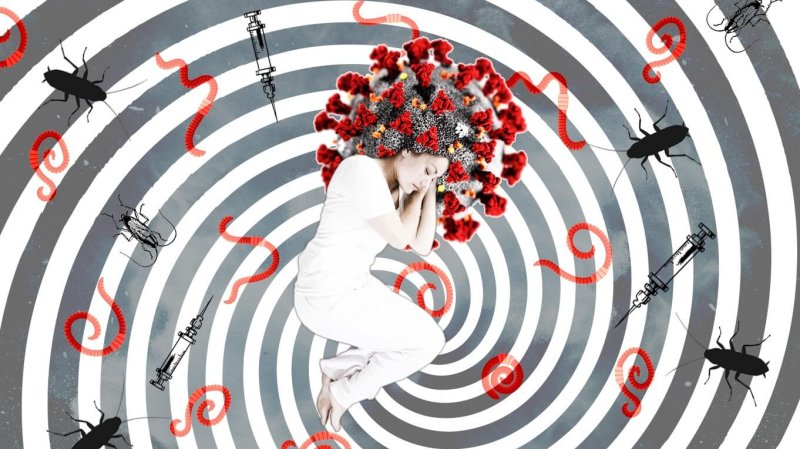
Our dreams reveal the escalating, suppressed anxiety spawned by COVID

download
Credit: Kay Scanlon/Los Angeles Times/Getty Images

We live day and night inside the same walls. We fear touching groceries that arrive at our doorstep. If we venture into town we wear masks, and we get anxious if we pass someone who is not. We have trouble discerning faces. It’s like living in a dream.

COVID-19 has altered our dream worlds, too: how much we dream, how many of our dreams we remember and the nature of our dreams themselves. Early this year, when stay-at-home directives were put in place widely, society quite unexpectedly experienced what I am calling a dream surge: a global increase in the reporting of vivid, bizarre dreams.

Dream reports from Brazilian adults in social isolation had high proportions of words related to anger, sadness, contamination and cleanliness. Text mining of accounts of 810 Finnish dreams showed that most word clusters were laden with anxiousness; 55 percent were about the pandemic directly (lack of regard for social distancing, elderly people in trouble).

Follow the latest news and policy debates on sustainable agriculture, biomedicine, and other ‘disruptive’ innovations. Subscribe to our newsletter.

It seems clear that some basic biological and social dynamics may have played a role in this unprecedented opening of the oneiric floodgates. At least three factors may have triggered or sustained the dream surge: disrupted sleep schedules augmenting the amount of REM sleep and therefore dreaming; threats of contagion and social distancing taxing dreaming’s capacity to regulate emotions; and social and mainstream media amplifying the public’s reaction to the surge.


Read the original post

{{ reviewsTotal }}{{ options.labels.singularReviewCountLabel }}
{{ reviewsTotal }}{{ options.labels.pluralReviewCountLabel }}
{{ options.labels.newReviewButton }}
{{ userData.canReview.message }}

Related Articles

Infographic: Global regulatory and health research agencies on whether glyphosate causes cancer

Infographic: Global regulatory and health research agencies on whether glyphosate causes cancer

Does glyphosate—the world's most heavily-used herbicide—pose serious harm to humans? Is it carcinogenic? Those issues are of both legal and ...

Most Popular

Screenshot-2026-05-01-at-1.29.41-PM
Viewpoint: What happens when whole grains meet modern food manufacturing? Labels don’t tell the whole story.
S
As vaccine rejectionism spreads, measles may be taking a more dangerous turn
ChatGPT-Image-Mar-27-2026-11_47_30-AM-2
FDA’s expedited drug reviews are hailed in some quarters but other approval practices are problematic
Screenshot-2026-04-20-at-2.26.27-PM
Viewpoint — Food-fear world: The latest activist scientists campaign: Cancer-causing additives
Screenshot 2026-05-06 at 2.56
Singularity crisis ahead? Can super babies save us from rogue AI geniuses?
Farmers can talk to plants
Farmers are a major source of misinformation—about farming
Screenshot-2026-04-30-at-2.19.37-PM
5 myths about summer dehydration that could damage your health — or even kill you
Screenshot-2026-05-06-at-2.07.43-PM
Manufacturing a conspiracy: The timeline of how  the White House embraced the fringe claim that scientists are being mysteriously murdered
Screenshot-2026-03-13-at-12.14.04-PM
The FDA wants to make many popular prescription drugs OTC—a great idea. Here’s why it’s unlikely to happen
Screenshot 2026-05-06 at 2.19
Vaccine shootout at the CDC 
glp menu logo outlined

Get news on human & agricultural genetics and biotechnology delivered to your inbox.