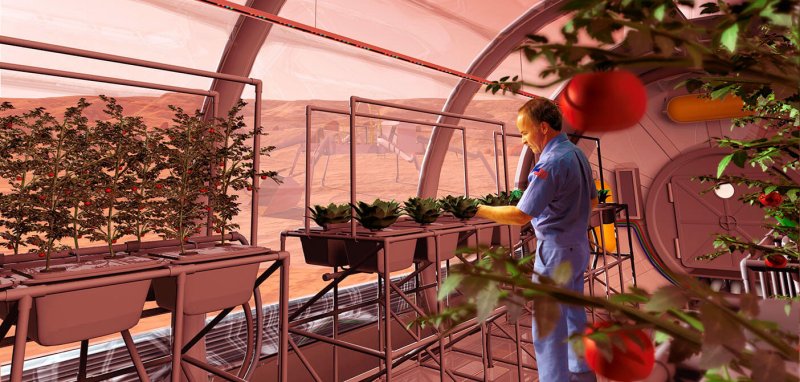
Growing crops on Mars? Geologists explore ways to feed a Martian colony without hauling soil into space

Credit: Pat Rawlings/NASA

Practically speaking, astronauts cannot haul an endless supply of topsoil through space. So University of Georgia geologists are figuring out how best to use the materials already on the planet’s surface.

To do that, they developed artificial soil mixtures that mimic materials found on Mars. In a new study published in the journal Icarus, the researchers evaluated the artificial soils to determine just how fertile Martian soil could be.

In the last decade, Martian surface exploration has expanded the understanding of the chemistry of the planet’s surface. Using data taken from NASA’s surface samples, the team studied regolith, or the loose material near the surface, to develop the simulants.

The materials used mimic mixtures of soil, clay minerals, salts and other materials obtainable from Mars’ surface by scooping loose material or mining it from bedrock.

Despite its thin atmosphere, extreme cold and low oxygen, Mars’ surface is known to contain the majority of plant essential nutrients, including nitrogen, phosphorus and potassium.

Follow the latest news and policy debates on sustainable agriculture, biomedicine, and other ‘disruptive’ innovations. Subscribe to our newsletter.

Whatever the eventual solution, the prospect of a manned mission to Mars hinges on the ability to grow food.

“There are multiple ways you can look at it, but one option might be to use what’s already there as a potting medium, and figure out if that’s a viable way to do it or if you have to bring all the plant materials with you,” [researcher Laura] Fackrell said.


Read the original post

{{ reviewsTotal }}{{ options.labels.singularReviewCountLabel }}
{{ reviewsTotal }}{{ options.labels.pluralReviewCountLabel }}
{{ options.labels.newReviewButton }}
{{ userData.canReview.message }}

Related Articles

Infographic: Global regulatory and health research agencies on whether glyphosate causes cancer

Infographic: Global regulatory and health research agencies on whether glyphosate causes cancer

Does glyphosate—the world's most heavily-used herbicide—pose serious harm to humans? Is it carcinogenic? Those issues are of both legal and ...

Most Popular

ChatGPT-Image-Mar-10-2026-01_39_01-PM
Viewpoint—“Miracle molecule” debunked: Why acemannan supplements don’t work
ChatGPT-Image-Jun-25-2026-12_23_17-PM
No, Bill Gates did not secretly engineer ticks to promote veganism
Screenshot 2026-07-08 at 10.13
What happens when a pro-life congresswoman needs an abortion?
ChatGPT-Image-Jul-7-2026-12_01_35-PM
Viewpoint: 21 worthless wellness trends inspired by RFK, Jr.’s ill-informed MAHA followers that can harm or even kill you.
ChatGPT-Image-Jul-7-2026-03_07_17-PM
Kennedy blocks preventive health care panel that reviews treatments for HIV, diabetes, and cancer from meeting — for fourth time
Screenshot-2026-07-06-at-12.30.23-PM
2,300 endangered species: Controversial de-extinction company Colossal Biosciences joins U.S. effort to preserve their DNA

Sorry. No data so far.

glp menu logo outlined

Get news on human & agricultural genetics and biotechnology delivered to your inbox.