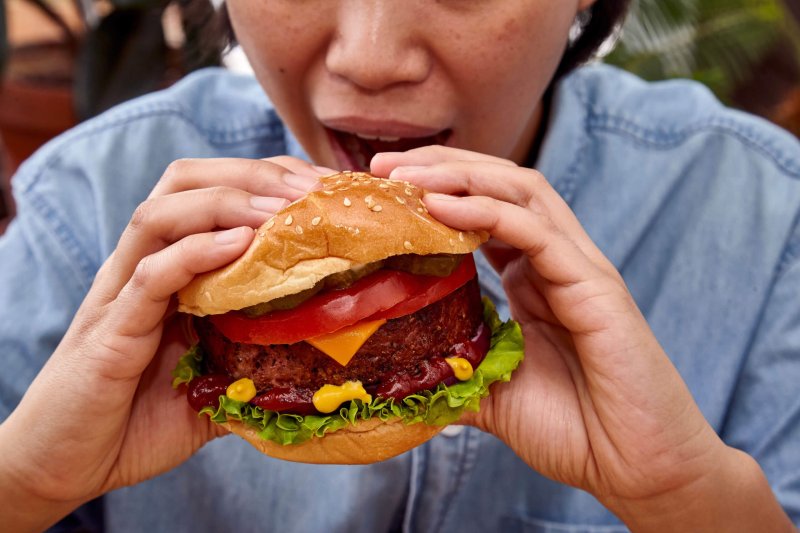
An increasing number of people are eating meat and dairy alternatives as concern grows over health, the environmental impact of livestock and animal welfare. [A Boston Consulting Group] report says the annual market for alternative meat, eggs, dairy and seafood products is on course to reach at least $290bn (£210bn) by 2035.
“The most striking thing is that in developed economies, we’re going to be at peak meat in 2025 in some scenarios,” said Decker Walker, the head of agribusiness at BCG. “There’s all this talk that alternative proteins are futuristic, and that many people don’t resonate with the concept of artificial meat. But what most people don’t realize is that we’re actually already at a point where [traditional] meat consumption is going to be declining for the first time in history. The global consequences of the shift to alternative proteins are significant.”

Bruce Friedrich, of the Good Food Institute, said governments that supported innovations in alternative proteins would reap the benefits. “Unless industrial meat consumption goes down, no government in the world will stand a chance of meeting their [climate] obligations. Now is the time for governments everywhere to use public dollars for the public good.”