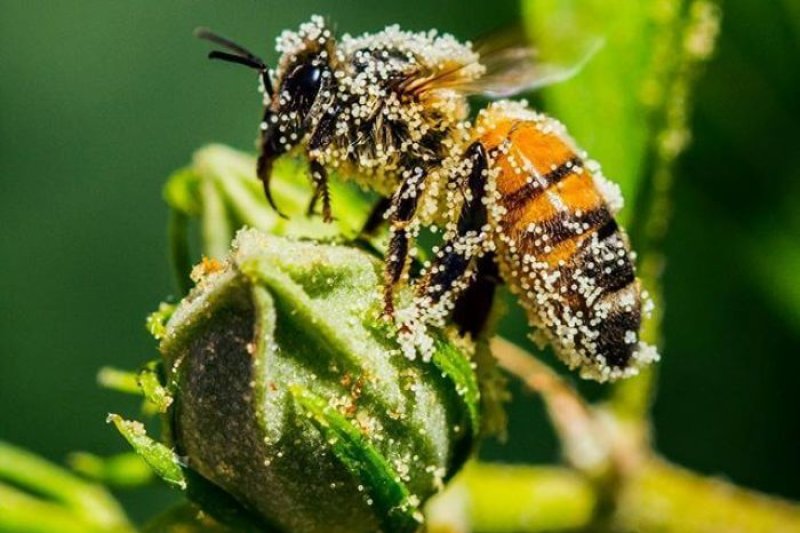
Synergistic effect of ‘agricultural chemical cocktails’ commonly used by farmers pose harm to pollinating insects

Credit: Andrew Lancaster/ABC

For bees, the threats are numerous, including habitat loss, climate change, and intensive agriculture. As fields of flowering plants are converted to roads and row crops, sources of food for wild pollinators dwindle. And when insects forage in farms, they suffer from poor nutrition due to a lack of diverse food sources and become exposed to agricultural chemicals. Honey bees—a managed, non-native species in the US—are transported into many farms to provide pollination, but still face threats from poor nutrition, pests, and pathogens. 

A new analysis in the journal Nature shows that some of these threats, when put together, kill more bees than the combination of each threat alone. It turns out, cocktails of agricultural chemicals may have a synergistic effect on bee mortality. In other words, more bees die than would have if the effects of the chemicals simply added to each other.

The authors of the paper analyzed 90 studies that in total documented 356 effects from interacting bee stressors.
Follow the latest news and policy debates on sustainable agriculture, biomedicine, and other ‘disruptive’ innovations. Subscribe to our newsletter.

“[The study] shows that you need to be thinking about exposure at a landscape level,” [ecologist Elizabeth Nicholls] says. “And it’s not okay just to test exposure from one crop and one chemical.”


Read the original post

{{ reviewsTotal }}{{ options.labels.singularReviewCountLabel }}
{{ reviewsTotal }}{{ options.labels.pluralReviewCountLabel }}
{{ options.labels.noReviewsLabel }}
{{ options.labels.newReviewButton }}
{{ userData.canReview.message }}

Related Articles

Infographic: Global regulatory and health research agencies on whether glyphosate causes cancer

Infographic: Global regulatory and health research agencies on whether glyphosate causes cancer

Does glyphosate—the world's most heavily-used herbicide—pose serious harm to humans? Is it carcinogenic? Those issues are of both legal and ...

Most Popular

Screenshot-2026-07-09-at-1.09.25-PM
Anti-vaccine myths rattle health care
ChatGPT-Image-Jul-10-2026-12_21_03-PM
Viewpoint: Is there new evidence that the animal deworming drug ivermectin decreases the risk of Covid and cancer? Don’t waste your money.
Picture1
Hiroshima at 81: America’s new nuclear bomb, a buried Iranian target, and a question no one wants to ask
ChatGPT-Image-Mar-10-2026-01_39_01-PM
Viewpoint—“Miracle molecule” debunked: Why acemannan supplements don’t work
leeteam
How Kennedy and his family could pocket millions from Merck’s $50 million vaccine injury settlement that he oversaw
Screenshot-2026-07-30-at-3.07.42-PM
Controversy over WNBA star Sophie Cunningham’s comment opposing trans females in women’s sports reinvigorates the culture wars
ChatGPT-Image-Jun-25-2026-12_23_17-PM
No, Bill Gates did not secretly engineer ticks to promote veganism
Screenshot-2026-07-30-at-2.30.35-PM
Climate scientists claim conservative activists are promoting ‘lies’ that Europe’s summer heatwaves are far from unusual

Sorry. No data so far.

glp menu logo outlined

Get news on human & agricultural genetics and biotechnology delivered to your inbox.