How robots are filling in for bees and helping pollinate Japan’s apple orchards

Credit: FutureIoT
Credit: FutureIoT

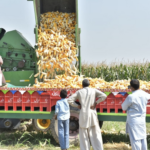
According to the estimate of the Japanese government, the number of bee swarms in Japan has seen a 40% reduction over the past nine years. The absence of important insect pollinators could cast a massive fruit yield reduction and cause a fatal blow on the annual revenue of fruit farmers.

The idea of applying ground robots for fruit tree pollination was a bold attempt to cope with the pollination crisis.

As an all-electric, mini-scale autonomous farm robot, the R150 travelled nimbly between three rows of Sun Fuji apples, spraying atomised pollen solution uniformly on every tree from the bottom up. From a distance, the operator could adjust the spray angle and spread width simply through the smartphone app.


Follow the latest news and policy debates on sustainable agriculture, biomedicine, and other ‘disruptive’ innovations. Subscribe to our newsletter.

To make sure every blossom from the top of the trees gets successfully pollinated, workers often needed to use ladders to climb up and down for artificial pollination. This traditional method was not only tiring, tedious, and time-consuming, but also pose a safety risk to workers who might suffer a fall.

The trial at the Takayama farm showed that an XAG R150 could pollinate one row of apple trees within 10 minutes, 12 times more efficient than that of hand spray.


Read the original post

{{ reviewsTotal }}{{ options.labels.singularReviewCountLabel }}
{{ reviewsTotal }}{{ options.labels.pluralReviewCountLabel }}
{{ options.labels.newReviewButton }}
{{ userData.canReview.message }}

Related Articles

Infographic: Global regulatory and health research agencies on whether glyphosate causes cancer

Infographic: Global regulatory and health research agencies on whether glyphosate causes cancer

Does glyphosate—the world's most heavily-used herbicide—pose serious harm to humans? Is it carcinogenic? Those issues are of both legal and ...

Most Popular

Screenshot-2026-05-01-at-1.29.41-PM
Viewpoint: What happens when whole grains meet modern food manufacturing? Labels don’t tell the whole story.
S
As vaccine rejectionism spreads, measles may be taking a more dangerous turn
Screenshot 2026-05-06 at 2.56
Singularity crisis ahead? Can super babies save us from rogue AI geniuses?
Screenshot-2026-05-06-at-2.07.43-PM
Manufacturing a conspiracy: The timeline of how  the White House embraced the fringe claim that scientists are being mysteriously murdered
Screenshot-2026-03-13-at-12.14.04-PM
The FDA wants to make many popular prescription drugs OTC—a great idea. Here’s why it’s unlikely to happen
Screenshot-2026-04-20-at-2.26.27-PM
Viewpoint — Food-fear world: The latest activist scientists campaign: Cancer-causing additives
Screenshot-2026-04-30-at-2.19.37-PM
5 myths about summer dehydration that could damage your health — or even kill you
ChatGPT-Image-May-6-2026-03_41_05-PM
‘Protecting the integrity of science’: Kennedy’s FDA blocks release of taxpayer-funded studies finding COVID and shingles vaccines safe
Screenshot-2026-05-01-at-11.56.24-AM
‘Science moves forward when people are willing to think differently’: Memories of DNA maverick Craig Venter
79d03212-2508-45d0-b427-8e9743ff6432
Viewpoint: The Casey Means hustle—Wellness woo opportunism dressed up as medical wisdom
Screenshot 2026-05-06 at 12.49
Immortal dragons: The quest to ‘make death optional’
glp menu logo outlined

Get news on human & agricultural genetics and biotechnology delivered to your inbox.