Church of Scientology key driver of glyphosate class action suits

Credit: Getty Images

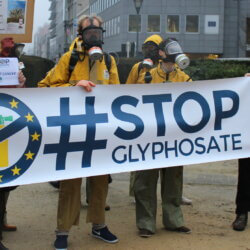
If it is now established that there would never have been a “glyphosate” case without the decisive impetus given by some large American law firms, we know much less, on the other hand, of the involvement of certain members of the Church of Scientology in this matter.

However, as the Genetic Literacy Project news site revealed in an article published last June, one of the firms most involved in the Roundup lawsuits – Baum, Hedlund, Aristei & Goldman – was founded by lawyers who are members of the Church of Scientology. Michael L. Baum, its founder, and one of its partners, Brent Wisner, have in fact been active members of the sect, for fifty years for the first and thirty for the second.

Follow the latest news and policy debates on sustainable agriculture, biomedicine, and other ‘disruptive’ innovations. Subscribe to our newsletter.

Troubling, when we know that his office played an essential role in the staging of the famous “Monsanto Papers.” In particular by disseminating on its website documents supposed to demonstrate that the herbicide would “have an impact on the public health of people.”

Thanks to the massive publication of these documents, in California as in Europe, the couple Alva and Alberta Pilliod, defended by Wisner, obtained from a Californian court, which considered that there was a link between the use of this herbicide and non-Hodgkin’s lymphoma from which the two septuagenarians are affected, the conviction of Bayer to 2 billion dollars “as a punitive.”

[Editor’s note: This article was originally published in French and has been translated and edited for clarity.]


This is an excerpt. Read the original post here.

{{ reviewsTotal }}{{ options.labels.singularReviewCountLabel }}
{{ reviewsTotal }}{{ options.labels.pluralReviewCountLabel }}
{{ options.labels.newReviewButton }}
{{ userData.canReview.message }}

Related Articles

Infographic: Global regulatory and health research agencies on whether glyphosate causes cancer

Infographic: Global regulatory and health research agencies on whether glyphosate causes cancer

Does glyphosate—the world's most heavily-used herbicide—pose serious harm to humans? Is it carcinogenic? Those issues are of both legal and ...

Most Popular

Screenshot-2026-04-22-at-12.21.32-PM
Viewpoint: Why the retracted Monsanto glyphosate study doesn’t change the science—the world’s most popular herbicide is safe 
ChatGPT-Image-Apr-16-2026-02_56_53-PM
Financial incentives, over diagnosis, and weak oversight: Autism claims are driving up Medicare costs
Picture1
The FDA couldn’t find a vaccine safety crisis, so it buried its own research
ChatGPT-Image-May-1-2026-11_42_59-AM-2
Viewpoint: NAD is the wellness grifters latest evidence-lite longevity fad. At least the mice are impressed.
global warming
‘Implausible’: Top climate scientists reject worst-case scenario—soaring temperatures and fast-rising sea levels
Screenshot-2026-05-21-at-12.15.17-PM
UK gene-editing milestone: Livestock barley that increases ruminant value and reduces methane emissions is first-approved CRISPR crop
Screenshot-2026-05-21-at-3.15.53-PM
Chiropractors may no longer be modern-day snake oil salesmen, but the benefits of their therapy are limited–at best

Sorry. No data so far.

glp menu logo outlined

Get news on human & agricultural genetics and biotechnology delivered to your inbox.