Who owns your genes? Book review of ‘The Genome Defense’

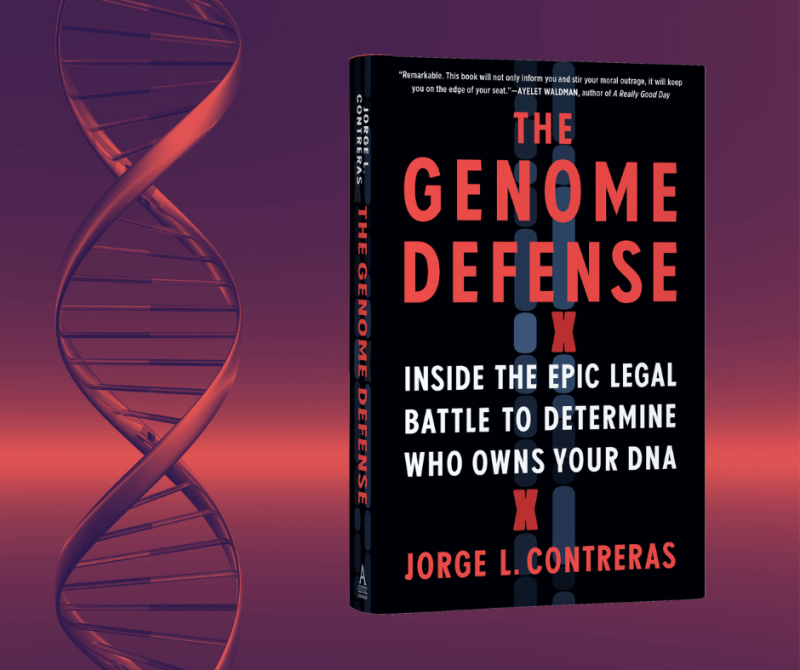
Credit: Algonquin Books

In 2009, [lawyer Chris] Hansen, a veteran of civil-rights cases at the American Civil Liberties Union (ACLU) in New York City, embarked on a lawsuit that ended gene patenting in the United States. The effort seemed doomed, yet Hansen went on to win at the US Supreme Court, challenging the very idea of what patents are and what they should do.

The unexpected twists and turns of that case — as well as its impact on medicine, and particularly on the lives of women affected by breast and ovarian cancer — are ably and affectingly detailed in The Genome Defense. 

Its author, patent scholar Jorge Contreras, has been a vocal critic of over-reaching patents and the universities that grant exclusive licences to their intellectual property, particularly when they nurture monopolies and sign over responsible stewardship of their patents to the licensee

Follow the latest news and policy debates on sustainable agriculture, biomedicine, and other ‘disruptive’ innovations. Subscribe to our newsletter.

Contreras spares us the details, pulling out only nuggets that are needed to understand the case. He explains the science and legal arguments clearly and succinctly. (He does a better job of this than did some of the lawyers and justices involved, who trotted out painful analogies throughout the four-year process: genes were likened variously to chocolate-chip cookies, baseball bats and kidneys.)


This is an excerpt. Read the original post here.

{{ reviewsTotal }}{{ options.labels.singularReviewCountLabel }}
{{ reviewsTotal }}{{ options.labels.pluralReviewCountLabel }}
{{ options.labels.newReviewButton }}
{{ userData.canReview.message }}

Related Articles

Infographic: Global regulatory and health research agencies on whether glyphosate causes cancer

Infographic: Global regulatory and health research agencies on whether glyphosate causes cancer

Does glyphosate—the world's most heavily-used herbicide—pose serious harm to humans? Is it carcinogenic? Those issues are of both legal and ...

Most Popular

Screenshot-2026-04-22-at-12.21.32-PM
Viewpoint: Why the retracted Monsanto glyphosate study doesn’t change the science—the world’s most popular herbicide is safe 
Picture1
The FDA couldn’t find a vaccine safety crisis, so it buried its own research
ChatGPT-Image-May-1-2026-11_42_59-AM-2
Viewpoint: NAD is the wellness grifters latest evidence-lite longevity fad. At least the mice are impressed.
global warming
‘Implausible’: Top climate scientists reject worst-case scenario—soaring temperatures and fast-rising sea levels
Screenshot-2026-05-21-at-12.15.17-PM
UK gene-editing milestone: Livestock barley that increases ruminant value and reduces methane emissions is first-approved CRISPR crop
ChatGPT-Image-Apr-16-2026-02_56_53-PM
Financial incentives, over diagnosis, and weak oversight: Autism claims are driving up Medicare costs
vax-misinformation-main
Facts & Fallacies Podcast: Limit free speech to blunt social media misinfo?
Screenshot-2026-05-21-at-3.15.53-PM
Chiropractors may no longer be modern-day snake oil salesmen, but the benefits of their therapy are limited–at best
ChatGPT-Image-May-12-2026-11_27_01-AM-2
AI likely to improve health care, research shows—but not for blacks and ethnic minorities
Screenshot-2026-05-20-at-5.11.17-PM
Viewpoint: No, sugar doesn’t ‘feed’ cancer — common cancer myths, debunked

Sorry. No data so far.

glp menu logo outlined

Get news on human & agricultural genetics and biotechnology delivered to your inbox.