The mission to restore the American chestnut tree using biotechnology

Credit: Housatonic Heritage

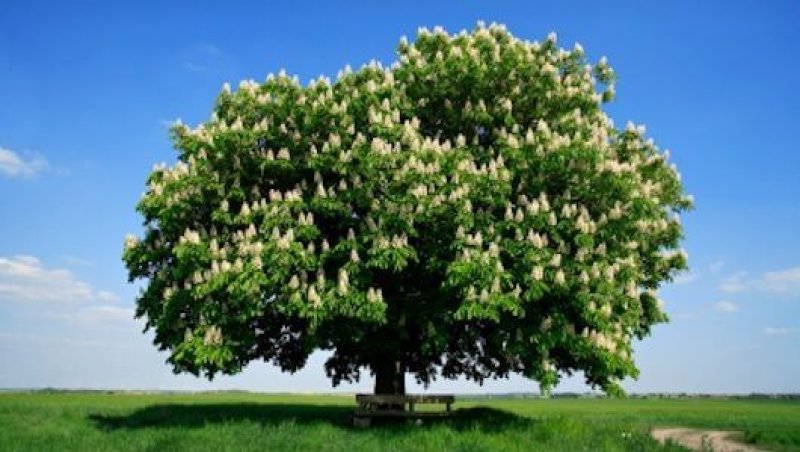
For almost two decades, [Sara] Fitzsimmons has been working to revive the American chestnut (Castanea dentata), a foundational species that once dominated the Eastern forests of the United States and southern Ontario, Canada. But more than a century ago, the trees were exposed to chestnut blight, an invasive pathogen that was accidentally introduced by imported Asian species of the trees.

Follow the latest news and policy debates on sustainable agriculture, biomedicine, and other ‘disruptive’ innovations. Subscribe to our newsletter.

In [William] Powell’s lab at SUNY-ESF, he recently used genetic engineering to develop a blight-resistant tree by combining a single strand of wheat DNA with the DNA of American chestnut. Powell, who has worked on the project for more than 30 years, isolated a gene from wheat, targeting it for its ability to deal with the blight fungus. “The nice thing about this gene is it counteracts how the fungus attacks the tree,” he says.

“So basically we are taking the weapon away from the fungus.” The genetically engineered, or transgenic, trees are known as Darling 58 and are the first of their kind. And while the new trees can still become infected with the same chestnut blight that killed their cousins more than a century ago—and potentially even be slightly damaged by it—the tree will survive.


This is an excerpt. Read the original post here.

{{ reviewsTotal }}{{ options.labels.singularReviewCountLabel }}
{{ reviewsTotal }}{{ options.labels.pluralReviewCountLabel }}
{{ options.labels.newReviewButton }}
{{ userData.canReview.message }}

Related Articles

Infographic: Global regulatory and health research agencies on whether glyphosate causes cancer

Infographic: Global regulatory and health research agencies on whether glyphosate causes cancer

Does glyphosate—the world's most heavily-used herbicide—pose serious harm to humans? Is it carcinogenic? Those issues are of both legal and ...

Most Popular

Screenshot 2025-07-30 at 10.48
Can gene editing eliminate Down syndrome? Scientists have done it in lab-grown cells
ChatGPT Image May 26, 2026, 08_42_17 AM (1)
Viewpoint: Greenpeace and poison: How environmental advocacy groups rely on compliant (and often ignorant) journalists to spread disinformation and spark litigation
ChatGPT Image May 26, 2026, 08_21_36 AM
Limiting gender affirming interventions: Trump administration targets Texas even though it already bans youth access
Screenshot-2026-05-28-at-1.36.28-PM
Viewpoint: Can mRNA research survive the Trump administration?
Screenshot-2026-06-03-at-1.24.46-PM
Challenging anti-GMO disinformation: Why genetically-tweaked crops offer bushels of benefits
ChatGPT-Image-Jun-2-2026-03_04_17-PM
Viewpoint: Why the hyper-promoted doping ‘enhanced games’ pseudo Olympics flopped
ChatGPT-Image-May-26-2026-07_51_21-AM-2
Viewpoint: There are more than 1,000 chemicals in a cup of coffee—including many substances that can cause cancer. Why isn’t it banned?
ChatGPT-Image-Jun-3-2026-12_33_40-PM-2-1
Viewpoint—The end of ‘ivory tower science’: What does that even mean, and what comes next
tick-DNA
GLP podcast: Spread meat allergy with gene-edited ticks? Bioethicists pose vile ‘thought experiment’
Picture1
Sounds we can’t hear — the hidden planetary signals behind science, fear, and misinformation
ChatGPT-Image-Mar-10-2026-01_39_01-PM
Viewpoint—“Miracle molecule” debunked: Why acemannan supplements don’t work
ChatGPT-Image-Jun-2-2026-11_39_58-AM
Viewpoint: Who is RFK, Jr.’s newly-appointed CDC senior counselor, Sara Brenner — Vaccine skeptic and self-proclaimed “MAHA mom”
glp menu logo outlined

Get news on human & agricultural genetics and biotechnology delivered to your inbox.