Can we restore the near-extinct American chestnut tree? Decision nears on approval of genetically engineered species 

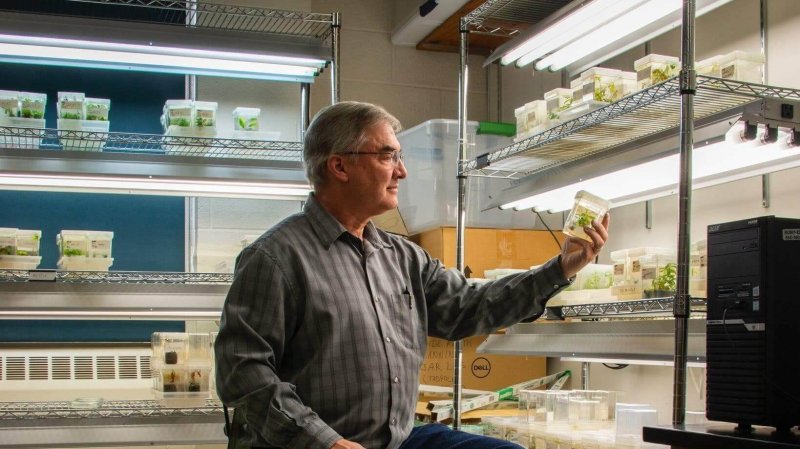
Lead scientist Bill Powell holding GM chestnut seedlings. Credit: Shne Lavalette via NYT

Scientists appear to have the technical capability to bring back a tree that we humans had almost driven to extinction — the American chestnut. Should they be given the go-ahead to do so?

Follow the latest news and policy debates on sustainable agriculture, biomedicine, and other ‘disruptive’ innovations. Subscribe to our newsletter.

In 2020, the American Chestnut Research and Restoration Program at the State University of New York-College of Environmental Science and Forestry (SUNY-ESF) in Syracuse, under the direction of Dr. William Powell, submitted a proposal to the U.S. Department of Agriculture to deregulate a genetically engineered American chestnut variety known as Darling 58 for unrestricted planting.

The public comment period ending in September 2021 resulted in about 63% favorable responses (34% against, 3% neutral), a virtually unheard of level of support for a genetically modified organism.

It’s thought the EPA’s Environmental Impact Statement process and the FDA’s evaluation of possible health issues associated with large-scale planting of the tree should be nearing completion by now. A ruling is expected sometime this year.

Dr. Powell says, “We call this a century project. To get [the eastern forests] to look even somewhat like it did before the blight is going to take centuries. It’s for the next generation — it’s planting a tree you’ll never enjoy the shade of.”


This is an excerpt. Read the original post here.

{{ reviewsTotal }}{{ options.labels.singularReviewCountLabel }}
{{ reviewsTotal }}{{ options.labels.pluralReviewCountLabel }}
{{ options.labels.newReviewButton }}
{{ userData.canReview.message }}

Related Articles

Infographic: Global regulatory and health research agencies on whether glyphosate causes cancer

Infographic: Global regulatory and health research agencies on whether glyphosate causes cancer

Does glyphosate—the world's most heavily-used herbicide—pose serious harm to humans? Is it carcinogenic? Those issues are of both legal and ...

Most Popular

Screenshot-2026-05-01-at-1.29.41-PM
Viewpoint: What happens when whole grains meet modern food manufacturing? Labels don’t tell the whole story.
Screenshot-2026-04-12-135256
Bixonimania: The fake disease scam that AI swallowed whole

Sorry. No data so far.

glp menu logo outlined

Get news on human & agricultural genetics and biotechnology delivered to your inbox.