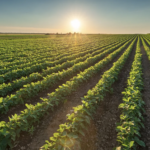
Age of eco-terrorism: Why are activists attacking the most productive part of our food industry — modern agriculture?

Credit: Jean-Francois Monier/AFP

The attack on a grain train by activists hostile to what they call “agro-industry” on March 19 in Brittany, France has sparked outrage.

The operation, which targeted a train of soybeans destined for an animal feed company, resulted in the waste of nearly 1,500 tons of wheat intended for the chickens at a cooperative. 

Follow the latest news and policy debates on sustainable agriculture, biomedicine, and other ‘disruptive’ innovations. Subscribe to our newsletter.

In recent months, actions targeting the agricultural world and its practices have multiplied. 

“We note an intensification of actions everywhere in France,” notes Arnaud Rousseau, vice-president of the FNSEA, the main agricultural union [in France]. “The legal response has so far been almost nil. The self-proclaimed whistleblowers are feeling their wings grow. For them, radicalism is an effective means of stopping the development of what they call ‘industrial agriculture’,” an avatar of the capitalism they want to bring down. Violent struggle is a valued reference. 

“It is always complicated to talk about radicalization,” notes Eddy Fougier, a political scientist specializing in anti-globalism and protest movements. But what is certain is that we now see movements that are not interested in agriculture making it a new entry point to emphasize their favorite issues, such as the climate or anti-capitalism. 

[Editor’s note: This article was originally published in French and has been translated and edited for clarity.]


This is an excerpt. Read the original post here.

{{ reviewsTotal }}{{ options.labels.singularReviewCountLabel }}
{{ reviewsTotal }}{{ options.labels.pluralReviewCountLabel }}
{{ options.labels.newReviewButton }}
{{ userData.canReview.message }}

Related Articles

Infographic: Global regulatory and health research agencies on whether glyphosate causes cancer

Infographic: Global regulatory and health research agencies on whether glyphosate causes cancer

Does glyphosate—the world's most heavily-used herbicide—pose serious harm to humans? Is it carcinogenic? Those issues are of both legal and ...

Most Popular

Screenshot-2026-04-22-at-12.21.32-PM
Viewpoint: Why the retracted Monsanto glyphosate study doesn’t change the science—the world’s most popular herbicide is safe 
ChatGPT-Image-Apr-16-2026-02_56_53-PM
Financial incentives, over diagnosis, and weak oversight: Autism claims are driving up Medicare costs
Picture1
The FDA couldn’t find a vaccine safety crisis, so it buried its own research
global warming
‘Implausible’: Top climate scientists reject worst-case scenario—soaring temperatures and fast-rising sea levels

Sorry. No data so far.

glp menu logo outlined

Get news on human & agricultural genetics and biotechnology delivered to your inbox.