How the search for mates across prehistoric Africa shaped human evolution

Credit: New Scientist

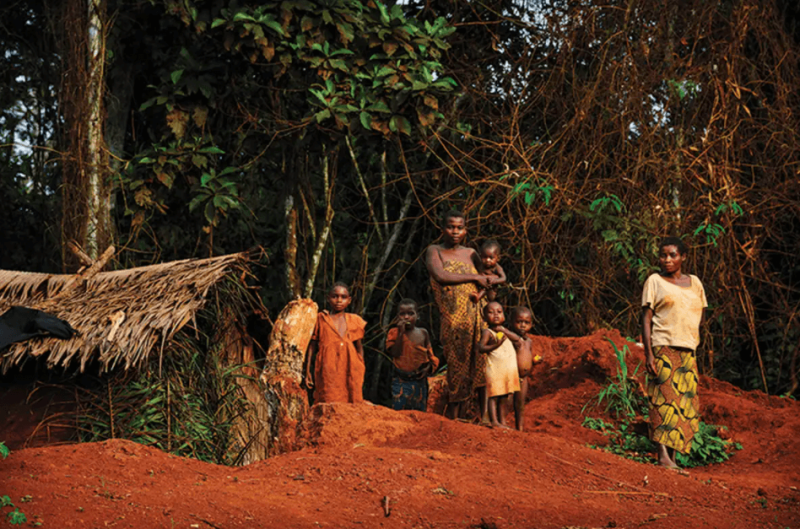
Ancient Africans in search of mates traded long-distance travels for regional connections starting about 20,000 years ago, an analysis of ancient and modern DNA suggests.

That shift occurred after treks across much of Africa to find breeding partners had been the norm starting at least 50,000 years ago, the same analysis shows. These new findings — helped by several examples of the oldest human DNA from Africa isolated to date — offer the first genetic support for a previously suspected change in mating patterns around that time.

Follow the latest news and policy debates on sustainable agriculture, biomedicine, and other ‘disruptive’ innovations. Subscribe to our newsletter.

These newly identified, long-distance movements of ancient human groups help explain archaeological discoveries of common types of stone and bone toolmaking and other cultural behaviors that increasingly appeared across much of Africa beginning about 50,000 years ago, evolutionary geneticist Mark Lipson of Harvard Medical School and colleagues report February 23 in Nature.

Starting around that time, inherited sets of gene variants became increasingly similar in ancient individuals found in central, eastern and southern regions of sub-Saharan Africa, the researchers report. This suggests that this area was a genetic melting pot, in which hunter-gatherers migrated between the three regions, mating with each other along the way.


This is an excerpt. Read the original post here.

{{ reviewsTotal }}{{ options.labels.singularReviewCountLabel }}
{{ reviewsTotal }}{{ options.labels.pluralReviewCountLabel }}
{{ options.labels.newReviewButton }}
{{ userData.canReview.message }}

Related Articles

Infographic: Global regulatory and health research agencies on whether glyphosate causes cancer

Infographic: Global regulatory and health research agencies on whether glyphosate causes cancer

Does glyphosate—the world's most heavily-used herbicide—pose serious harm to humans? Is it carcinogenic? Those issues are of both legal and ...

Most Popular

ChatGPT-Image-Mar-27-2026-11_47_30-AM-2
FDA’s expedited drug reviews are hailed in some quarters but other approval practices are problematic
Screenshot-2026-05-01-at-1.29.41-PM
Viewpoint: What happens when whole grains meet modern food manufacturing? Labels don’t tell the whole story.
Farmers can talk to plants
Farmers are a major source of misinformation—about farming
S
As vaccine rejectionism spreads, measles may be taking a more dangerous turn
ChatGPT-Image-Apr-13-2026-02_20_22-PM
Viewpoint: Misinformation infodemic? Why assessing evidence is so challenging 
Screenshot-2026-04-20-at-2.26.27-PM
Viewpoint — Food-fear world: The latest activist scientists campaign: Cancer-causing additives
Screenshot 2026-05-06 at 2.19
Vaccine shootout at the CDC 
What explains Homo sapiens’ huge brains? Ancient climate change played a role
Viewpoint: Internal White House documents detail administration’s strategy to undermine climate science
ChatGPT-Image-May-7-2026-11_28_04-AM-2
‘Conflict entrepreneurs’ are driving disinformation and shaping public opinion
ChatGPT-Image-May-6-2026-03_41_05-PM
‘Protecting the integrity of science’: Kennedy’s FDA blocks release of taxpayer-funded studies finding COVID and shingles vaccines safe
Screenshot 2026-05-06 at 2.56
Singularity crisis ahead? Can super babies save us from rogue AI geniuses?
Screenshot-2026-03-13-at-12.14.04-PM
The FDA wants to make many popular prescription drugs OTC—a great idea. Here’s why it’s unlikely to happen

Screenshot-2026-05-06-at-2.07.43-PM
Manufacturing a conspiracy: The timeline of how  the White House embraced the fringe claim that scientists are being mysteriously murdered
Screenshot 2026-05-06 at 12.49
Immortal dragons: The quest to ‘make death optional’
glp menu logo outlined

Get news on human & agricultural genetics and biotechnology delivered to your inbox.