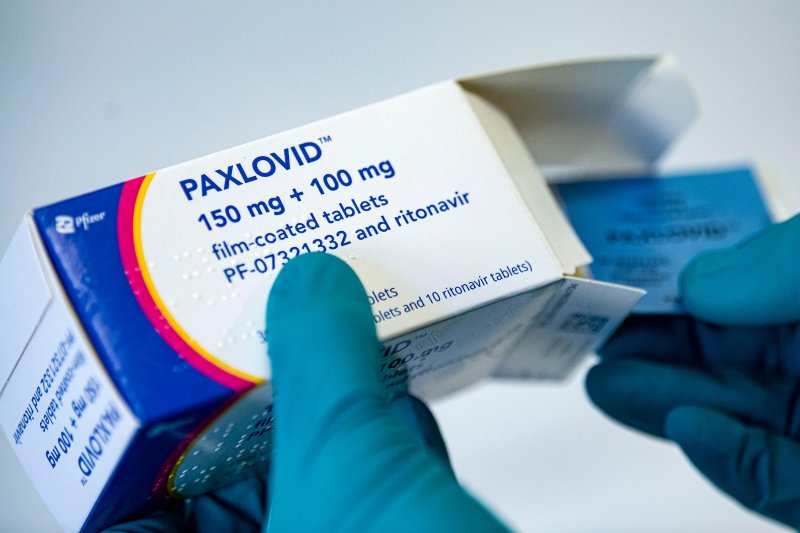
Some patients who take COVID medication Paxlovid experience rebound symptom recurrence

Credit: Fabian Sommer for Getty Images

I had low expectations for Pfizer’s anti-Covid medication, Paxlovid, before its clinical trial data was released. After all, novel antivirals face tough sledding, with only a handful of success stories over decades of research. But then — that data! An 80-90% reduction in severe disease among high risk patients given the drug early in their Covid-19 course was a remarkable result.

Follow the latest news and policy debates on sustainable agriculture, biomedicine, and other ‘disruptive’ innovations. Subscribe to our newsletter.

A host of anecdotal reports began popping up in the past week of people taking Paxlovid experiencing viral remission, negative rapid test and all, and then getting sick again – positive rapid test and all.

Through the magic of Twitter, the truth actually became obvious in real time — no puzzle-solving needed. The FDA was well aware of this rebound in viral loads in a substantial proportion of people treated with Paxlovid, around days 10-14 after starting treatment. For some reason, though, they didn’t think to tell us doctors about it.

To be clear, this whole kerfuffle has me more disappointed in the FDA than in Paxlovid. The vast majority of patients experienced the expected, sustained drop in viral load that we would anticipate from an effective antiviral. The fact that outcomes were tracked for 28 days after the start of treatment, and we still saw almost none (0.7%) of of the treated, high-risk patients be hospitalized (vs 6.5% receiving placebo), implies that this rebound phenomenon might be immunologically concerning, and a problem in terms of counseling patients around contagiousness, but not a deal-breaker.

In the clinical trials, Paxlovid succeeded at its most important task: preventing hospitalization and death.


This is an excerpt. Read the original post here. 

{{ reviewsTotal }}{{ options.labels.singularReviewCountLabel }}
{{ reviewsTotal }}{{ options.labels.pluralReviewCountLabel }}
{{ options.labels.newReviewButton }}
{{ userData.canReview.message }}

Related Articles

Infographic: Global regulatory and health research agencies on whether glyphosate causes cancer

Infographic: Global regulatory and health research agencies on whether glyphosate causes cancer

Does glyphosate—the world's most heavily-used herbicide—pose serious harm to humans? Is it carcinogenic? Those issues are of both legal and ...

Most Popular

Screenshot-2026-04-22-at-12.21.32-PM
Viewpoint: Why the retracted Monsanto glyphosate study doesn’t change the science—the world’s most popular herbicide is safe 
ChatGPT-Image-Apr-16-2026-02_56_53-PM
Financial incentives, over diagnosis, and weak oversight: Autism claims are driving up Medicare costs
Picture1
The FDA couldn’t find a vaccine safety crisis, so it buried its own research
global warming
‘Implausible’: Top climate scientists reject worst-case scenario—soaring temperatures and fast-rising sea levels
ChatGPT-Image-May-1-2026-11_42_59-AM-2
Viewpoint: NAD is the wellness grifters latest evidence-lite longevity fad. At least the mice are impressed.

Sorry. No data so far.

glp menu logo outlined

Get news on human & agricultural genetics and biotechnology delivered to your inbox.