
Audio: This controversial psychologist and author argues that anxiety is good for you

Credit: Unique Mindcare

eqtm liclAnxiety is an unpleasant emotion, but can it be useful? NPR’s A Martinez talks to clinical psychologist and author Tracy Dennis-Tiwary, who calls anxiety a triumph of human evolution.

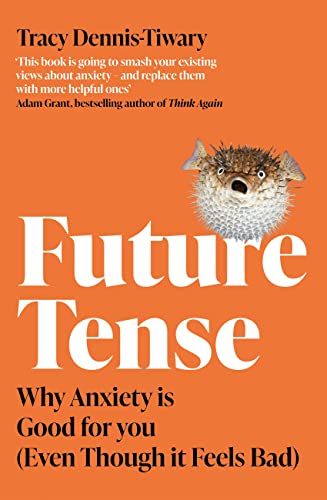
A MARTINEZ, HOST: More than 100 million people in the U.S. will experience an anxiety disorder at some point in their lives. Anxiety is one of the most common and unpleasant mental health conditions on the planet. But maybe – maybe, just maybe – it’s gotten a bad rap. That’s the gist of a new book called “Future Tense: Why Anxiety Is Good For You Even Though It Feels Bad.” And it’s written by Tracy Dennis-Tiwary. The clinical psychologist joins me now to talk about why anxiety may actually be useful.

Follow the latest news and policy debates on sustainable agriculture, biomedicine, and other ‘disruptive’ innovations. Subscribe to our newsletter.

DENNIS-TIWARY: One of the most anxiety-provoking experiences of my life is when we discovered that my son, my first born, was born with a congenital heart condition which would require open heart surgery when he was an infant. When we knew this, it was really anxiety that allowed me to function. It kept me hopeful that there was a future. I understood that something bad could happen. But I really believed that if I worked hard enough that that good outcome that the doctors told me about was also possible. So it kept me focused, energized. The worry that I had, it wasn’t easy. But it kept me, really, working hard to get him the best treatment, the best follow-up care. And, I think, in many ways, if I hadn’t had that anxiety, I might have fallen prey to despair.


This is an excerpt. Read the original post here

{{ reviewsTotal }}{{ options.labels.singularReviewCountLabel }}
{{ reviewsTotal }}{{ options.labels.pluralReviewCountLabel }}
{{ options.labels.newReviewButton }}
{{ userData.canReview.message }}

Related Articles

Infographic: Global regulatory and health research agencies on whether glyphosate causes cancer

Infographic: Global regulatory and health research agencies on whether glyphosate causes cancer

Does glyphosate—the world's most heavily-used herbicide—pose serious harm to humans? Is it carcinogenic? Those issues are of both legal and ...

Most Popular

Screenshot-2026-04-22-at-12.21.32-PM
Viewpoint: Why the retracted Monsanto glyphosate study doesn’t change the science—the world’s most popular herbicide is safe 
Picture1
The FDA couldn’t find a vaccine safety crisis, so it buried its own research
ChatGPT-Image-May-1-2026-11_42_59-AM-2
Viewpoint: NAD is the wellness grifters latest evidence-lite longevity fad. At least the mice are impressed.
global warming
‘Implausible’: Top climate scientists reject worst-case scenario—soaring temperatures and fast-rising sea levels
Screenshot-2026-05-21-at-12.15.17-PM
UK gene-editing milestone: Livestock barley that increases ruminant value and reduces methane emissions is first-approved CRISPR crop
ChatGPT-Image-Apr-16-2026-02_56_53-PM
Financial incentives, over diagnosis, and weak oversight: Autism claims are driving up Medicare costs
vax-misinformation-main
Facts & Fallacies Podcast: Limit free speech to blunt social media misinfo?
Screenshot-2026-05-21-at-3.15.53-PM
Chiropractors may no longer be modern-day snake oil salesmen, but the benefits of their therapy are limited–at best
ChatGPT-Image-May-12-2026-11_27_01-AM-2
AI likely to improve health care, research shows—but not for blacks and ethnic minorities
Screenshot-2026-05-20-at-5.11.17-PM
Viewpoint: No, sugar doesn’t ‘feed’ cancer — common cancer myths, debunked

Sorry. No data so far.

glp menu logo outlined

Get news on human & agricultural genetics and biotechnology delivered to your inbox.