What unique characteristics of the human brain distinguish us from other animals?

Credit: BBC
Credit: BBC

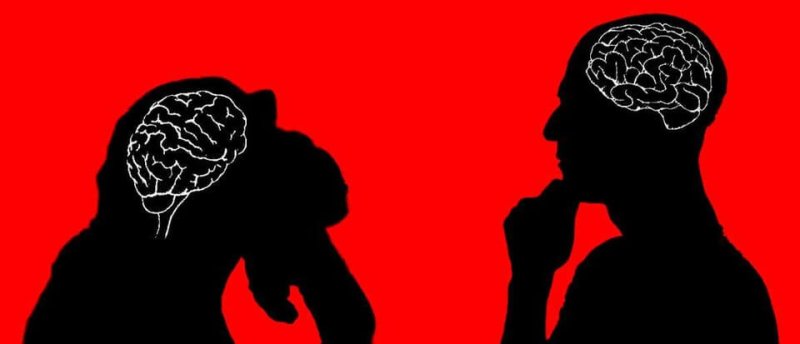
The brains of human beings are different from those of every other species of animal, because all species’ brains have been tuned to their lifestyles through millions of years of evolution.

But what mental functions separate us most from other animals? What makes us human? Answering this question is a continuous quest of philosophy, comparative psychology, and neuroscience. 

Follow the latest news and policy debates on sustainable agriculture, biomedicine, and other ‘disruptive’ innovations. Subscribe to our newsletter.

Our brains are identifiable as uniquely human through their common anatomical features, yet there is a tremendous amount of variability among human brains. Measures of several anatomical features of the cerebral cortex show that human brains are more variable in terms of the shape, size, and thickness of different cortical regions than are those of chimpanzees. Brain size alone in humans can vary up to twofold, and region size commonly varies by this amount.

The evolutionary history of the human brain is written in the genome, but the uniqueness of each mind is written in its unique and ever-changing synaptic circuitry. It seems that what makes us all human is also what makes us all different. Everyone’s body and everyone’s brain differs from everyone else’s from the moment of birth, and these differences grow as the final shaping of our bodies and brains is done outside the womb and incorporates our individual experiences in the world.


This is an excerpt. Read the original post here

{{ reviewsTotal }}{{ options.labels.singularReviewCountLabel }}
{{ reviewsTotal }}{{ options.labels.pluralReviewCountLabel }}
{{ options.labels.newReviewButton }}
{{ userData.canReview.message }}

Related Articles

Infographic: Global regulatory and health research agencies on whether glyphosate causes cancer

Infographic: Global regulatory and health research agencies on whether glyphosate causes cancer

Does glyphosate—the world's most heavily-used herbicide—pose serious harm to humans? Is it carcinogenic? Those issues are of both legal and ...

Most Popular

Screenshot-2026-05-01-at-11.56.24-AM
‘Science moves forward when people are willing to think differently’: Memories of DNA maverick Craig Venter
Screenshot-2026-04-20-at-2.26.27-PM
Viewpoint — Food-fear world: The latest activist scientists campaign: Cancer-causing additives
Screenshot-2026-04-03-at-11.15.51-AM
Paraben panic: How a flawed study, media hype, and chemophobia convinced the public of the danger of one of the safest classes of preservatives
Screenshot-2026-03-13-at-12.14.04-PM
The FDA wants to make many popular prescription drugs OTC—a great idea. Here’s why it’s unlikely to happen
ChatGPT-Image-May-1-2026-02_20_13-PM
How RFK, Jr.’s false vaccine claims are holding up $600 million to fight diseases in poor countries
viva-la-vida-watermelons
Misinformation and climate change are endangering summer watermelons
ChatGPT-Image-Mar-27-2026-11_27_05-AM
The myths of “process”: What science says about the “dangers’ of synthetic products and ultra-processed foods
79d03212-2508-45d0-b427-8e9743ff6432
Viewpoint: The Casey Means hustle—Wellness woo opportunism dressed up as medical wisdom
Screenshot-2026-04-30-at-2.19.37-PM
5 myths about summer dehydration that could damage your health — or even kill you
Drinking lots of water can help reduce the effects of aging
Nanoplastics in drinking water: MAHA activists forge science-based bipartisan coalition 
Screenshot-PM-24
Viewpoint: The herbicide glyphosate isn’t perfect. Banning it would be far worse.
ChatGPT-Image-Apr-30-2026-12_21_05-PM-2
The tech billionaires behind the immortality movement
ChatGPT-Image-Mar-10-2026-01_39_01-PM
Viewpoint—“Miracle molecule” debunked: Why acemannan supplements don’t work
glp menu logo outlined

Get news on human & agricultural genetics and biotechnology delivered to your inbox.