We frequently receive requests to comment on specific news stories. These are usually examples of journalists or pundits commenting on subjects they know nothing about and badly misleading their audiences as a result. Earlier this week, a dispatch subscriber asked us to review an opinion piece published in the Epoch Times: “Saying No to Glyphosate in Our Foods, Environment.”
Penned by “holistic nutrition counselor” Melissa Diane Smith, the article is a collection of misleading assertions, out-of-context study citations, and outright lies. It leaves readers with the false impression that our food supply has been contaminated by glyphosate, elevating our risk of celiac disease, cancer, and birth defects in children. Let’s take a closer look at Smith’s specific claims; her comments are in quotes, followed by my commentary.
Of all the pesticides in our food supply today, the most concerning to consumers is likely glyphosate, the primary active ingredient in Roundup herbicide.
This is false. As anti-pesticide activist Carey Gillam recently conceded, the general public is largely unconcerned about glyphosate exposure. I suspect this is because we have no evidence implicating the herbicide as a cause of any serious disease. In a world plagued by wars, inflation, and infectious disease, people have real health and economic threats to deal with. They simply don’t have time to fret about fictitious chemical scares invented by trial lawyers and activist groups.
Residues of the well-known weed killer have been discovered in a wide range of staple food products sold in top grocery stores, meaning we are all at risk of inadvertent exposure from the foods we eat.
Traces of glyphosate haven’t been “discovered” in staple foods; scientists know that tiny quantities of the weed killer will show up in the items we purchase at grocery stores.
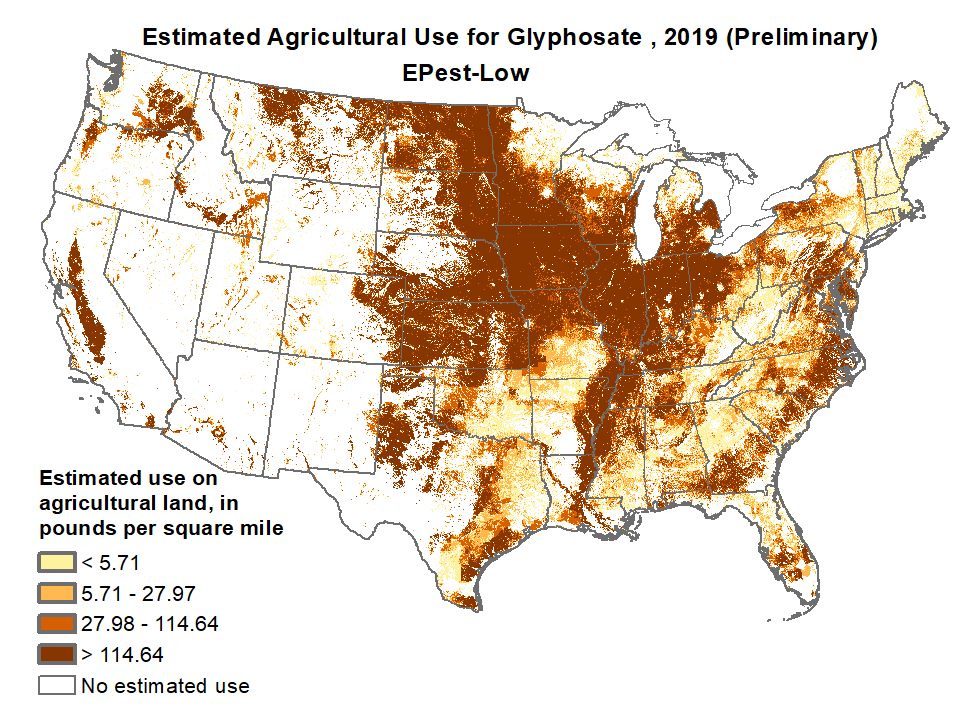
Glyphosate is used all over the country, and yet only a tiny amount typically ends up in consumer produce. Credit: USGS
They know this because EPA-mandated studies have identified the dose at which any registered pesticide may cause harm. The agency uses these studies to set a very conservative reference dose (RfD) that can’t possibly harm human health. It then enacts regulations that ensure farmers use the pesticide in quantities that fall below the RfD. See this detailed analysis by retired UC Davis toxicologist Dr. Carl Winter if you want to better understand the pesticide registration process.
We can confirm this regulatory process works because ongoing surveys of glyphosate residues in the food supply consistently show that consumers are exposed to very low levels of the herbicide. Remember this fact; it will come in handy as we go.
Follow the latest news and policy debates on sustainable agriculture, biomedicine, and other ‘disruptive’ innovations. Subscribe to our newsletter.
Some cities and countries are worried enough about the health effects that they are taking action to prohibit or restrict the use of glyphosate on playing fields and lawns and in landscaping.
This is a textbook example of the “banned in Europe” fallacy, widely employed by anti-vaccine and anti-pesticide groups. If jurisdiction X bans chemical Y, the argument goes, then surely every other city, state, and country should follow their lead, because the chemical must be harmful. This is nonsensical, and it’s easy to see why. [1]
Why should we care that, say, Sri Lanka has banned glyphosate? The country took the foolish advice of anti-GMO guru Vandana Shiva and outlawed imports of “synthetic” pesticides and fertilizers, decimating its agriculture sector. Taxpayers are now facing food shortages (exacerbated by the Ukraine war) and have been forced to subsidize farmers to the tune of $200 million. Why would Smith list such a tragic (and preventable) situation as a supporting example?
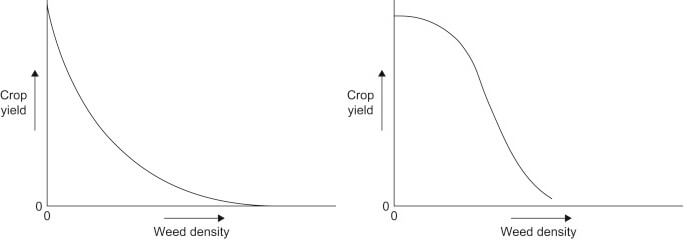
More weeds = less crops. What is an acceptable tradeoff between herbicide qualities and effectiveness. Credit: Zimdahl
Endocrine disrupters everywhere
No pesticide scare story would be complete without a reference to endocrine disruption, Smith’s article included:
An October 2020 review paper in Chemosphere journal found that glyphosate exhibits eight of ten key characteristics of an endocrine, or hormone, disruptor. It has been found to disrupt thyroid hormone regulation, suppress testosterone synthesis, and inhibit an enzyme critical for conversion of testosterone to estrogen.
No, it hasn’t. Glyphosate does not interact with the pathways necessary to damage the endocrine system. You can find studies and reviews like the Chemosphere paper that challenge this conclusion, but these are largely cell-culture and animal studies that involve doses literally thousands of times higher than what consumers, or even farmers, are exposed to. By way of comparison, if you took 600 multi-vitamins in the morning, instead of one or two as recommended by the manufacturer, you’d have a very bad day. Does that mean your multi-vitamin is “toxic” in the quantities you’re supposed to consume? You know the answer.
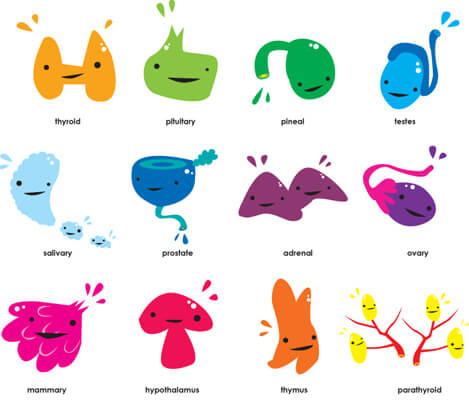
The endocrine system includes how hormones regulate body functions including growth and reproduction, thyroid and metabolism, calcium and bones, nutrition, and salt/fluid balance. The complexity makes it difficult to study and easy to make difficult to disprove assertions about. Credit: iheartguts.com
But don’t take my word here. Check with the EPA and the National Toxicology Program; they will tell you the same thing, as will the authors of another 2020 literature review on glyphosate and endocrine distruption:
“Based on an analysis of the comprehensive toxicology database for glyphosate and the literature, this review has concluded that glyphosate does not have endocrine-disrupting properties through estrogen, androgen, thyroid and steroidogenic modes of action.”
Glyphosate causes birth defects?
Back to Smith:
Exposure to glyphosate is linked to reproductive disorders, including birth defects in children and fertility problems in adults. A 2018 study in Environmental Health suggests glyphosate could be associated with shorter pregnancies…
The study merely found an association between urinary levels of glyphosate and pregnancy length in 71 women in central Indiana. The authors acknowledged that their sample was too small and homogeneous (they were all white or Asian women) to generalize the results. The study “did not investigate” any of the outcomes we’re interested in anyway—birth defects, miscarriage, preterm births, low birth weight, and small for gestational age. The paper also summarized the state of the research on glyphosate exposure and birth defects:
Current evidence for an association between GLY exposure and elevated risk of adverse reproductive and developmental outcomes is limited and inconsistent. Studies that relied on indirect estimates of GLY exposure to investigate risks of congenital birth defects or other developmental outcomes could not reliably estimate the timing or dose of exposure during pregnancy [my emphasis].
Chemical structure of glyphosate (the carbon is implied). Glyphosate is understood to work through the ‘shikimate pathway’ which is only found in plant metabolism. Credit: Romanus Abia
To say that glyphosate exposure “is linked to reproductive disorders” based on this literature is a lie, plain and simple. Consumers should be told about such a risk—if and when the evidence confirms it. But there is no credible data to justify this fear at present. Until that changes, Smith others like her should stop needlessly scaring parents.
Cameron English is a writer, editor and co-host of the Science Facts and Fallacies Podcast. Before joining ACSH, he was managing editor at the Genetic Literacy Project, a nonprofit committed to aiding the public, media, and policymakers by promoting science literacy. You can visit Cameron’s website here
A version of this article was posted at American Council on Science and Health and is used here with permission. You can check out the American Council on Science and Health on Twitter @ACSHorg