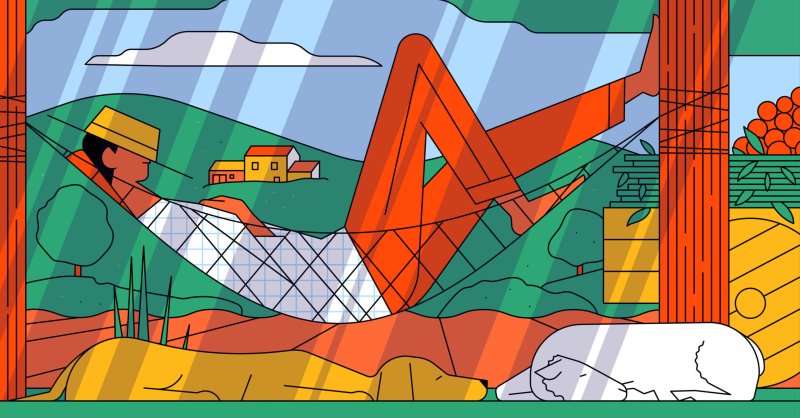
Siesta science: Sleepy during the heat of summer? Evolution may be the cause

Credit: Sam Peet / © Culture Trip

On the hottest summer days, you may find yourself dozing off in the middle of the day.  In some parts of the world, it’s a cultural norm to schedule “siestas” and shutter businesses during the warmest hours of the day. As it turns out, biology, not just culture, may be behind this.

Follow the latest news and policy debates on sustainable agriculture, biomedicine, and other ‘disruptive’ innovations. Subscribe to our newsletter.

In a new study, published Aug. 17 in the journal Current Biology, researchers found that fruit flies are pre-programmed to take a nap in the middle of the day. A follow-up to their 2020 Biology paper that identified a brain thermometer only active in cold weather, the new paper explores a similar “thermometer” circuit for hot temperatures.

“Changes in temperature have a strong effect on behavior in both humans and animals, and offer animals a cue that is time to adapt to the changing seasons,” said Marco Gallio, associate professor of neurobiology in the Weinberg College of Arts and Sciences. 

Just as they expected based on the results of their previous paper on cold temperature, researchers found that brain neurons receiving information about heat are part of the broader system that regulates sleep. When the hot circuit, which runs parallel to the cold circuit, is active, the target cells that promote midday sleep stay on longer. This results in an increase in midday sleep that keeps flies away from the hottest part of the day.


This is an excerpt. Read the original post here

{{ reviewsTotal }}{{ options.labels.singularReviewCountLabel }}
{{ reviewsTotal }}{{ options.labels.pluralReviewCountLabel }}
{{ options.labels.noReviewsLabel }}
{{ options.labels.newReviewButton }}
{{ userData.canReview.message }}

Related Articles

Infographic: Global regulatory and health research agencies on whether glyphosate causes cancer

Infographic: Global regulatory and health research agencies on whether glyphosate causes cancer

Does glyphosate—the world's most heavily-used herbicide—pose serious harm to humans? Is it carcinogenic? Those issues are of both legal and ...

Most Popular

ChatGPT-Image-Mar-10-2026-01_39_01-PM
Viewpoint—“Miracle molecule” debunked: Why acemannan supplements don’t work
ChatGPT-Image-Jul-10-2026-12_21_03-PM
Viewpoint: Is there new evidence that the animal deworming drug ivermectin decreases the risk of Covid and cancer? Don’t waste your money.
Screenshot-2026-07-09-at-1.09.25-PM
Anti-vaccine myths rattle health care
Picture1
Hiroshima at 81: America’s new nuclear bomb, a buried Iranian target, and a question no one wants to ask
leeteam
How Kennedy and his family could pocket millions from Merck’s $50 million vaccine injury settlement that he oversaw
Screenshot-2026-07-30-at-3.07.42-PM
Controversy over WNBA star Sophie Cunningham’s comment opposing trans females in women’s sports reinvigorates the culture wars
Screenshot-2026-07-30-at-2.30.35-PM
Climate scientists claim conservative activists are promoting ‘lies’ that Europe’s summer heatwaves are far from unusual
ChatGPT-Image-Jun-25-2026-12_23_17-PM
No, Bill Gates did not secretly engineer ticks to promote veganism
ChatGPT Image Jul 29, 2026, 05_50_04 PM
Fear, science, and the law: If talc powder is unlikely to cause cancer and J&J was winning in court, why did it pay more than $5.5 billion to settle?

Sorry. No data so far.

glp menu logo outlined

Get news on human & agricultural genetics and biotechnology delivered to your inbox.