Viewpoint: Facing unprecedented drought, Europe debates embracing sustainable, climate-flexible, insecticide-reducing genetically modified crops

Credit: EuroNews
Credit: EuroNews

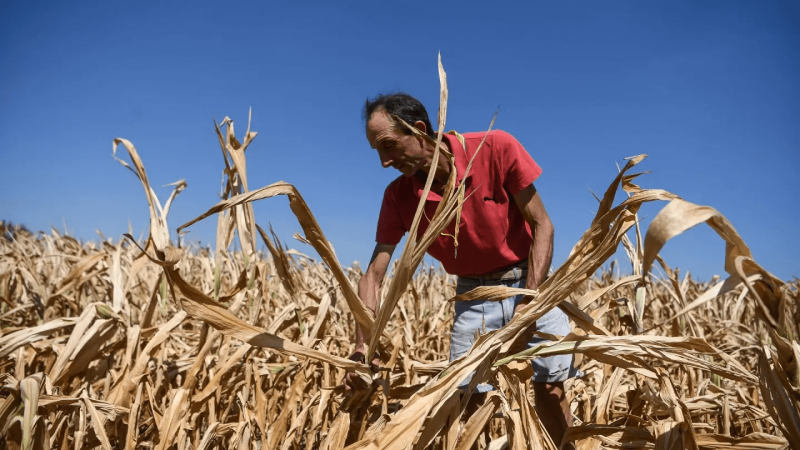
Europe’s summer of drought has been impossible to ignore. Rivers dried up, exposing the skeletons of warships and ancient buildings. Images captured by satellite show swathes of the continent’s normally verdant fields turned to parched dust bowls.

In response, some European politicians are starting to rethink the European Union’s long-standing opposition to genetically modified (GMO) and gene-edited crops.  In July, an Italian member of the European Parliament called for a loosening of the rules that restrict crop varieties created using new gene-editing techniques like CRISPR from being grown and sold within the EU. “New agricultural biotechnology can provide experimentation for more drought- and pest-resistant plants,” member Antonio Tajani said in a meeting at the European Parliament. Other Italian politicians have joined him in calling for similar changes to gene-editing regulations.


Follow the latest news and policy debates on sustainable agriculture, biomedicine, and other ‘disruptive’ innovations. Subscribe to our newsletter.

The European Commission is responsible for creating new legislation in the EU, and in April 2021 published a study outlining its desire to loosen regulations on gene-edited crops. “The commission realized that the European Court of Justice decision was not science-based. It was legally based but it wasn’t science-based,” says Cathie Martin, a professor of plant science at the John Innes Centre in the UK. The European Commission’s study concluded that the EU’s existing GMO rules aren’t suitable for regulating crops made using gene editing.


This is an excerpt. Read the original post here

{{ reviewsTotal }}{{ options.labels.singularReviewCountLabel }}
{{ reviewsTotal }}{{ options.labels.pluralReviewCountLabel }}
{{ options.labels.newReviewButton }}
{{ userData.canReview.message }}

Related Articles

Infographic: Global regulatory and health research agencies on whether glyphosate causes cancer

Infographic: Global regulatory and health research agencies on whether glyphosate causes cancer

Does glyphosate—the world's most heavily-used herbicide—pose serious harm to humans? Is it carcinogenic? Those issues are of both legal and ...

Most Popular

Picture1
The FDA couldn’t find a vaccine safety crisis, so it buried its own research
Screenshot-2026-04-22-at-12.21.32-PM
Viewpoint: Why the retracted Monsanto glyphosate study doesn’t change the science—the world’s most popular herbicide is safe 
ChatGPT-Image-May-7-2026-12_32_36-PM
Viewpoint: The state of U.S. vaccine policy? Dismal nationally, but some states are stepping up.
_20250221_nib_rfk_trump
Viewpoint: 'Crisis of public trust': Autism support community shocked RFK continues to peddle false claims about the danger of vaccines
Screenshot-2026-05-19-at-11.23.34-AM
West-originated vaccine disinformation sparks murders of health care workers across Africa
placebo
Viewpoint — Alternative medicine and the placebo effect: Selling a reassuring illusion of health
ChatGPT-Image-May-18-2026-01_45_05-PM-2
Newest hantavirus conspiracy: Online disinformation turns outbreak into latest ivermectin grift
ChatGPT-Image-May-18-2026-12_06_18-PM-2
Defying death: The immortality movement goes mainstream
Screenshot-2026-04-13-at-1.39.26-PM
Viewpoint: ‘Safer for children?’ Stonyfield yogurt under fire for deceptive organic marketing
Defense_Secretary_Ash_Carter_tours_the_Microsoft_Cybercrime_Center_in_Seattle_March_3_2016
How criminals are using AI to target social media users and steal their money and confidential data
glp menu logo outlined

Get news on human & agricultural genetics and biotechnology delivered to your inbox.