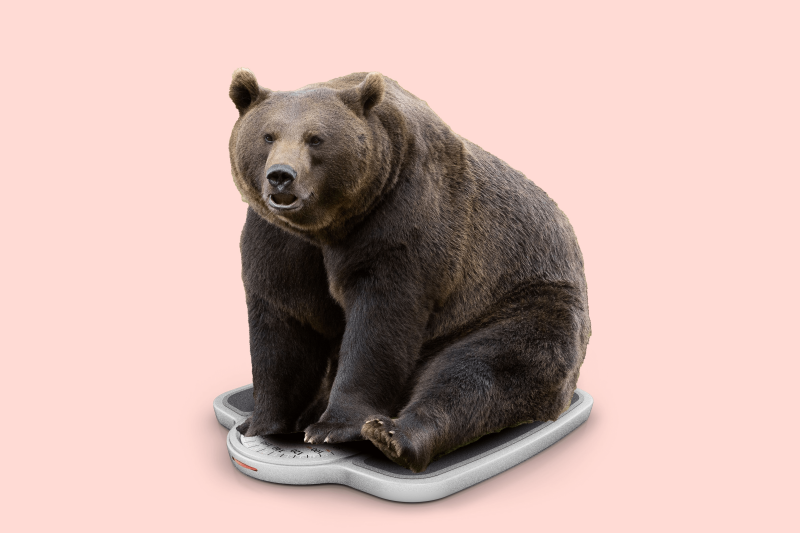
These key grizzly bear genes keep them diabetes-free over long winter hibernations — offering clues to how we might better treat the disease in humans

Credit: iStock/Washington Post

If a human ate tens of thousands of calories a day, ballooned in size, then barely moved for months, the health outcomes would be catastrophic. Scientists have long been puzzled why this same behavior doesn’t lead to diabetes in grizzly bears—until now.

By feeding honey water to hibernating bears, researchers at Washington State University have discovered genetic clues to how these bruins can control their insulin. Their results—published in iScience—might lead to better diabetes treatments for people.

Insulin is a hormone found in most mammals that regulates the body’s blood sugar levels, for instance by telling the liver, muscle, and fat cells to absorb blood sugar, a source of energy. But if a lot of blood sugar enters the bloodstream, over time the cells stop responding, and become resistant to insulin. This is a leading cause of Type 2 diabetesa disease that can lead to heart attacks, strokes, and blindness.

Follow the latest news and policy debates on sustainable agriculture, biomedicine, and other ‘disruptive’ innovations. Subscribe to our newsletter.

This experiment helped the team narrow down the bears’ secret to controlling their insulin: Eight key proteins that seem to have a unique role in bear biology, working either independently or together to regulate insulin during hibernation.


Because humans share most of our genes with bears, understanding the role of these eight proteins could teach scientists more about human insulin resistance, [co-author Blair] Perry says.


This is an excerpt. Read the full article here

{{ reviewsTotal }}{{ options.labels.singularReviewCountLabel }}
{{ reviewsTotal }}{{ options.labels.pluralReviewCountLabel }}
{{ options.labels.newReviewButton }}
{{ userData.canReview.message }}

Related Articles

Infographic: Global regulatory and health research agencies on whether glyphosate causes cancer

Infographic: Global regulatory and health research agencies on whether glyphosate causes cancer

Does glyphosate—the world's most heavily-used herbicide—pose serious harm to humans? Is it carcinogenic? Those issues are of both legal and ...

Most Popular

Screenshot-2026-05-01-at-1.29.41-PM
Viewpoint: What happens when whole grains meet modern food manufacturing? Labels don’t tell the whole story.
S
As vaccine rejectionism spreads, measles may be taking a more dangerous turn
Screenshot 2026-05-06 at 2.56
Singularity crisis ahead? Can super babies save us from rogue AI geniuses?
Screenshot-2026-05-06-at-2.07.43-PM
Manufacturing a conspiracy: The timeline of how  the White House embraced the fringe claim that scientists are being mysteriously murdered
Screenshot-2026-04-20-at-2.26.27-PM
Viewpoint — Food-fear world: The latest activist scientists campaign: Cancer-causing additives
Screenshot-2026-04-30-at-2.19.37-PM
5 myths about summer dehydration that could damage your health — or even kill you
Screenshot-2026-03-13-at-12.14.04-PM
The FDA wants to make many popular prescription drugs OTC—a great idea. Here’s why it’s unlikely to happen
ChatGPT-Image-May-6-2026-03_41_05-PM
‘Protecting the integrity of science’: Kennedy’s FDA blocks release of taxpayer-funded studies finding COVID and shingles vaccines safe
Screenshot 2026-05-06 at 12.49
Immortal dragons: The quest to ‘make death optional’
Screenshot-2026-05-01-at-11.56.24-AM
‘Science moves forward when people are willing to think differently’: Memories of DNA maverick Craig Venter
glp menu logo outlined

Get news on human & agricultural genetics and biotechnology delivered to your inbox.