Kaftrio miracle: How a new suite of genetically-tuned drugs are challenging cystic fibrosis – and opening door for victims to have children

New drug makes it possible for those with cystic fibrosis to have children
Credit: Chemistry World

Becoming a parent for the first time is a major moment for anyone — but for Laura Gayton, giving birth to a healthy, crying baby boy felt nothing short of a ‘miracle’.

Laura, a swimming teacher from Kettering, Northants, is one of around 10,800 people in the UK with cystic fibrosis (CF), a progressive genetic disease that claims the lives of half of those affected before the age of 40.

Follow the latest news and policy debates on sustainable agriculture, biomedicine, and other ‘disruptive’ innovations. Subscribe to our newsletter.

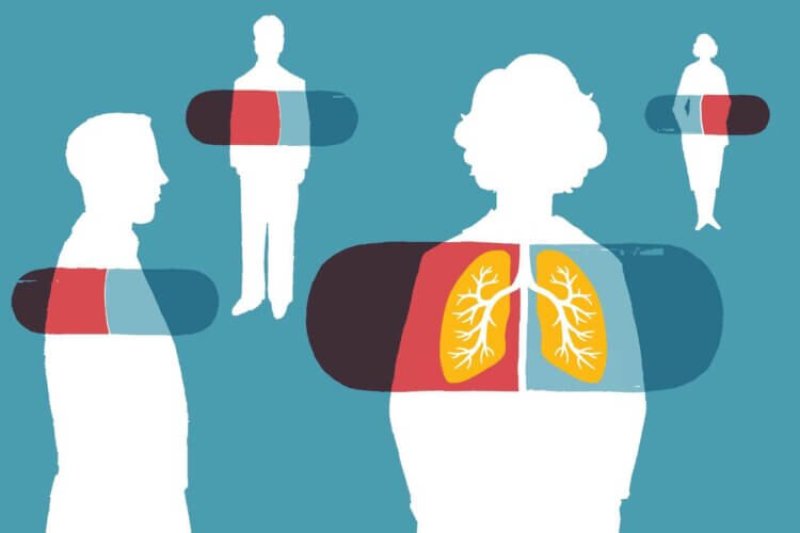
Kaftrio, a triple-drug therapy, directly targets the defective protein, making it work more effectively and thinning the mucus. It helps clear the lungs, allowing patients to breathe easier and reducing the risk of infection.

The drug can help around 90 per cent of CF patients, and in September last year Laura became one of the first phase of 60 patients to be given Kaftrio, which is taken as a pill, twice daily — and ‘almost immediately’ she started to feel better.


In the first year the drug became widely available in the U.S., one healthcare trust reported that 18 women with CF — nearly all of whom were taking the drug — became pregnant, a rate of 16 per cent. By comparison, the U.S. national rate of CF pregnancies in 2014 was just 2.5 per cent.


This is an excerpt. Read the full article here

{{ reviewsTotal }}{{ options.labels.singularReviewCountLabel }}
{{ reviewsTotal }}{{ options.labels.pluralReviewCountLabel }}
{{ options.labels.newReviewButton }}
{{ userData.canReview.message }}

Related Articles

Infographic: Global regulatory and health research agencies on whether glyphosate causes cancer

Infographic: Global regulatory and health research agencies on whether glyphosate causes cancer

Does glyphosate—the world's most heavily-used herbicide—pose serious harm to humans? Is it carcinogenic? Those issues are of both legal and ...

Most Popular

Screenshot-2026-04-22-at-12.21.32-PM
Viewpoint: Why the retracted Monsanto glyphosate study doesn’t change the science—the world’s most popular herbicide is safe 
Picture1
The FDA couldn’t find a vaccine safety crisis, so it buried its own research
ChatGPT-Image-May-1-2026-11_42_59-AM-2
Viewpoint: NAD is the wellness grifters latest evidence-lite longevity fad. At least the mice are impressed.
global warming
‘Implausible’: Top climate scientists reject worst-case scenario—soaring temperatures and fast-rising sea levels
Screenshot-2026-05-21-at-12.15.17-PM
UK gene-editing milestone: Livestock barley that increases ruminant value and reduces methane emissions is first-approved CRISPR crop
vax-misinformation-main
Facts & Fallacies Podcast: Limit free speech to blunt social media misinfo?
ChatGPT-Image-Apr-16-2026-02_56_53-PM
Financial incentives, over diagnosis, and weak oversight: Autism claims are driving up Medicare costs
Screenshot-2026-05-21-at-3.15.53-PM
Chiropractors may no longer be modern-day snake oil salesmen, but the benefits of their therapy are limited–at best
ChatGPT-Image-May-12-2026-11_27_01-AM-2
AI likely to improve health care, research shows—but not for blacks and ethnic minorities
Screenshot-2026-05-20-at-5.11.17-PM
Viewpoint: No, sugar doesn’t ‘feed’ cancer — common cancer myths, debunked

Sorry. No data so far.

glp menu logo outlined

Get news on human & agricultural genetics and biotechnology delivered to your inbox.