More than 3,000 plants — including some organic crops — developed by mutating seeds using radiation or chemicals. Here’s an explainer

Credit: Central Illustration Agency

Plant mutation breeding, also called variation breeding, is a method that uses physical radiation or chemical means to induce spontaneous genetic variation in plants to develop new crop varieties. “Mutation” is the source of most genetic variation and the motor of evolution.

Follow the latest news and policy debates on sustainable agriculture, biomedicine, and other ‘disruptive’ innovations. Subscribe to our newsletter.

Plant varieties bred using radiation are equally safe as the varieties developed through conventional or marker assisted breeding, since radiation does not pass on to further generations of the bred variety. Thus, plants can be bred for many generations to achieve the best result without suffering damage or becoming radioactive. Many crop varieties developed though mutation breeding have been grown all over the world in the last 100 years. Check out a few examples from BulgariaChinaCubaUganda and other countries.

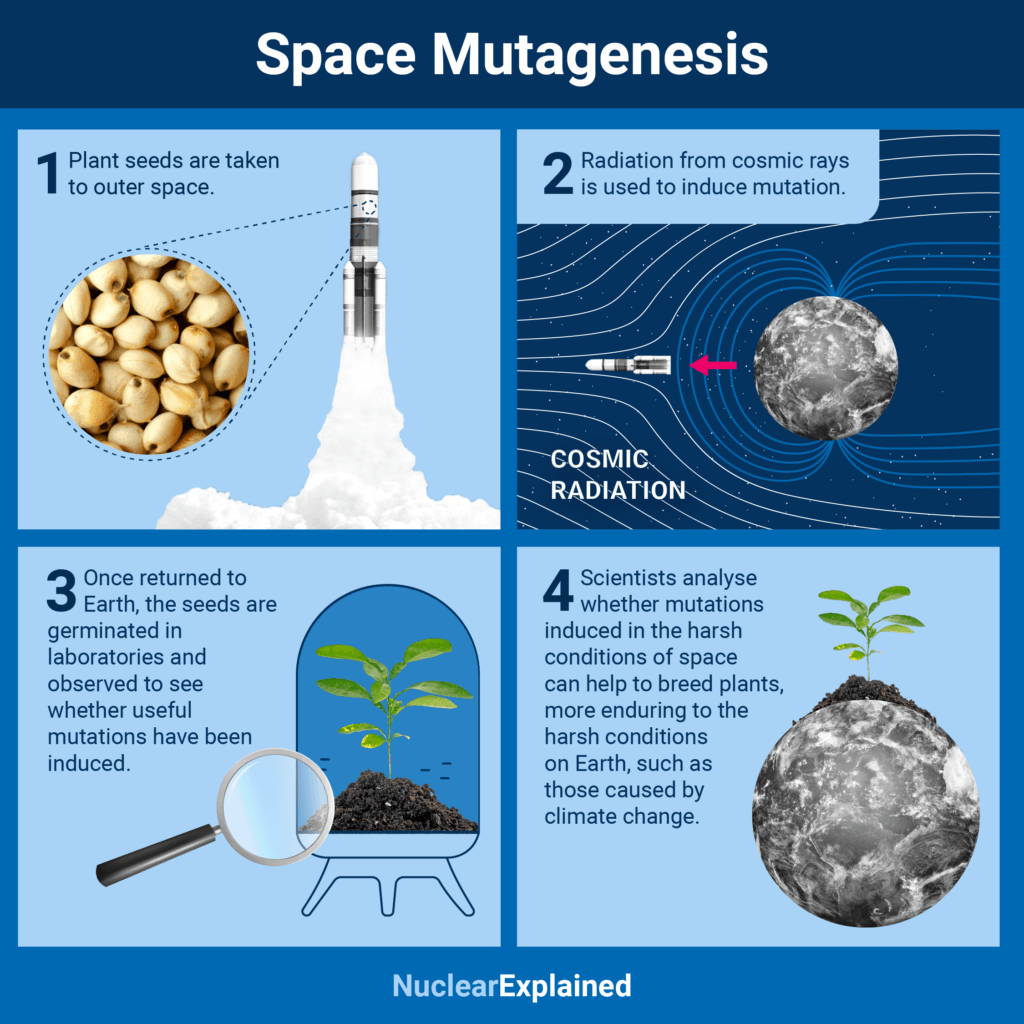
Space mutagenesis, is a method that involves the use of cosmic rays in outer space to induce spontaneous mutations. Scientists typically send plant seeds into space, and then grow, screen and breed them once they return to Earth. As in conventional mutation breeding, scientists try to identify the plants with the most useful traits, and those which may provide an advantage over more traditional crop varieties. Wheat, rice and cotton have already visited space.


Credit: Adriana Vargas via IAEA

This is an excerpt. Read the original post here

{{ reviewsTotal }}{{ options.labels.singularReviewCountLabel }}
{{ reviewsTotal }}{{ options.labels.pluralReviewCountLabel }}
{{ options.labels.newReviewButton }}
{{ userData.canReview.message }}

Related Articles

Infographic: Global regulatory and health research agencies on whether glyphosate causes cancer

Infographic: Global regulatory and health research agencies on whether glyphosate causes cancer

Does glyphosate—the world's most heavily-used herbicide—pose serious harm to humans? Is it carcinogenic? Those issues are of both legal and ...

Most Popular

Screenshot-2026-04-22-at-12.21.32-PM
Viewpoint: Why the retracted Monsanto glyphosate study doesn’t change the science—the world’s most popular herbicide is safe 
ChatGPT-Image-Apr-16-2026-02_56_53-PM
Financial incentives, over diagnosis, and weak oversight: Autism claims are driving up Medicare costs
Picture1
The FDA couldn’t find a vaccine safety crisis, so it buried its own research
ChatGPT-Image-May-1-2026-11_42_59-AM-2
Viewpoint: NAD is the wellness grifters latest evidence-lite longevity fad. At least the mice are impressed.
Screenshot-2026-05-21-at-12.15.17-PM
UK gene-editing milestone: Livestock barley that increases ruminant value and reduces methane emissions is first-approved CRISPR crop
global warming
‘Implausible’: Top climate scientists reject worst-case scenario—soaring temperatures and fast-rising sea levels
Screenshot-2026-05-21-at-3.15.53-PM
Chiropractors may no longer be modern-day snake oil salesmen, but the benefits of their therapy are limited–at best

Sorry. No data so far.

glp menu logo outlined

Get news on human & agricultural genetics and biotechnology delivered to your inbox.