Will climate change lead to future food crises?

pht original
Credit: Destina/AdobeStock

All the world organizations have already grasped the importance of this climate change, and they have rolled up their sleeves to take urgent measures regarding the adverse effects of the event on food and agriculture. FAO, the European Commission (EC), the International Fund for Agricultural Development (IFAD), and the World Food Program (WFP) have recently signed a framework cooperation agreement to meet the food requirement. The aim is to develop effective, coordinated, and sustainable new strategies for food safety and security.

There are many other compelling reasons, especially climate change. First of all, the expectation is that the population will reach 9.5 billion in 2050.

Mis- and disinformation are distorting science and public policy. Subscribe to our Daily and Weekly Digests for incisive coverage of ‘disruptive’ innovations in AI, agricultural biotechnology, food, chemicals, nuclear energy, vaccines, and other disruptive innovations.

Let’s try to estimate the number of people fed by one hectare of agricultural land: In 1960, one hectare fed 0.7 people, in 1980 1.5 people, in 2000 2.7 people. In 2020, one hectare should feed 4.2 people. From this point of view, the inevitability of buying more products per unit area emerges in the coming years.

Another factor that comes with climate change and will negatively affect agriculture is the diseases and pests that may shift to the north with increasing temperatures. One cannot even imagine its possible effects.

…
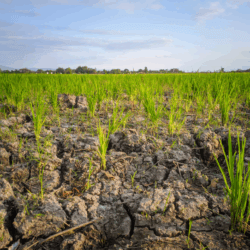
Even if all these questions are answered positively, it is a fact that the climate crisis, whose degree cannot be fixed, will be the biggest threat to food security.


This is an excerpt. Read the original post here

Related Articles

Infographic: Global regulatory and health research agencies on whether glyphosate causes cancer

Infographic: Global regulatory and health research agencies on whether glyphosate causes cancer

Does glyphosate—the world's most heavily-used herbicide—pose serious harm to humans? Is it carcinogenic? Those issues are of both legal and ...

Most Popular

Screenshot-2026-11-17-at-12.18.09-PM
Challenging glyphosate fear-mongering: Statewide Nebraska study finds no link between weedkiller use and non-Hodgkin lymphoma
Screenshot-2026-11-16-at-2.37.32-PM
30 years of GMO farming: Is the boom in glyphosate and glufosinate use harming the environment? Data show they’re the most sustainable choice
Soybean Harvest in Cupped Hands
30 years of GMO farming: Defying cynics, we’ve had larger harvests, lower costs, and $385 billion in added global farmer income
ChatGPT-Image-Mar-10-2026-01_39_01-PM
Viewpoint—“Miracle molecule” debunked: Why acemannan supplements don’t work
Stormlit Portrait Over Golden Mountains
Searching for life where no one thought to look: A renowned astrophysicist’s seemingly quixotic quest to explore Venus’s clouds
Screenshot-2026-11-19-at-7.54.57-PM
European General Court sides with scientists, dismisses activist claims that glyphosate is toxically dangerous
Screenshot-2026-11-13-at-10.02.02-AM
Viewpoint: Why it’s such a big deal that under Trump-RFK Jr., the U.S. has lost its ‘measles-free’ status  
Screenshot-2026-11-09-at-3.01.19-PM
Are Texas data centers killing calves? Debunking viral AI claims
BEMT Lotion for Freckled Skin
Burned by FDA bureaucracy: Why Americans waited decades for cancer-preventing sunscreen
Screenshot 2026-07-29 at 10.40
The COVID vaccine turbo cancer scare is back. Science still proves it’s wrong.
glp menu logo outlined

Get news on human & agricultural genetics and biotechnology delivered to your inbox.