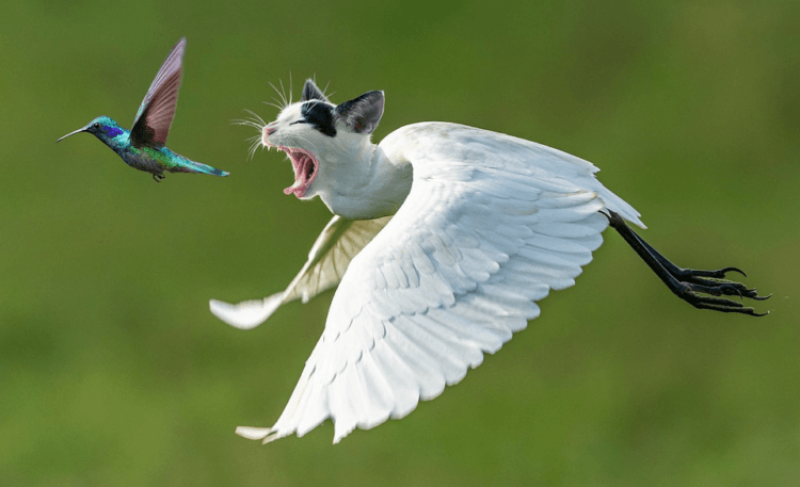
CRISPR cats and dogs? Royal Society for the Prevention of Cruelty to Animals raises alarm that pets could be ‘created’ with extreme features under new UK gene editing law

CRISPR cats and dogs? Royal Society for the Protection of Cruelty to Animals raises alarm the pets could be ‘created’ with extreme features under new UK gene editing law
Credit: Pixabay/ SarahRichterArt

Pets could be subjected to gene editing under a new government act, the RSPCA has warned.

The animal charity has said that the Genetic Technology (Precision Breeding) Act applies to all vertebrate animals, not only farmed animals, and that it could lead to cats and dogs being gene-edited to include extreme features.

The law allows the creation and marketing of “precision-bred” or genome-edited plants and vertebrate animals in England. The government said it would allow farmers to grow crops that are drought- and disease-resistant, reduce the use of fertilisers and pesticides, and help breed animals that are protected from catching harmful diseases.

Follow the latest news and policy debates on sustainable agriculture, biomedicine, and other ‘disruptive’ innovations. Subscribe to our newsletter.

David Bowles, the head of campaigns and public affairs at the RSPCA, criticised what he described as an “ill-judged policy”. He said the charity had tried to get the government to include an exemption for pets, but was “sadly ignored”.

He added: “Gene editing could be a huge step backwards for animals. We do not believe this act should include animals, whether they are farm, pet or wildlife. Invasive procedures are needed to create each line of gene-edited mammals.”


This is an excerpt. Read the full article here

{{ reviewsTotal }}{{ options.labels.singularReviewCountLabel }}
{{ reviewsTotal }}{{ options.labels.pluralReviewCountLabel }}
{{ options.labels.newReviewButton }}
{{ userData.canReview.message }}

Related Articles

Infographic: Global regulatory and health research agencies on whether glyphosate causes cancer

Infographic: Global regulatory and health research agencies on whether glyphosate causes cancer

Does glyphosate—the world's most heavily-used herbicide—pose serious harm to humans? Is it carcinogenic? Those issues are of both legal and ...

Most Popular

ChatGPT-Image-Mar-27-2026-11_47_30-AM-2
FDA’s expedited drug reviews are hailed in some quarters but other approval practices are problematic
Farmers can talk to plants
Farmers are a major source of misinformation—about farming
Screenshot-2026-05-01-at-1.29.41-PM
Viewpoint: What happens when whole grains meet modern food manufacturing? Labels don’t tell the whole story.
ChatGPT-Image-Apr-13-2026-02_20_22-PM
Viewpoint: Misinformation infodemic? Why assessing evidence is so challenging 
S
As vaccine rejectionism spreads, measles may be taking a more dangerous turn
Screenshot 2026-05-06 at 2.19
Vaccine shootout at the CDC 
What explains Homo sapiens’ huge brains? Ancient climate change played a role
Viewpoint: Internal White House documents detail administration’s strategy to undermine climate science
Screenshot-2026-04-20-at-2.26.27-PM
Viewpoint — Food-fear world: The latest activist scientists campaign: Cancer-causing additives
ChatGPT-Image-May-7-2026-11_28_04-AM-2
‘Conflict entrepreneurs’ are driving disinformation and shaping public opinion
bigstock opioids on chalkboard with rol
GLP podcast: 'Safe injection sites': enabling drug addiction or saving lives?
ChatGPT-Image-May-6-2026-03_41_05-PM
‘Protecting the integrity of science’: Kennedy’s FDA blocks release of taxpayer-funded studies finding COVID and shingles vaccines safe
Screenshot-2026-05-06-at-2.07.43-PM
Manufacturing a conspiracy: The timeline of how  the White House embraced the fringe claim that scientists are being mysteriously murdered
circular-bioeconomy-should-focus-on-sustainable-wellbeing
GLP podcast: What's wrong with 'doomsday' environmentalism? It's false.

Sorry. No data so far.

glp menu logo outlined

Get news on human & agricultural genetics and biotechnology delivered to your inbox.