Viewpoint: ‘No magic wand will answer the grim tidings of climate change’’ — Asian farming experts urge wider adoption of technology in agriculture

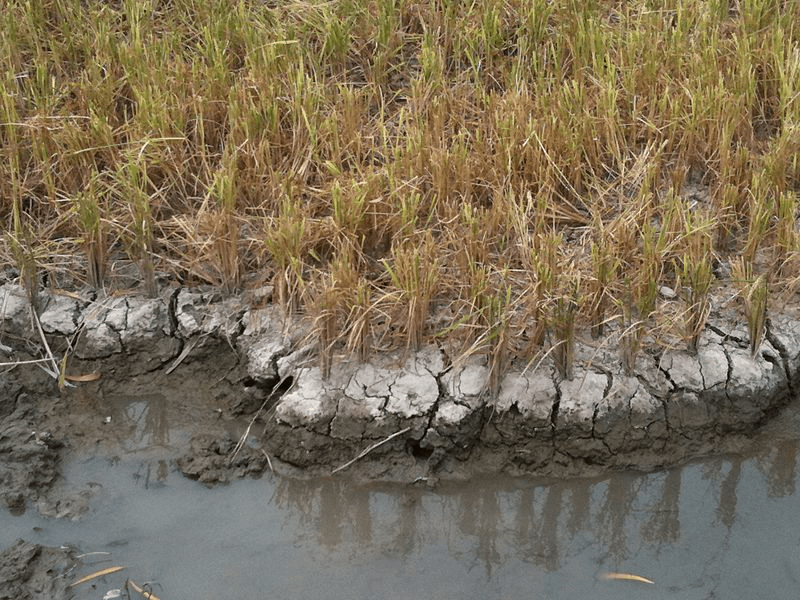
Rice suffering from drought. Credit: Dragfyre via CC-BY-SA-3.0

The father of India’s green revolution, M.S. Swaminathan, once famously said: “If agriculture goes wrong, nothing else will have a chance to go right.”

A blistering heatwave and patchy monsoon rains in Asia have reinforced this claim, as food prices remained stubbornly high for months due to inclement weather and supply shocks from the Russia-Ukraine war.

Millions of tonnes of unharvested rice have also been affected by unusually heavy rain in central China’s Henan province [recently].

For the second year in a row the region is experiencing extreme weather, which shows climate change is happening here and now.

Follow the latest news and policy debates on sustainable agriculture, biomedicine, and other ‘disruptive’ innovations. Subscribe to our newsletter.

Gene editing, a technique that makes it possible to alter crops without introducing new genes, can also be used to help them withstand climate stress, said Shivendra Bajaj, a technical adviser at Asia-Pacific Seed Alliance, an organisation with more than 500 member companies in the region.

“There is no magic wand. No technique alone can give you the solution you are looking for,” he said. “If you keep on stacking everything, incremental changes will follow.”

The power of digital technology can only be fully realised when governments work together to plan for water sharing, encourage farmers to switch to less resource-intensive crops, and save areas affected by natural disasters.


This is an excerpt. Read the original post here

{{ reviewsTotal }}{{ options.labels.singularReviewCountLabel }}
{{ reviewsTotal }}{{ options.labels.pluralReviewCountLabel }}
{{ options.labels.newReviewButton }}
{{ userData.canReview.message }}

Related Articles

Infographic: Global regulatory and health research agencies on whether glyphosate causes cancer

Infographic: Global regulatory and health research agencies on whether glyphosate causes cancer

Does glyphosate—the world's most heavily-used herbicide—pose serious harm to humans? Is it carcinogenic? Those issues are of both legal and ...

Most Popular

ChatGPT-Image-May-7-2026-12_32_36-PM
Viewpoint: The state of U.S. vaccine policy? Dismal nationally, but some states are stepping up.
Screenshot-2026-04-22-at-10.46.29-AM
Viewpoint: How to counter science disinformation? Science journalist offers 12 practical tips
Screenshot-2026-04-13-at-1.39.26-PM
Viewpoint: ‘Safer for children?’ Stonyfield yogurt under fire for deceptive organic marketing
the magic of mRNA
Viewpoint: Anti-vax fake ‘turbo cancer’ claims threaten cancer treatment breakthroughs
ChatGPT-Image-May-7-2026-12_16_37-PM-2
Viewpoint: Are cancer rates ‘skyrocketing’ as RFK, Jr. and MAHA claim? The evidence says mostly the opposite
ChatGPT-Image-May-7-2026-01_23_27-PM-2
Viewpoint: Will AI democratize personalized cancer treatment or fuel medical misinformation?
Defense_Secretary_Ash_Carter_tours_the_Microsoft_Cybercrime_Center_in_Seattle_March_3_2016
How criminals are using AI to target social media users and steal their money and confidential data
artificial intelligence brain think illustration md
Viewpoint — Digital gods and human extinction: Will we be the first species ever to design our own descendants?
Picture1-1
Cooling the planet with balloons: Could a geoengineering gamble slow global warming?
Screenshot-2026-04-23-at-11.00.36-AM
Regulators' dilemma: Thalidomide, Metformin, and the cost of getting drug approvals wrong
RFKjr-Tech-Vax-Misinfo
As U.S. officials spread medical misinformation, scientists fact check online
ChatGPT Image May 12, 2026, 01_21_30 PM
How big health brands are funding online medical misinformation 
glp menu logo outlined

Get news on human & agricultural genetics and biotechnology delivered to your inbox.