This hardy pea plant is climate-change resistant, but sometimes poisonous. Here’s how gene editing could turn it into a ‘climate crisis’ crop

Credit: Wikimedia Commons

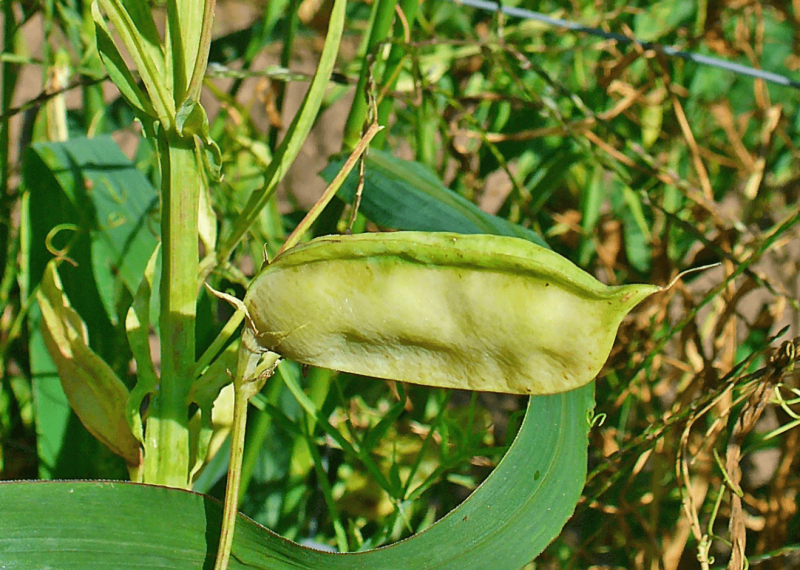
It is grown in some of the world’s most inhospitable, arid regions and is noted for being rich in protein. But the grass pea – although hardy and nutritious – comes with a catch. It contains a poison that can occasionally trigger irreversible paralysis, particularly among individuals who are already undernourished.

Follow the latest news and policy debates on sustainable agriculture, biomedicine, and other ‘disruptive’ innovations. Subscribe to our newsletter.

Nevertheless, poisoning from Lathyrus sativus still occurs in Bangladesh, India, Pakistan, Nepal, Ethiopia and Algeria.

But now a group of UK scientists studying the grass pea have revealed the secrets of its poison production. In the near future they expect to create versions that are free of its toxic side-effects.

“Very soon, we will be able to make safe versions of the grass pea and provide our undernourished, overheated planet with a very valuable crop,” said project scientist Dr Anne Edwards, of the John Innes Centre in Norfolk.

The key biochemical steps by which the grass pea’s poison is made were revealed when scientists decoded the highly complex genome of Lathyrus sativus. They discovered details of the pathways that lead to the pea poison’s manufacture, leaving them poised to use gene-editing or standard breeding techniques to create versions that are poison-free or extremely low in toxins.


This is an excerpt. Read the original post here

{{ reviewsTotal }}{{ options.labels.singularReviewCountLabel }}
{{ reviewsTotal }}{{ options.labels.pluralReviewCountLabel }}
{{ options.labels.newReviewButton }}
{{ userData.canReview.message }}

Related Articles

Infographic: Global regulatory and health research agencies on whether glyphosate causes cancer

Infographic: Global regulatory and health research agencies on whether glyphosate causes cancer

Does glyphosate—the world's most heavily-used herbicide—pose serious harm to humans? Is it carcinogenic? Those issues are of both legal and ...

Most Popular

ChatGPT-Image-May-7-2026-12_16_37-PM-2
Viewpoint: Are cancer rates ‘skyrocketing’ as RFK, Jr. and MAHA claims? The evidence says mostly the opposite
Screenshot-2026-04-13-at-1.39.26-PM
Viewpoint: ‘Safer for children?’ Stonyfield yogurt under fire for deceptive organic marketing
Screenshot-2026-04-22-at-10.46.29-AM
Viewpoint: How to counter science disinformation? Science journalist offers 12 practical tips
png-pill-omega-Supp-fish-oil
Millions take omega-3 fish oil for brain health. New research suggests it may do the opposite.
Screenshot-2026-04-23-at-11.00.36-AM
Regulators' dilemma: Thalidomide, Metformin, and the cost of getting drug approvals wrong
ChatGPT Image May 14, 2026, 09_51_35 PM
Facebook swamped by hundreds of thousands of scam ads for illegal or dangerous medical products
ChatGPT Image May 12, 2026, 01_21_30 PM
How big health brands are funding online medical misinformation 

Sorry. No data so far.

glp menu logo outlined

Get news on human & agricultural genetics and biotechnology delivered to your inbox.