Future protein: ‘If meat-loving habits prove too hard to shift, the obvious solution is to replace meat with meat’

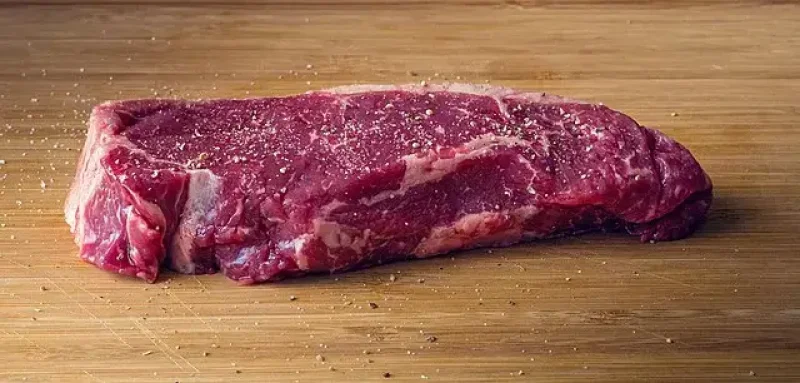
Emissions per kilogram of cultured-meat protein could be smaller even than those from plant and insect protein. Credit: Ted Eytan via CC-BY-SA-2.0

Globally, 80 billion animals die for our dinners each year — and a joint report by the United Nations and the Organisation for Economic Co-operation and Development predicts that global demand for meat will rise by 15% by 2031, thanks to a growing affluent population.

Follow the latest news and policy debates on sustainable agriculture, biomedicine, and other ‘disruptive’ innovations. Subscribe to our newsletter.

In response, the food industry is developing a bevy of alternative protein sources, from algae to insects (see ‘Fungi bacon and insect burgers: a guide to the proteins of the future’). But if the sensual experience of meat is a priority, then cell-cultivated meat might take top prize. “I’ve spoken to people who have been vegan for 15 years and they still crave meat,” says [biomedical engineer Mark] Post. If meat-loving habits prove too hard to shift, he says, the obvious solution is to replace meat with meat.

In the Western world, cultured meat might, ironically, find a big market among vegetarians, notes [food systems researcher Marco] Springmann. UPSIDE Foods, for example, has partnered with three-star Michelin chef Dominique Crenn, who plans to sell its product in her currently pescatarian restaurant.

If cultured meat is to make a dent in global problems, says [ecologist Pelle] Sinke, “it needs to replace conventional meat — not become another luxury item”.


This is an excerpt. Read the original post here

{{ reviewsTotal }}{{ options.labels.singularReviewCountLabel }}
{{ reviewsTotal }}{{ options.labels.pluralReviewCountLabel }}
{{ options.labels.newReviewButton }}
{{ userData.canReview.message }}

Related Articles

Infographic: Global regulatory and health research agencies on whether glyphosate causes cancer

Infographic: Global regulatory and health research agencies on whether glyphosate causes cancer

Does glyphosate—the world's most heavily-used herbicide—pose serious harm to humans? Is it carcinogenic? Those issues are of both legal and ...

Most Popular

ChatGPT-Image-May-7-2026-12_32_36-PM
Viewpoint: The state of U.S. vaccine policy? Dismal nationally, but some states are stepping up.
Screenshot-2026-04-22-at-10.46.29-AM
Viewpoint: How to counter science disinformation? Science journalist offers 12 practical tips
Screenshot-2026-04-13-at-1.39.26-PM
Viewpoint: ‘Safer for children?’ Stonyfield yogurt under fire for deceptive organic marketing
the magic of mRNA
Viewpoint: Anti-vax fake ‘turbo cancer’ claims threaten cancer treatment breakthroughs
ChatGPT-Image-May-7-2026-12_16_37-PM-2
Viewpoint: Are cancer rates ‘skyrocketing’ as RFK, Jr. and MAHA claim? The evidence says mostly the opposite
ChatGPT-Image-May-7-2026-01_23_27-PM-2
Viewpoint: Will AI democratize personalized cancer treatment or fuel medical misinformation?
artificial intelligence brain think illustration md
Viewpoint — Digital gods and human extinction: Will we be the first species ever to design our own descendants?
Defense_Secretary_Ash_Carter_tours_the_Microsoft_Cybercrime_Center_in_Seattle_March_3_2016
How criminals are using AI to target social media users and steal their money and confidential data
Picture1-1
Cooling the planet with balloons: Could a geoengineering gamble slow global warming?
ChatGPT-Image-May-12-2026-08_39_41-PM
GLP podcast: Big Pharma, Big Ag, Big Food—health harming industries or life-saving innovators?
RFKjr-Tech-Vax-Misinfo
As U.S. officials spread medical misinformation, scientists fact check online
ChatGPT Image May 12, 2026, 01_21_30 PM
How big health brands are funding online medical misinformation 
glp menu logo outlined

Get news on human & agricultural genetics and biotechnology delivered to your inbox.