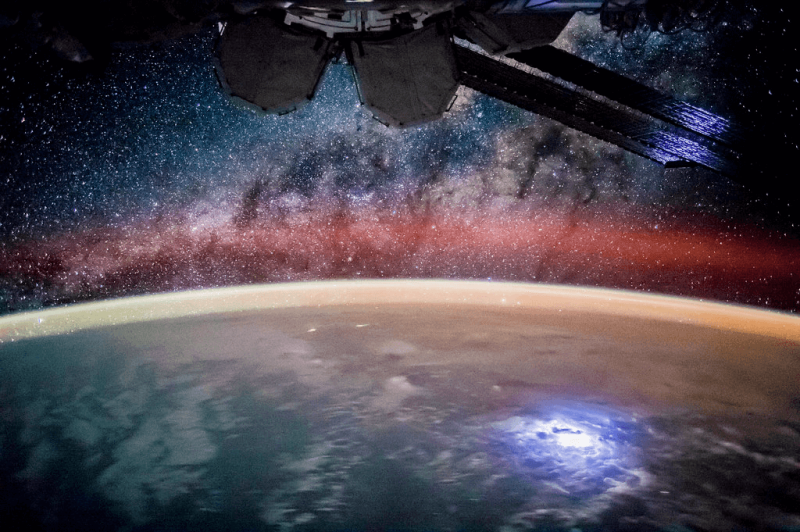
Companies such as United Launch Alliance and Lockheed Martin are designing infrastructure for lunar habitation. Elon Musk has claimed SpaceX will colonize Mars. But are any of these plans realistic? Just how profoundly difficult would it be to live beyond Earth—especially considering that outer space seems designed to kill us?
Humans evolved for and adapted to conditions on Earth. Move us off our planet, and we start to fail—physically and psychologically. The cancer risk from cosmic rays and the problems that human bodies experience in microgravity could be deal-breakers on their own. Moreover, there may not be a viable economic case for sustaining a presence on another world. Historically, there hasn’t been much public support for spending big money on it. Endeavors toward interplanetary colonization also bring up thorny ethical issues that most space optimists haven’t fully grappled with.
As hard as it is for space fans to believe, most people don’t place much value on astronaut adventures. A 2018 Pew poll asked participants to rate the importance of nine of NASA’s key missions as “top priority,” “important but lower priority,” or “not too important/should not be done.” Just 18 and 13 percent of people thought sending humans to Mars and to the moon, respectively, was a top priority.