AI helps craft crops that can stand up to climate change

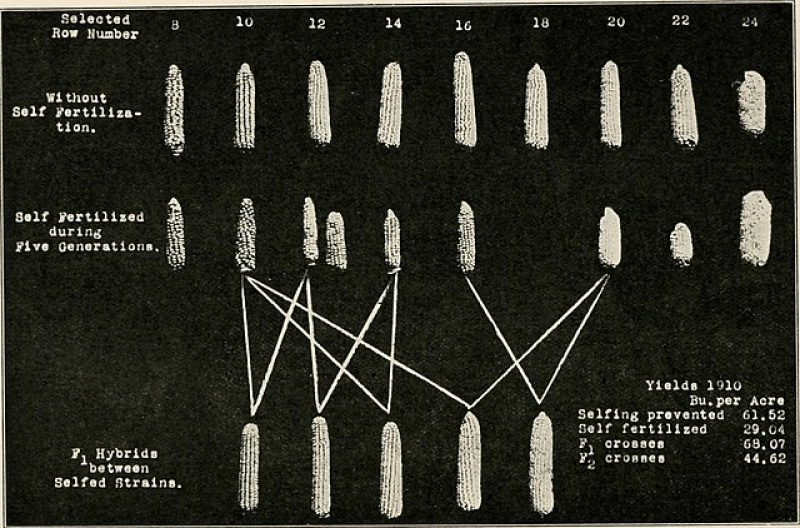
Plant breeding has come a long way in the past 100 years. Credit: Charles Stuart Gauge via CC0-1.0

Previously, we grew improved versions of crops by growing multiple, comparing them, and then planting the seeds of the one that best suits our desired trait. Nowadays, we could take a more direct approach because we’ve sequenced the genome of these plants.

We can identify the ones that have our desired traits and target them for future generations. However, TechCrunch says that can still take a decade with conventional methods.

Follow the latest news and policy debates on sustainable agriculture, biomedicine, and other ‘disruptive’ innovations. Subscribe to our newsletter.

We still have to test several traits because there isn’t only one gene that produces a trait. Fortunately, the new AI crop system can simulate the effects of changes to a plant’s genome, which can reduce the 15-year lead time to two or three.

“The idea was to create a much more realistic model for the genome that’s more evolutionary aware,” said [Avalo CEO Brendan] Collins. These simulations will consider more contexts from biology and evolution to reduce false positives.

As a result, they could significantly cut research times for improved fruits and vegetables. “You can design the perfect genotype in silico [i.e., in simulation] and then do intensive breeding and watch for that genotype,” explained Collins.


This is an excerpt. Read the original post here

{{ reviewsTotal }}{{ options.labels.singularReviewCountLabel }}
{{ reviewsTotal }}{{ options.labels.pluralReviewCountLabel }}
{{ options.labels.newReviewButton }}
{{ userData.canReview.message }}

Related Articles

Infographic: Global regulatory and health research agencies on whether glyphosate causes cancer

Infographic: Global regulatory and health research agencies on whether glyphosate causes cancer

Does glyphosate—the world's most heavily-used herbicide—pose serious harm to humans? Is it carcinogenic? Those issues are of both legal and ...

Most Popular

Screenshot-2026-05-01-at-1.29.41-PM
Viewpoint: What happens when whole grains meet modern food manufacturing? Labels don’t tell the whole story.
Screenshot-2026-04-12-135256
Bixonimania: The fake disease scam that AI swallowed whole

Sorry. No data so far.

glp menu logo outlined

Get news on human & agricultural genetics and biotechnology delivered to your inbox.