Canine neuroscience: Exploring what shapes dog personalities

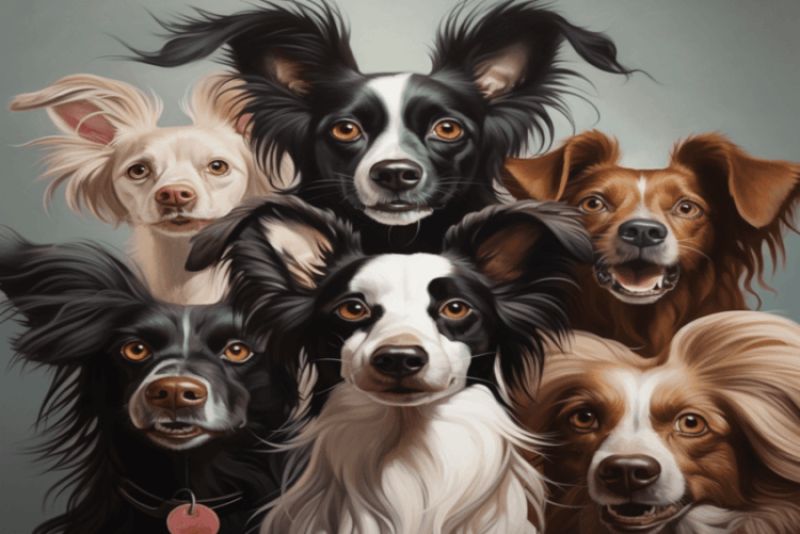
Each dog has their own personality. What explains their unique temperaments?
Credit: Midjourney/ Heenan

Some dogs love to play fetch, while others watch the tennis ball roll by with little interest. Some run circles around their owners, herding them, during walks, while others stop to sniff everything in their path.

It begs the question — why do dogs behave so differently, even within their own breeds?

Mis- and disinformation are distorting science and public policy. Subscribe to our Daily and Weekly Digests for incisive coverage of ‘disruptive’ innovations in AI, agricultural biotechnology, food, chemicals, nuclear energy, vaccines, and other disruptive innovations.

Dogs, according to [human evolutionary biology professor Erin] Hecht, have the potential to teach us a lot about brain development, having been domesticated roughly 20,000 to 40,000 years ago — a blip on the evolutionary timeline. For context, modern humans emerged roughly 300,000 years ago. Because domestication was relatively recent, modern dog breeds live alongside ancient breeds, making comparison possible.

…
“There was one study that collected C-BARQ data on 32,000 dogs from 82 different breeds and then performed clustering on the survey responses. And the data clustered more on the body height of the dogs than on breed relatedness. So size was a better predictor than breed in predicting temperament scores on this C-BARQ assessment,” Hecht said.

She added that just because certain dogs have brain makeups that suggest a certain disposition, it doesn’t lock them into those behaviors. That goes especially for working skills.


This is an excerpt. Read the full article here

Related Articles

Infographic: Global regulatory and health research agencies on whether glyphosate causes cancer

Infographic: Global regulatory and health research agencies on whether glyphosate causes cancer

Does glyphosate—the world's most heavily-used herbicide—pose serious harm to humans? Is it carcinogenic? Those issues are of both legal and ...

Most Popular

ChatGPT-Image-Mar-10-2026-01_39_01-PM
Viewpoint—“Miracle molecule” debunked: Why acemannan supplements don’t work
Screenshot-2026-10-06-at-2.36.47-PM
Is organic farming really more sustainable? 100 recent studies say ‘no’
Supreme-Court-Amid-Climate-Crisis
Should fossil fuel companies be shielded from lawsuits over climate change damage? The Supreme Court takes up the question
Screenshot 2025-09-17 at 12.41
Jump-starting global warming: Rising temperatures are driving up emissions from wildfires, fermenting wetlands, and melting permafrost
Screenshot-2026-10-02-at-9.11.36-AM
The genetics of personality
Radioactive-Americana-Collage-2
The kooky logic behind the raft of spurious cancer claims from Harvard’s T.H. Chan School of Public Health
Childrens-Health-Defense-Press-Briefing
Court links patient’s death to anti-vaccine doctor promoted by Kennedy’s Children’s Health Defense
Kind-People-Kind-Futures-Hands
Patches for sleep, weight, NAD+, energy, focus, periods. No evidence to support the latest social media wellness scams
Screenshot-2026-09-28-at-11.26.17-AM
Viewpoint: Wellness movement activists reposition nicotine from a killer addictive drug into a cure-all for brain ills
strand of dna genetics
No, GMO foods do not “damage genes, natural disposition and hormones, or decrease physical health and intelligence”
Screenshot-2026-09-22-at-10.54.12-AM
‘They misunderstand science’: Research attempting to tie autism to changes in the gut microbiome comes under fire
ChatGPT-Image-Sep-21-2026-11_21_39-AM
Viewpoint: Food cults: Online ‘nutrition communities’ can pose unique dangers
glp menu logo outlined

Get news on human & agricultural genetics and biotechnology delivered to your inbox.