Viewpoint: Anti-GMO arguments seem silly after 28 years of false narratives about health harms and and genetic contamination

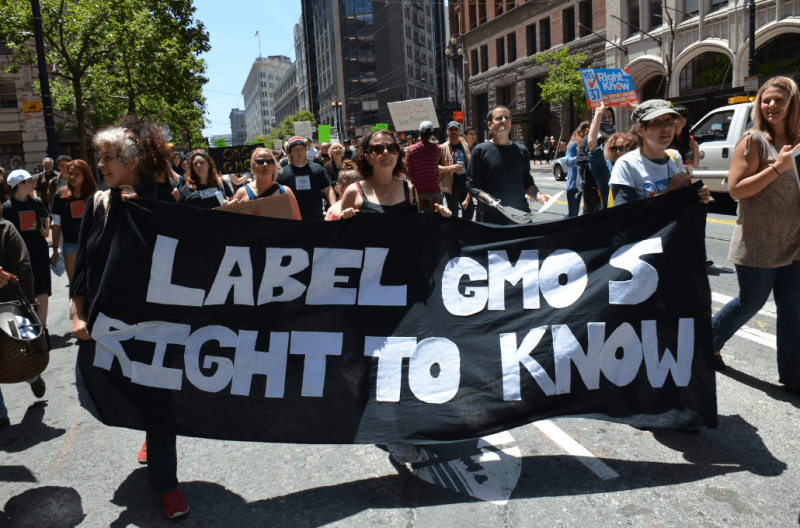
Credit: Steve Rhodes via CC-BY-NC-ND-2.0

Since the first genetically engineered or modified crops or organisms (GMO) were approved for commercial production in 1995, no new GMO has been proven to be a hazard or cause harm to human consumers. These modifications have improved crop efficiency, reduced losses to insect pests, reduced losses to viral and microbial plant pathogens and improved drought tolerance.

Follow the latest news and policy debates on sustainable agriculture, biomedicine, and other ‘disruptive’ innovations. Subscribe to our newsletter.

Regulators in the United States and countries signing the CODEX Alimentarius and Cartagena Biosafety agreements have evaluated human and animal food safety considering potential risks of allergenicity, toxicity, nutritional and anti-nutritional risks.

There are no cases where post-market surveillance has uncovered harm to consumers or the environment including potential transfer of DNA from the GMO to non-target organisms. In fact, many GMOs have helped improve production, yield and reduced risks from chemical insecticides or fungicides.

Yet there are generic calls to label foods containing any genetic modification as a GMO and refusing to allow GM events to be labeled as organic. Many African countries have accepted the Cartagena Protocol as a tool to keep GM events out of their countries while facing food insecurity. The rationale for those restrictions are not rational.


This is an excerpt. Read the original post here

{{ reviewsTotal }}{{ options.labels.singularReviewCountLabel }}
{{ reviewsTotal }}{{ options.labels.pluralReviewCountLabel }}
{{ options.labels.newReviewButton }}
{{ userData.canReview.message }}

Related Articles

Infographic: Global regulatory and health research agencies on whether glyphosate causes cancer

Infographic: Global regulatory and health research agencies on whether glyphosate causes cancer

Does glyphosateโ€”the world's most heavily-used herbicideโ€”pose serious harm to humans? Is it carcinogenic? Those issues are of both legal and ...

Most Popular

Screenshot-PM-24
Viewpoint: The herbicide glyphosate isnโ€™t perfect. Banning it would be far worse.
ChatGPT-Image-Feb-16-2026-01_57_31-PM
Viewpoint: โ€˜Science-as-Satanโ€™ unites the MAHAโ€”MAGA movements. Is a breakup in the works?
bayer-supremecourt-lt
EPA concludes glyphosate is not carcinogenic. Missouri courts say Monsanto failed to warn it might be. SCOTUS weighs in.
d-b
Blocked arteries, kidney stones, nausea, constipation, fatigue: Long list of health problems caused by too much vitamin Dย 
ChatGPT-Image-Apr-22-2026-11_06_18-AM
Wellness influencer nonsense: No, nicotine does not boost cognition and productivity, but it can damage your healthย 
Screenshot-2026-04-27-at-12.22.38-PM
Running โ€˜wildโ€™: Last year, RFK, Jr. was given a green light to โ€˜reformโ€™ chemical policies. Glyphosate illustrates how Trump now has him on a tight leash, and MAHA is furious
Screenshot-2026-04-13-at-3.54.04-PM
AI disinformation stress test: Challenges and response strategies
ChatGPT-Image-Feb-16-2026-01_04_32-PM
Raw milk myth wake-up call
ChatGPT-Image-Mar-11-2026-11_58_46-AM
The Trump administration has run out more than 4,000 National Institutes of Health employees. Here are the consequences
Screenshot-2026-04-27-at-1.40.55-PM
With federal funding for scientific research already reeling, Trump fires the entire apolitical National Science Board
Screenshot-2026-04-21-at-1.11.22-PM
Boy Kibble: Muscle-building protein maxxing is the latest male health delusion
glp menu logo outlined

Get news on human & agricultural genetics and biotechnology delivered to your inbox.