Viewpoint: Philippines court bungled its interpretation of the precautionary principle in suspending the growing of Vitamin A enhanced Golden Rice

golden rice
Credit: Inquirer

Principle 15 of the 1992 Rio Declaration laid out the premise of the precautionary rule in international environmental law. It states:

In order to protect the environment, the precautionary approach shall be widely applied by States according to their capabilities. Where there are threats of serious or irreversible damage, lack of full scientific certainty shall not be used as a reason for postponing cost-effective measures to prevent environmental degradation.

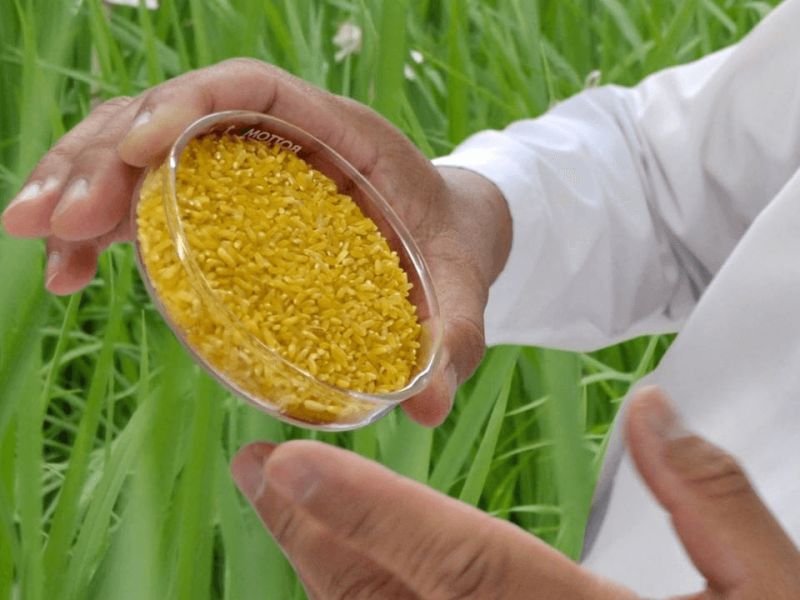
This is the basis for the most recent decision promulgated by the [Philippines’] Fourth Division of the Court of Appeals (CA), which […] ordered the University of the Philippines Los Baños (UPLB) and the Philippine Rice Research Institute (Philrice) to stop the commercial propagation of Golden Rice and BT eggplant, both of which are considered genetically modified organisms (GMOs). Golden Rice is a variety enriched with beta-carotene sourced from corn and from two types of bacteria, Pantoria ananatis and Escherichia coli. On the other hand, Bt eggplant contains genetic material from Bacillus thuringensis, which is another type of bacteria.

Follow the latest news and policy debates on sustainable agriculture, biomedicine, and other ‘disruptive’ innovations. Subscribe to our newsletter.

Under this environmental legal principle, the benefits that are offered by GMOs, as supported by empirical data from research, are not the controlling consideration. The mere offering of potential harm, if shown to be plausible even if uncertain, would be enough to stop the commercial propagation of GMOs, as it did to Golden Rice and Bt eggplant.


This is an excerpt. Read the original post here

{{ reviewsTotal }}{{ options.labels.singularReviewCountLabel }}
{{ reviewsTotal }}{{ options.labels.pluralReviewCountLabel }}
{{ options.labels.newReviewButton }}
{{ userData.canReview.message }}

Related Articles

Infographic: Global regulatory and health research agencies on whether glyphosate causes cancer

Infographic: Global regulatory and health research agencies on whether glyphosate causes cancer

Does glyphosate—the world's most heavily-used herbicide—pose serious harm to humans? Is it carcinogenic? Those issues are of both legal and ...

Most Popular

Screenshot-2026-04-22-at-12.21.32-PM
Viewpoint: Why the retracted Monsanto glyphosate study doesn’t change the science—the world’s most popular herbicide is safe 
Picture1
The FDA couldn’t find a vaccine safety crisis, so it buried its own research
ChatGPT-Image-May-1-2026-11_42_59-AM-2
Viewpoint: NAD is the wellness grifters latest evidence-lite longevity fad. At least the mice are impressed.
ChatGPT-Image-Apr-16-2026-02_56_53-PM
Financial incentives, over diagnosis, and weak oversight: Autism claims are driving up Medicare costs
global warming
‘Implausible’: Top climate scientists reject worst-case scenario—soaring temperatures and fast-rising sea levels
ChatGPT-Image-May-12-2026-11_27_01-AM-2
AI likely to improve health care, research shows—but not for blacks and ethnic minorities
ChatGPT-Image-May-7-2026-01_23_27-PM-2
Viewpoint: Will AI democratize personalized cancer treatment or fuel medical misinformation?
vax-misinformation-main
Facts & Fallacies Podcast: Limit free speech to blunt social media misinfo?

Sorry. No data so far.

glp menu logo outlined

Get news on human & agricultural genetics and biotechnology delivered to your inbox.