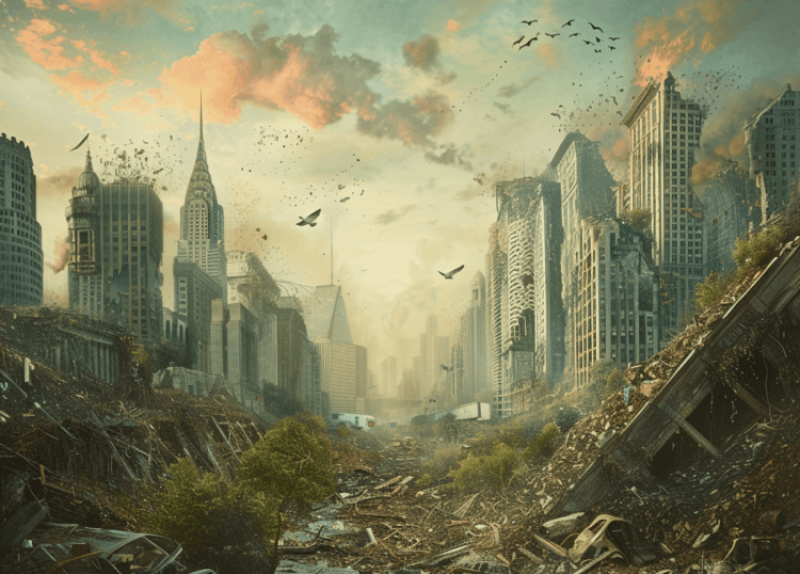
What do you call the current time period — when we humans are warming the atmosphere, acidifying the oceans, altering the land and leaving a literal mark on the planet? Not the Anthropocene, according to geologists who rejected the idea of adding a new epoch to Earth’s official geological timeline.
Yet for many activists, artists and academics outside of geology, the Anthropocene, or “Age of Humans,” is here to stay, regardless of what rock specialists have to say.
Earlier this year, a panel of geologists rejected a proposal to officially designate the past seven decades, during which humans profoundly impacted the environment, as the new chapter in the planet’s history.
The name’s persistence speaks to a need for a cultural shorthand for referring to the big, complex ecological changes that are defining the present era, advocates say — something akin to terms like the Cold War or the Internet Age that came before it. Even if geologists say they cannot pinpoint its exact start, it is obvious to many who continue to use the term that the Anthropocene has begun.

…
Even the term’s critics admit it has staying power. “The term Anthropocene is unfortunately here to stay,” [Philip Gibbard, a University of Cambridge geologist] said. “The cat’s out of the bag. The horse has bolted. We can’t stop it.”