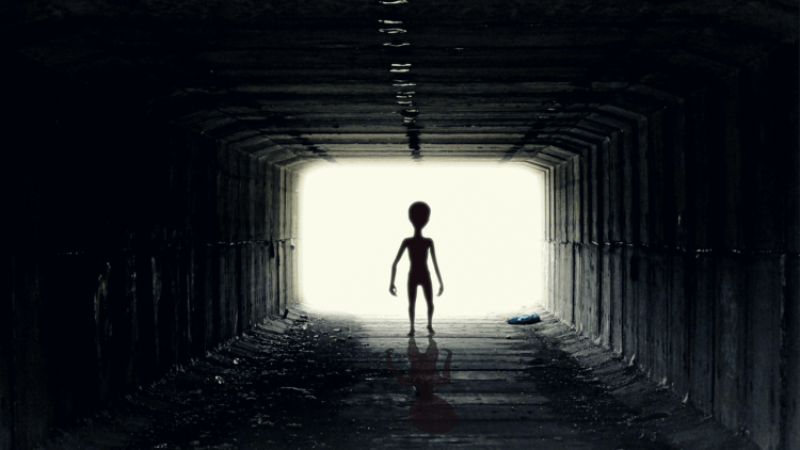
Grey giants or little green men? If there is intelligent alien life on other planets, what might it look like?

Grey giants or little green men? If there is intelligent alien life on other planets, what might it look like?
Credit: Pixabay/ Pawel86

Are we alone in the universe? It’s one of life’s biggest mysteries and one that is explored by science fiction and scientists alike. But if there is alien life on other planets, what might it look like?

While little green men or towering predators are the stereotypical depictions of extraterrestrials in film, any aliens that might be out there are unlikely to resemble those characters, experts told Live Science.

Follow the latest news and policy debates on sustainable agriculture, biomedicine, and other ‘disruptive’ innovations. Subscribe to our newsletter.
[Sarah Rugheimer, an associate professor of astronomy and astrophysics at York University in Toronto said it is] “very unlikely” that it would look exactly like humans. Our unique physiology is both a result of evolution in a unique Earth environment, as well as a good dash of luck, [professor of astrophysics at the University of Rochester Adam] Frank said.

However, alien life may still have some animal-like traits as a result of convergent evolution, Rugheimer said — for example, eyes to see the environment and limbs or wings to traverse it. But that could be where the similarities end.

Of course, all these ideas are based on the assumption that extraterrestrial life would need similar necessities to Earth-life — like water, sunlight, and oxygen — in order to survive. It’s also possible that life on other planets could evolve in a completely different way, or even with a completely different elemental structure.


This is an excerpt. Read the full article here

{{ reviewsTotal }}{{ options.labels.singularReviewCountLabel }}
{{ reviewsTotal }}{{ options.labels.pluralReviewCountLabel }}
{{ options.labels.newReviewButton }}
{{ userData.canReview.message }}

Related Articles

Infographic: Global regulatory and health research agencies on whether glyphosate causes cancer

Infographic: Global regulatory and health research agencies on whether glyphosate causes cancer

Does glyphosate—the world's most heavily-used herbicide—pose serious harm to humans? Is it carcinogenic? Those issues are of both legal and ...

Most Popular

Picture1
The FDA couldn’t find a vaccine safety crisis, so it buried its own research
Screenshot-2026-04-22-at-12.21.32-PM
Viewpoint: Why the retracted Monsanto glyphosate study doesn’t change the science—the world’s most popular herbicide is safe 
Screenshot-2026-05-19-at-11.23.34-AM
West-originated vaccine disinformation sparks murders of health care workers across Africa
Screenshot-2026-05-08-at-11.55.47-AM
Anti-vax activists falsely blame COVID vaccines for the rising U.S. cancer rate among younger people.
ChatGPT-Image-Apr-16-2026-02_56_53-PM
Financial incentives, over diagnosis, and weak oversight: Autism claims are driving up Medicare costs
ChatGPT-Image-May-7-2026-12_32_36-PM
Viewpoint: The state of U.S. vaccine policy? Dismal nationally, but some states are stepping up.
ChatGPT-Image-May-12-2026-11_27_01-AM-2
AI likely to improve health care, research shows—but not for blacks and ethnic minorities
modi visit sikkim
Viewpoint: Indian PM wants farmers to switch to 50% organic. It would take at least 10 years, likely won’t work, and isn’t more sustainable
Screenshot-2026-04-13-at-1.39.26-PM
Viewpoint: ‘Safer for children?’ Stonyfield yogurt under fire for deceptive organic marketing
ChatGPT-Image-May-18-2026-12_06_18-PM-2
Defying death: The immortality movement goes mainstream
_20250221_nib_rfk_trump
Viewpoint: 'Crisis of public trust': Autism support community shocked RFK continues to peddle false claims about the danger of vaccines
glp menu logo outlined

Get news on human & agricultural genetics and biotechnology delivered to your inbox.