‘It was a big challenge to dispel the narrative that TELA Maize is harmful’: Biotechnology solutions spearheaded by Nigerian scientists can address crop diseases, pests, and unpredictable climate conditions

Credit: AATF
Credit: AATF

Over the years, farming in Africa and Nigeria in particular have become not only unattractive but discouraging as a result of low yield, that has been identified as a critical challenge to the continent’s quest to feed its teeming and ever-growingpopulation.

Almost all crops planted on the continent are producing abysmally when compared to crops on other continents and this scientists have attributed to diseases, pest attacks, climatic conditions like drought and the absence of technologies.

These challenges have made planting of maize less attractive despite being one of the highest consumed staple in families across the continent.

Follow the latest news and policy debates on sustainable agriculture, biomedicine, and other ‘disruptive’ innovations. Subscribe to our newsletter.

“The introduction of modern agricultural biotechnology in Nigeria is not unfounded, as it was spearheaded by Nigerian scientists at the Institute for Agricultural Research (IAR) at Ahmadu Bello University, Zaria.”

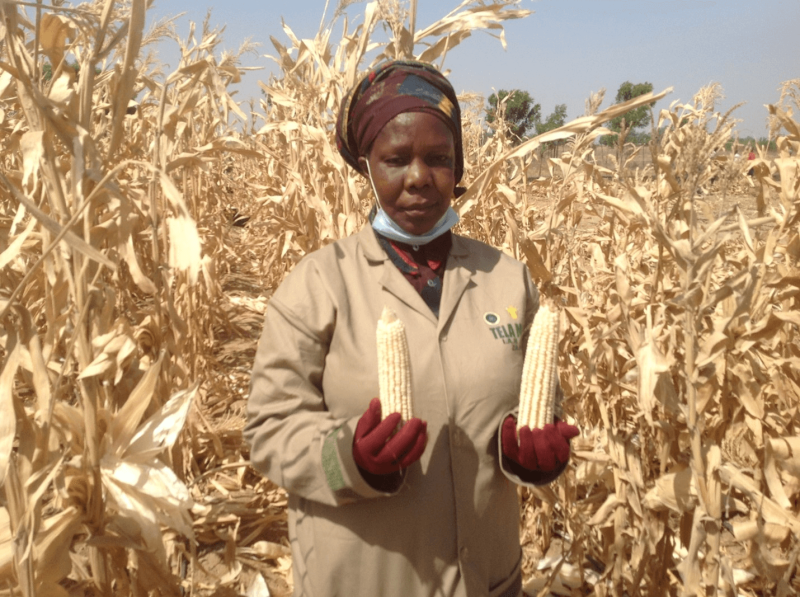
“The scientists behind the researches and development of the TELA Maize and similar crops in Nigeria deserves to be celebrated,” adding also that “TELA Maize is an answer to the questions about the relevance of research institutions in the country and Africa”, he said.

At the policy making level, Abdullahi said, “It was a big challenge dealing with the narrative that TELA Maize, like other similarly developed crops are harmful.”


This is an excerpt. Read the original post here

{{ reviewsTotal }}{{ options.labels.singularReviewCountLabel }}
{{ reviewsTotal }}{{ options.labels.pluralReviewCountLabel }}
{{ options.labels.newReviewButton }}
{{ userData.canReview.message }}

Related Articles

Infographic: Global regulatory and health research agencies on whether glyphosate causes cancer

Infographic: Global regulatory and health research agencies on whether glyphosate causes cancer

Does glyphosate—the world's most heavily-used herbicide—pose serious harm to humans? Is it carcinogenic? Those issues are of both legal and ...

Most Popular

Screenshot-2026-04-22-at-12.21.32-PM
Viewpoint: Why the retracted Monsanto glyphosate study doesn’t change the science—the world’s most popular herbicide is safe 
Picture1
The FDA couldn’t find a vaccine safety crisis, so it buried its own research
ChatGPT-Image-May-1-2026-11_42_59-AM-2
Viewpoint: NAD is the wellness grifters latest evidence-lite longevity fad. At least the mice are impressed.
ChatGPT-Image-Apr-16-2026-02_56_53-PM
Financial incentives, over diagnosis, and weak oversight: Autism claims are driving up Medicare costs
global warming
‘Implausible’: Top climate scientists reject worst-case scenario—soaring temperatures and fast-rising sea levels
ChatGPT-Image-May-12-2026-11_27_01-AM-2
AI likely to improve health care, research shows—but not for blacks and ethnic minorities
ChatGPT-Image-May-7-2026-01_23_27-PM-2
Viewpoint: Will AI democratize personalized cancer treatment or fuel medical misinformation?

Sorry. No data so far.

glp menu logo outlined

Get news on human & agricultural genetics and biotechnology delivered to your inbox.