Did fentanyl ‘over-prescription’ drive the opioid epidemic? Here’s why that’s a false narrative

Did doctors over-prescribing fetanyl drive the opioid epidemic? Here's why that's a fake narrative (STAT) -MH
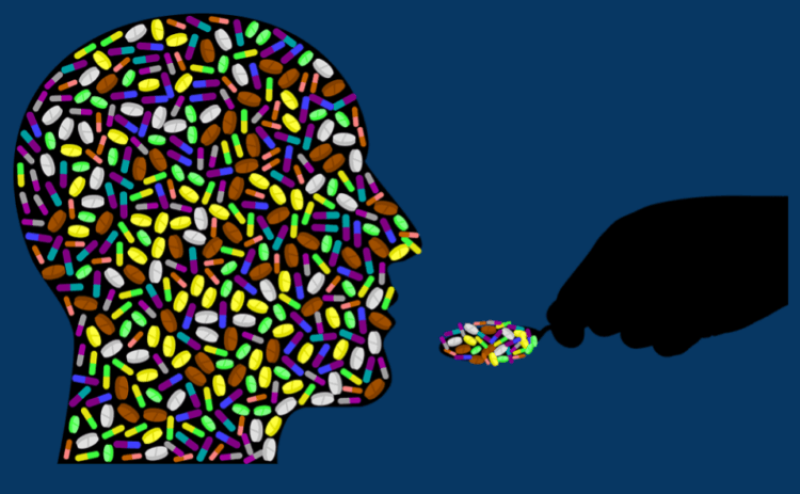
Credit: Pixabay/ GDJ

A key part of the federal government’s narrative about the epidemic of addiction and overdose deaths in the U.S. has been that it is driven by doctors and other clinicians overprescribing opioid painkillers. That story line is false — and was never true.

The Centers for Disease Control and Prevention has traditionally relied on death certificate data compiled by the National Center for Health Statistics for its data on overdose deaths, organized as Underlying Cause of Death data using codes from the International Classification of Diseases.

In 2018, however, the CDC and the U.S. Bureau of Vital Statistics were forced to admit that they had been misattributing deaths involving illegal street fentanyl to deaths caused by “prescription” drugs. When this error was corrected, the number of deaths in which a prescription drug was reported dropped by half.

Follow the latest news and policy debates on sustainable agriculture, biomedicine, and other ‘disruptive’ innovations. Subscribe to our newsletter.

As a health care writer and advocate for people in pain, I communicate with patients and clinicians every week. What I see is that pain medicine in the U.S. is failing both patients and clinicians, largely due to the CDC’s faulty narrative and the DEA’s harassment and prosecution of clinicians for legally and ethically prescribing opioid painkillers to their patients. The result? Millions of Americans living with severe chronic pain are being denied safe and effective pain management with prescription opioids, deserted by doctors afraid of being targeted and persecuted by DEA and state medical boards.


This is an excerpt. Read the full article here

{{ reviewsTotal }}{{ options.labels.singularReviewCountLabel }}
{{ reviewsTotal }}{{ options.labels.pluralReviewCountLabel }}
{{ options.labels.newReviewButton }}
{{ userData.canReview.message }}

Related Articles

Infographic: Global regulatory and health research agencies on whether glyphosate causes cancer

Infographic: Global regulatory and health research agencies on whether glyphosate causes cancer

Does glyphosate—the world's most heavily-used herbicide—pose serious harm to humans? Is it carcinogenic? Those issues are of both legal and ...

Most Popular

wuhan institute of virology main entrance
​​COVID lab leak? Making a case that the Wuhan market origins theory is wrong
Screenshot-2026-06-17-at-9.44.03-AM
Viewpoint: Embryos are becoming the newest battleground of love, loss, and legal uncertainty
Screenshot-2026-06-18-at-11.41.51-AM
Viewpoint—Protecting baloney science: Far right senators move to protect the phony homeopathy industry
Screenshot-2026-06-17-at-11.57.12-AM
Viewpoint: Raw milk and the myth of safety—ProPublica exposes the growing anti-homogenization movement
ChatGPT-Image-Jun-9-2026-01_11_37-PM
Turmeric supplements: More risks than benefits
ChatGPT-Image-Mar-10-2026-01_39_01-PM
Viewpoint—“Miracle molecule” debunked: Why acemannan supplements don’t work
Screenshot-2026-06-18-at-2.52.05-PM
Activist organization accuses Trump of protecting methane-generating stripper wells to benefit billionaire and donor Jeffrey Hildebrand 
Screenshot-2026-06-16-at-10.02.22-PM
Viewpoint: ‘Industrial food’ primer—Challenging the dangerous delusions of the alternative food movement
ChatGPT-Image-Jun-18-2026-02_32_04-PM
Can illegal social media content be stopped before it goes viral? UK is going to try.
ChatGPT-Image-Jun-4-2026-03_07_27-PM
AAP v. Kennedy: While a court challenge grinds on, RFK Jr. quietly advances his anti-vaccine conspiracy agenda

Sorry. No data so far.

glp menu logo outlined

Get news on human & agricultural genetics and biotechnology delivered to your inbox.