
Why organic food costs so much: Hand weeding

Credit: Unsplash via CC0-1.0

Organic food sales nearly doubled between 2013 and 2022, to more than $61 billion. The top seller, according to the Organic Trade Association, is produce. Those organic fruits and veggies usually come at a higher price point than their conventionally grown counterparts. One reason is market demand. Another is that organic farmers face higher production costs than non-organic, or conventional farms. For produce to be certified organic, it needs to be grown without the use of most synthetic fertilizers, herbicides, and pesticides. Instead, organic farms have to rely on other tools, including increased labor.

“They don’t have the same toolkit available to them,” said Ted Jaenicke, a professor of agricultural economics at Penn State University. “They are substituting, in some cases, towards labor, which is generally more expensive.”

And labor is needed to deal with things like weeds. When David Paulk sees one on his organic farm, even just in passing, it’s hard for him not to pull it out.

Mis- and disinformation are distorting science and public policy. Subscribe to our Daily and Weekly Digests for incisive coverage of ‘disruptive’ innovations in AI, agricultural biotechnology, food, chemicals, nuclear energy, vaccines, and other disruptive innovations.

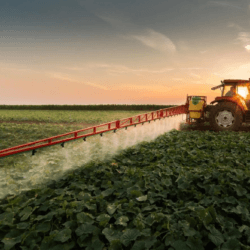
The weed is living among the shallots on Sassafras Creek Farm, 50 acres in St. Mary’s County, Maryland. All the crops — from arugula to zucchini — are certified organic, which means the farm doesn’t use any synthetic herbicides to keep those weeds from growing. And weeds are expensive.
“One of the reasons why organic foods cost so much is — do the best you can and there’s still going to be hand weeding,” said Paulk.

This is an excerpt. Read the original post here

Related Articles

Infographic: Global regulatory and health research agencies on whether glyphosate causes cancer

Infographic: Global regulatory and health research agencies on whether glyphosate causes cancer

Does glyphosate—the world's most heavily-used herbicide—pose serious harm to humans? Is it carcinogenic? Those issues are of both legal and ...

Most Popular

ChatGPT-Image-Mar-10-2026-01_39_01-PM
Viewpoint—“Miracle molecule” debunked: Why acemannan supplements don’t work
Screenshot 2026-11-23 at 11.51
Calley Means’ demonization of glyphosate is ‘just craziness’. Farmers are responding with science.
Pastel Breakfast Pedestals with Yogurt Bowl
RFK Jr. is about to issue an edict defining ultra-processed foods. What could go wrong?
Neon-AI-Globe-Network
Viewpoint: The three biggest threats posed by AI hyper-intelligence
Screenshot-2026-11-24-at-11.07.44-AM
Here's a sure way to increase testosterone levels and jack up your sex drive
Glassy Molecules Above Floral Pads
Viewpoint: ‘Forever' PFAS chemicals in panty liners? The only ‘forever’ truth is endless lawsuits that do not protect women’s health 
glp menu logo outlined

Get news on human & agricultural genetics and biotechnology delivered to your inbox.















