Farmers in Brazil and Argentina ramp up growing of genetically-modified drought tolerant wheat that can grow in subtropical regions

Credit: Eleusis Llanderal

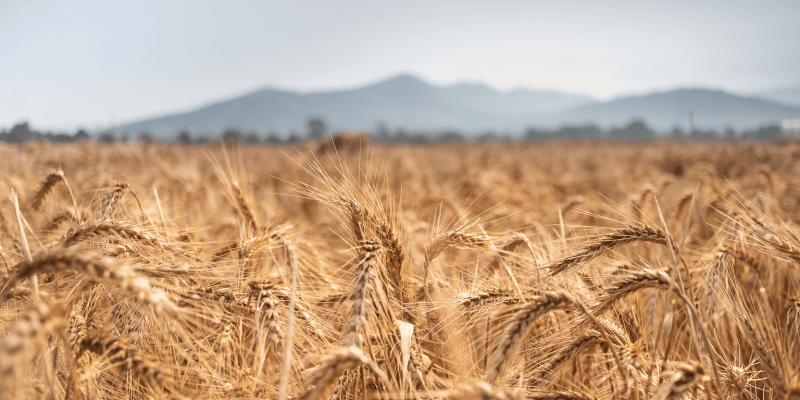
A new wheat variety, resistant to drought, is set to play a vital role in smoothing out South American production in the face of increasing weather uncertainty. HB4 wheat, developed by the Argentine company Bioceres, using a gene derived from sunflowers, is being taken up by growers in Argentina and Brazil.

South America’s major grain and oilseeds producers, Brazil and Argentina are, behind the United States, the second and third largest growers of biotech crop varieties in the world.

Follow the latest news and policy debates on sustainable agriculture, biomedicine, and other ‘disruptive’ innovations. Subscribe to our newsletter.

“Currently, 100% of soybeans, 99% of corn, and 100% of cotton planted in Argentina is genetically engineered. While in the past Argentina has primarily been a producer of GE crops destined for feed and fiber, it is now the first major wheat exporter to commercialize GE wheat for food use.”

The wheat involved is the drought-resistant HB4 variety developed by Bioceres.

“The approval in Argentina raised concerns among several farmer organizations and exporters, as they understand this approval might put Argentine wheat exports at risk in other markets,” the attaché said. “To address these concerns, government of Argentina created an audit commission within the National Seed Institute (INASE).”

“However, GE crops (regardless of the intended use or trait) are associated with plant protection products popularly considered harmful to the environment and health,” they said. “For years, there has been growing activism against the use of glyphosate,” which meant that “in 2021, the announcement of the HB4 drought-tolerant wheat approval that is also tolerant to glufosinate-ammonium sparked controversy among consumers.”


This is an excerpt. Read the original post here

{{ reviewsTotal }}{{ options.labels.singularReviewCountLabel }}
{{ reviewsTotal }}{{ options.labels.pluralReviewCountLabel }}
{{ options.labels.newReviewButton }}
{{ userData.canReview.message }}

Related Articles

Infographic: Global regulatory and health research agencies on whether glyphosate causes cancer

Infographic: Global regulatory and health research agencies on whether glyphosate causes cancer

Does glyphosate—the world's most heavily-used herbicide—pose serious harm to humans? Is it carcinogenic? Those issues are of both legal and ...

Most Popular

Screenshot-PM-24
Viewpoint: The herbicide glyphosate isn’t perfect. Banning it would be far worse.
79d03212-2508-45d0-b427-8e9743ff6432
Viewpoint: The Casey Means hustle—Wellness woo opportunism dressed up as medical wisdom
d-b
Blocked arteries, kidney stones, nausea, constipation, fatigue: Long list of health problems caused by too much vitamin D 
ChatGPT-Image-Mar-10-2026-01_39_01-PM
Viewpoint—“Miracle molecule” debunked: Why acemannan supplements don’t work
Screenshot-2026-04-30-at-11.33.46-AM
Anti-seed-oil to anti-vax pipeline: MAHA movement spreads to teen influencers
lab grown meat research kelly schultz lehighuniversity main
Profiles of the 10 top global cultured meat companies
ChatGPT-Image-Apr-30-2026-05_00_48-PM
Wellness grifter physician turned wellness influencer out as surgeon general nominee
ChatGPT-Image-Mar-27-2026-11_27_05-AM
The myths of “process”: What science says about the “dangers’ of synthetic products and ultra-processed foods
ChatGPT-Image-Apr-30-2026-12_21_05-PM-2
The tech billionaires behind the immortality movement
Screenshot-2026-04-28-at-1.21.37-PM
How America’s medical system encourages psychiatric overdiagnosis

Sorry. No data so far.

glp menu logo outlined

Get news on human & agricultural genetics and biotechnology delivered to your inbox.