‘Banana apocalypse’? How disease resistant bananas can help overcome a global lack of genetic diversity

messages.google

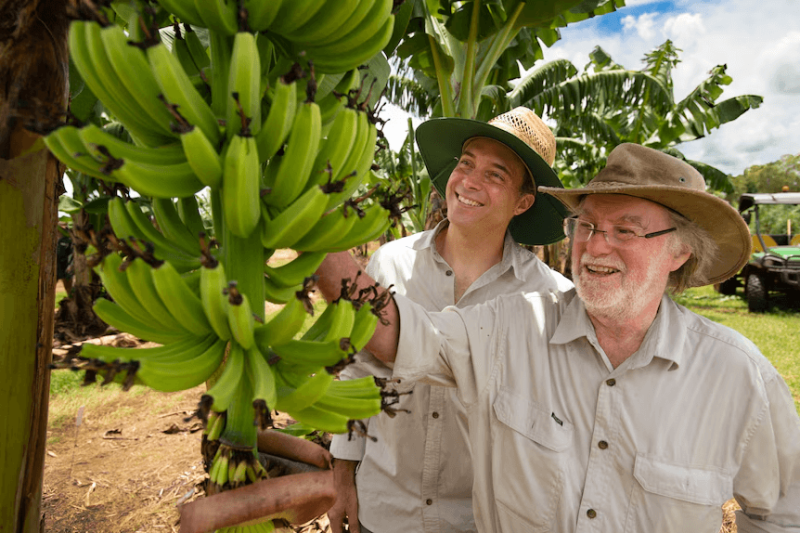
“[QCAV-4] is a Cavendish,” [Prof James Dale] says. “The bananas look the same, they feel the same, they peel the same, they smell the same and, we’re 99.99% sure, they are going to taste exactly the same.

The reason Dale can be supremely confident that the QCAV-4’s flavour is identical to the Cavendish banana – which accounts for 97% of bananas grown in Australia and 99% of those exported in the world – is because his team has only removed a single gene from the 25,000 genes in a wild species of banana and inserted it into the chromosome of the Cavendish.

[T]he gene in question’s qualities relate to disease resistance.

Follow the latest news and policy debates on sustainable agriculture, biomedicine, and other ‘disruptive’ innovations. Subscribe to our newsletter.

Because commercial bananas are sterile, rather than sexually reproducing, they are propagated by cutting stems from a parent plant. This means that every single Cavendish banana ever grown is a clone of a single seed produced as a naturally occurring hybrid, probably more than 1,000 years ago.
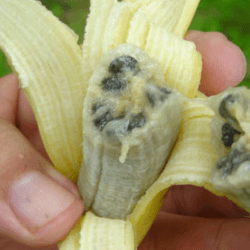
This lack of genetic diversity makes the commercial bananas extremely vulnerable to an outbreak of bacterial disease and fungus that could unleash a “banana apocalypse”. The kind of apocalypse that wiped out the Western world’s first commodity banana, the Gros Michel – known as “Big Mike” – by the 1960s. Or the kind of outbreak that is, even now, marching around the world’s Cavendish plantations.


This is an excerpt. Read the original post here

{{ reviewsTotal }}{{ options.labels.singularReviewCountLabel }}
{{ reviewsTotal }}{{ options.labels.pluralReviewCountLabel }}
{{ options.labels.newReviewButton }}
{{ userData.canReview.message }}

Related Articles

Infographic: Global regulatory and health research agencies on whether glyphosate causes cancer

Infographic: Global regulatory and health research agencies on whether glyphosate causes cancer

Does glyphosate—the world's most heavily-used herbicide—pose serious harm to humans? Is it carcinogenic? Those issues are of both legal and ...

Most Popular

Screenshot-2026-04-22-at-12.21.32-PM
Viewpoint: Why the retracted Monsanto glyphosate study doesn’t change the science—the world’s most popular herbicide is safe 
Picture1
The FDA couldn’t find a vaccine safety crisis, so it buried its own research
ChatGPT-Image-May-1-2026-11_42_59-AM-2
Viewpoint: NAD is the wellness grifters latest evidence-lite longevity fad. At least the mice are impressed.
global warming
‘Implausible’: Top climate scientists reject worst-case scenario—soaring temperatures and fast-rising sea levels
Screenshot-2026-05-21-at-12.15.17-PM
UK gene-editing milestone: Livestock barley that increases ruminant value and reduces methane emissions is first-approved CRISPR crop
vax-misinformation-main
Facts & Fallacies Podcast: Limit free speech to blunt social media misinfo?
ChatGPT-Image-Apr-16-2026-02_56_53-PM
Financial incentives, over diagnosis, and weak oversight: Autism claims are driving up Medicare costs
Screenshot-2026-05-21-at-3.15.53-PM
Chiropractors may no longer be modern-day snake oil salesmen, but the benefits of their therapy are limited–at best
ChatGPT-Image-May-12-2026-11_27_01-AM-2
AI likely to improve health care, research shows—but not for blacks and ethnic minorities
Screenshot-2026-05-20-at-5.11.17-PM
Viewpoint: No, sugar doesn’t ‘feed’ cancer — common cancer myths, debunked

Sorry. No data so far.

glp menu logo outlined

Get news on human & agricultural genetics and biotechnology delivered to your inbox.