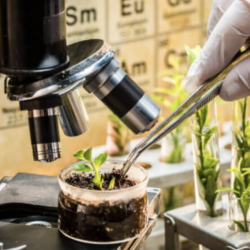
Can AI and precision technology be integrated into most farm operations without lowering productivity?

Credit: Successful Farming

Recent advancements in agtech solutions offer growers the promise of streamlining their farm operations, maximizing productive output, reducing costs and minimizing fieldwork hazards. Yet the agriculture sector tends to be cautious when it comes to tech adoption, as growers simply can’t afford to integrate technologies unless they are highly likely to increase profitability.

Fortunately, advances in artificial intelligence, autonomous solutions and precision technologies are signaling a season for change. Innovations in computer vision and navigation capabilities, precision material application, and hardware and software interoperability are helping to overcome industry barriers—a shift that should incentivize growers to adopt this next generation of farming equipment.

Mis- and disinformation are distorting science and public policy. Subscribe to our Daily and Weekly Digests for incisive coverage of ‘disruptive’ innovations in AI, agricultural biotechnology, food, chemicals, nuclear energy, vaccines, and other disruptive innovations.

…

Important sectors such as orchards and vineyards that have adopted these technologies are already seeing substantial returns on investment. Several solutions that automate pruning, spraying, weeding, mowing and harvesting are saving these farm owners between $200 and $800 per acre in operating and production costs.

This is an excerpt. Read the original post here

Related Articles

Infographic: Global regulatory and health research agencies on whether glyphosate causes cancer

Infographic: Global regulatory and health research agencies on whether glyphosate causes cancer

Does glyphosate—the world's most heavily-used herbicide—pose serious harm to humans? Is it carcinogenic? Those issues are of both legal and ...

Most Popular

Strawberry Clamshell with Warning Sticker
Viewpoint: Activists hype ‘dangerous level’ of pesticide residues in Driscoll berries: Separating health concerns from fear-mongering
ChatGPT-Image-Mar-10-2026-01_39_01-PM
Viewpoint—“Miracle molecule” debunked: Why acemannan supplements don’t work
Diet Soda with Measuring Tape 2
Science challenges anti-soda activists: No, sodas won’t make you fat
Author-Presenting-Good-Energy
'Disillusioned': Controversial RFK Jr. ally and MAHA leader Calley Means quits Trump advisory role
Silhouettes Beneath the Mosquito Nets
Guinea-Bissau halts widely condemned RFK Jr.-backed vaccine trial that would have withheld life-saving vaccines from thousands of newborns
Rustic Skillet of Raw Brains
‘Weird food’? Testicle- and brain-eating, supplement-gulping MAHA health food enthusiasts defend their ‘natural’ diets
Generations United for Immunization
Police raid Guinea-Bissau offices of RFK Jr.-backed vaccine researchers, seize hepatitis B doses
Screenshot 2026-10-16 at 5.38
PFAS in Agriculture: Science, Uncertainty, and Risk Communication
Prescription Capsules Scattered on Twenty-Dollar Bills
Facts & Fallacies podcast: America's health care system is broken. A doctor explains how to fix it, Part 2
Vibrant Social Media Confetti Explosion
Health misinformation minefield: Countering online deluge by copying its style
png_cheese_Raw_milk
100% raw milk, 100% misguided: As MAHA-fueled demand for unpasteurized milk soars, American Academy of Pediatrics renews call for a ban on its sale and distribution
Golden-GM-Emblem-with-EU-Stars
As Europe inches forward in its embrace of gene-edited crops, hopes abound that opposition to GMOs might fade
Screenshot-2026-10-21-at-10.38.39-AM
Viewpoint: The libertarian case for getting the government out of the business of regulating food choices
glp menu logo outlined

Get news on human & agricultural genetics and biotechnology delivered to your inbox.