Certain events in the last five years suggest that the Age of Environmental NGOs is ending, their influence waning and public trust declining. What happened?
- Loosely organized groups like Extinction Rebellion and Just Stop Oil formed out of frustration at how NGOs have failed to make any real impact in protecting the environment.
- Social media has enabled smaller niche groups like Just Stop Oil to rapidly form, take action, and move on.
- Populist gurus like Greta Thunberg made the conscious decision not to align with any movement or NGO that would diminish their impact.
- Foundations have transitioned into directing campaigns themselves, better financed, less political, and more effective.
- News organizations like the Guardian and the Associated Press are now running on an activist campaign business model, relying on public and foundation donations that had previously been going to NGOs.
So can NGOs adapt to these changing times? Should they follow the lead of the new players on the scene? Should they use their strengths (network, communication skills, political experience…) to support the alternative movements? How did they fall so far and so fast from their leadership position?
A Victim of their own Success
In the 1970s, environments around the world were in a real state: toxic waste dumps leaking into residential areas, acid rain, dead waterways, and uncontrolled air pollution dominated the news. But in the decade that followed, governments acted and those environmental issues were cleaned up. NGOs continued to demand more restrictions but their campaigns focused on issues that were less evident or actual like: potential endocrine disruption, possible effects of low-dose chemical cocktail exposures, unknown risks from food additives, GMOs, and pesticides… and their demands for cutbacks in Western living standards were too severe. Environmental activists became a small faction on the left wing of the political spectrum, speaking out against industry, capitalism, and global trade.
In the last decade though, climate change became the leading environmental campaign, giving NGOs a major platform and policy focus again. The “climate crisis” allowed these groups to bundle their actions against industry, fossil fuels, modern agriculture, chemicals, transportation, social justice, global trade, and international finance under the climate change umbrella. These NGOs, rich once again in funding and political support, hit their zenith, and with hubris, seized the opportunity to demand what they believed were sustainable transitions in energy, agriculture, transportation, and business.
But imposing these climate transitions on populations that could neither afford such affluent alternatives nor buy into their fear campaigns left NGOs once again at a dry political well. Meanwhile, those further to the left were not going to wait and launched populist movements like Extinction Rebellion or Just Stop Oil which were not structured like typical NGOs.
Drowning in their own Intransigence
The passion that drives environmental activists also contains their seeds of destruction. Their commitment to a green ideology based on promoting all things natural, against synthetic innovations and corporate investments left them unwilling to compromise. NGO campaigns stuck relentlessly to their political idealism on issues where pragmatic realism was what was needed. Green activists insisted on shutting down the last two German nuclear reactors at a time when energy costs were skyrocketing following the Russian invasion of Ukraine. European restrictions on agricultural technologies meant farmers were unable to earn a living. Once again, in 2024, citizens around the world were taking to the streets, not calling for climate change action but protesting against the draconian green activist policies being harshly implemented.

Pushing too hard and fast in imposing transitions to electric vehicles, renewable energy, and organic food, with no regard for the costs, actual environmental consequences, or public interest has left green NGOs on the wrong side of public opinion. They could no longer claim they were representing civil society (but rather an ideological affluent elite). The last year, particularly in Europe, saw political reactions against the green, activist agenda, with almost all proposed green policies being rejected.
Alternatives to NGOs
In light of these oversteps, alternatives to NGOs have started to have a stronger voice in public discourse showing how NGO organizations are becoming superfluous.
- Social Media Action Groups: The rapid rise of an ad hoc group like Extinction Rebellion demonstrated how a message or campaign can be effectively organized around social media groups with little leadership. At its high point, after only one year, their networks were motivating millions around the world to take action on climate campaigns. The Black Lives Matter movement, following the death of George Floyd, showed the same capacity to motivate public activism and outrage with little organization or structure.
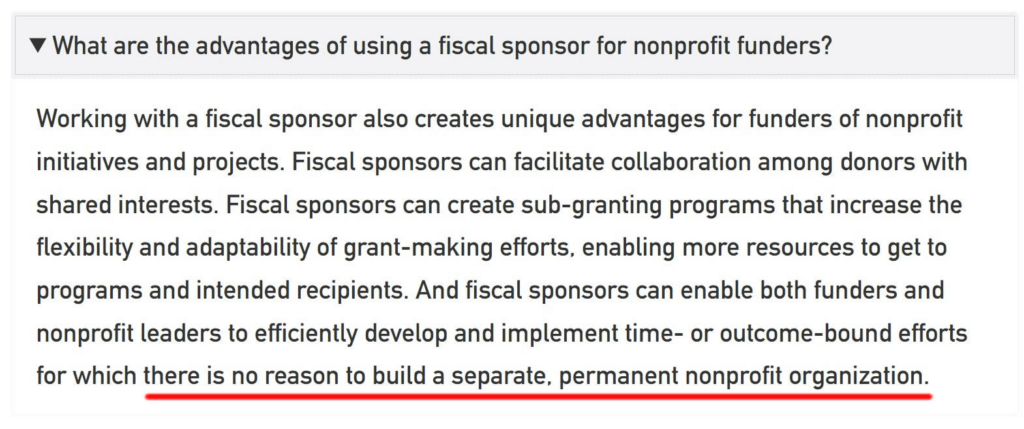
- Foundations: The Foundation Capitalism series in The Firebreak has examined the transition of foundations from funding activist groups to directly organizing activist campaigns themselves. Foundation consultants like the New Venture Fund (NVF) (managed by Arabella Advisors) describe their “fiscal sponsorship” approach as a means to promote “non-profit entrepreneurs” without the need to form any registered entity. There is, simply put, no need for more NGOs. The series also showed how NVF set up a non-registered front fund, the Collective Action Fund for Accountability, Resilience, and Adaptation (CAF), providing more than $10 million from seven large foundations to run a campaign via the climate tort law firm, Sher Edling. No NGOs were involved in this new form of a “special purpose campaign body”.
- Citizen Assemblies: National and local governments in Europe, Canada, and Japan have experimented with citizen panels or assemblies to decide or advise, at a limited scale, on particular policies. While activist groups like Friends of the Earth had pushed for this, they are losing the ability to control the narrative and push their policies forward.
- Media: News organizations are starting to produce investigative series in the same manner as NGOs run campaigns. A recent Firebreak analysis demonstrated how groups like the Guardian or the Associated Press now accept large donations from foundations to produce thematic articles (ie, campaign material). Journalists are now the activists, financed by interest groups directing their editors. Another investigative journalism group, The Examination, was set up by Bloomberg Philanthropies to research health issues from chemicals, nicotine products, and food. It launched last year, employing an enormous number of experienced journalists. Its fiscal sponsor is Rockefeller Philanthropy Advisors but it is unclear how many foundations are behind what looks very clearly like an activist campaign group. What is clear is that this funding used to go to NGOs to try to influence the media.
So what role will the environmental NGO play in the future? Given the concept of the NGO has always been widely defined (encompassing civil society organizations, non-profits, service clubs, faith groups…), these NGOs will continue to exist in one form or another, but their influence and impact will no longer be felt, their campaigns no longer trusted and their role in the policy process no longer necessary.
Farewell old warriors.
David Zaruk is the Firebreak editor and also writes under the pen name The Risk-Monger. David is a retired professor, environmental-health risk analyst, science communicator, promoter of evidence-based policy, and philosophical theorist on activists and the media. Find David on X @Zaruk
A version of this article was originally posted at The Firebreak and has been reposted here with permission. Any reposting should credit the original author and provide links to both the GLP and the original article. Find Firebreak on X @the_firebreak