These kinds of food mysteries are pretty hard to solve. Archaeology depends on solid remains to figure out what happened in the past, especially for people who didn’t use any sort of writing. Unfortunately, most stuff people traditionally used made from wood, animal materials or cloth decays pretty quickly, and archaeologists like me never find it.
We have lots of evidence of hard stuff, such as pottery and stone tools, but softer things – such as leftovers from a meal – are much harder to find. Sometimes we get lucky, if softer stuff is found in very dry places that preserve it. Also, if stuff gets burned, it can last a very long time.
Corn’s ancestors
Luckily, corn – also called maize – has some hard parts, such as the kernel shell. They’re the bits at the bottom of the popcorn bowl that get caught in your teeth. And since you have to heat maize to make it edible, sometimes it got burned, and archaeologists find evidence that way. Most interesting of all, some plants, including maize, contain tiny, rock-like fragments called phytoliths that can last for thousands of years.
Scientists are pretty sure they know how old maize is. We know maize was probably first farmed by Native Americans in what is now Mexico. Early farmers there domesticated maize from a kind of grass called teosinte.
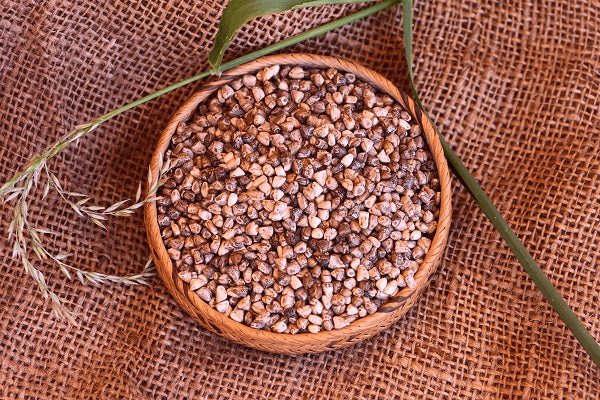
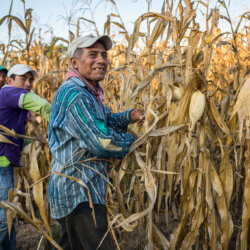
Before farming, people would gather wild teosinte and eat the seeds, which contained a lot of starch, a carbohydrate like you’d find in bread or pasta. They would pick teosinte with the largest seeds and eventually started weeding and planting it. Over time, the wild plant developed into something like what we call maize today. You can tell maize from teosinte by its larger kernels.
There’s evidence of maize farming from dry caves in Mexico as early as 9,000 years ago. From there, maize farming spread throughout North and South America.



Popped corn, preserved food
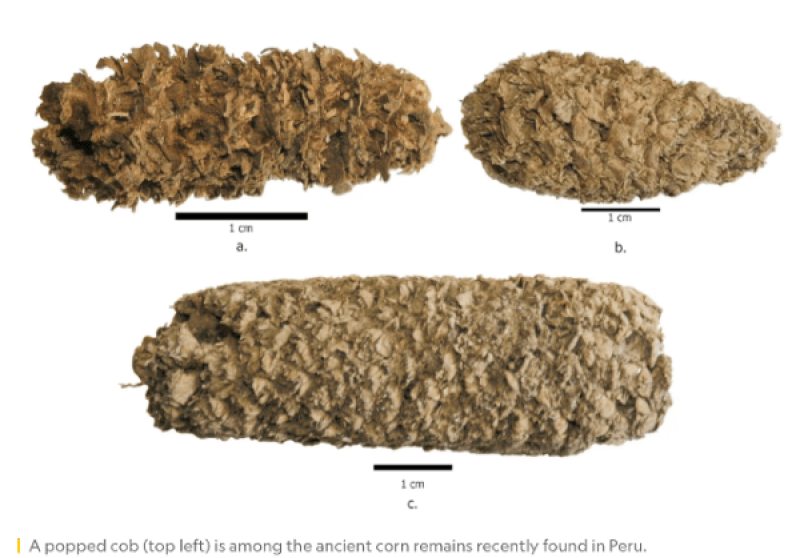
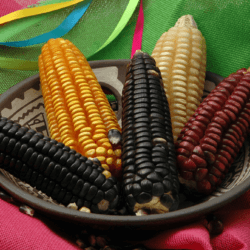
Figuring out when people started making popcorn is harder. There are several types of maize, most of which will pop if heated, but one variety, actually called “popcorn,” makes the best popcorn. Scientists have discovered phytoliths from Peru, as well as burned kernels, of this type of “poppable” maize from as early as 6,700 years ago.
You can imagine that popping maize kernels was first discovered by accident. Some maize probably fell into a cooking fire, and whoever was nearby figured out that this was a handy new way of preparing the food. Popped maize would last a long time and was easy to make.
Ancient popcorn was probably not much like the snack you might munch at the movie theater today. There was probably no salt and definitely no butter, since there were no cows to milk in the Americas yet. It probably wasn’t served hot and was likely pretty chewy compared with the version you’re used to today.
It’s impossible to know exactly why or how popcorn was invented, but I would guess it was a clever way to preserve the edible starch in corn by getting rid of the little bit of water inside each kernel that would make it more susceptible to spoiling. It’s the heated water in the kernel escaping as steam that makes popcorn pop. The popped corn could then last a long time. What you may consider a tasty snack today probably started as a useful way of preserving and storing food.
Sean Rafferty is a professor of anthropology at Albany State University of New York.
A version of this article was originally posted at Conversation and has been reposted here with permission. Find Conversation on X @ConversationUS